

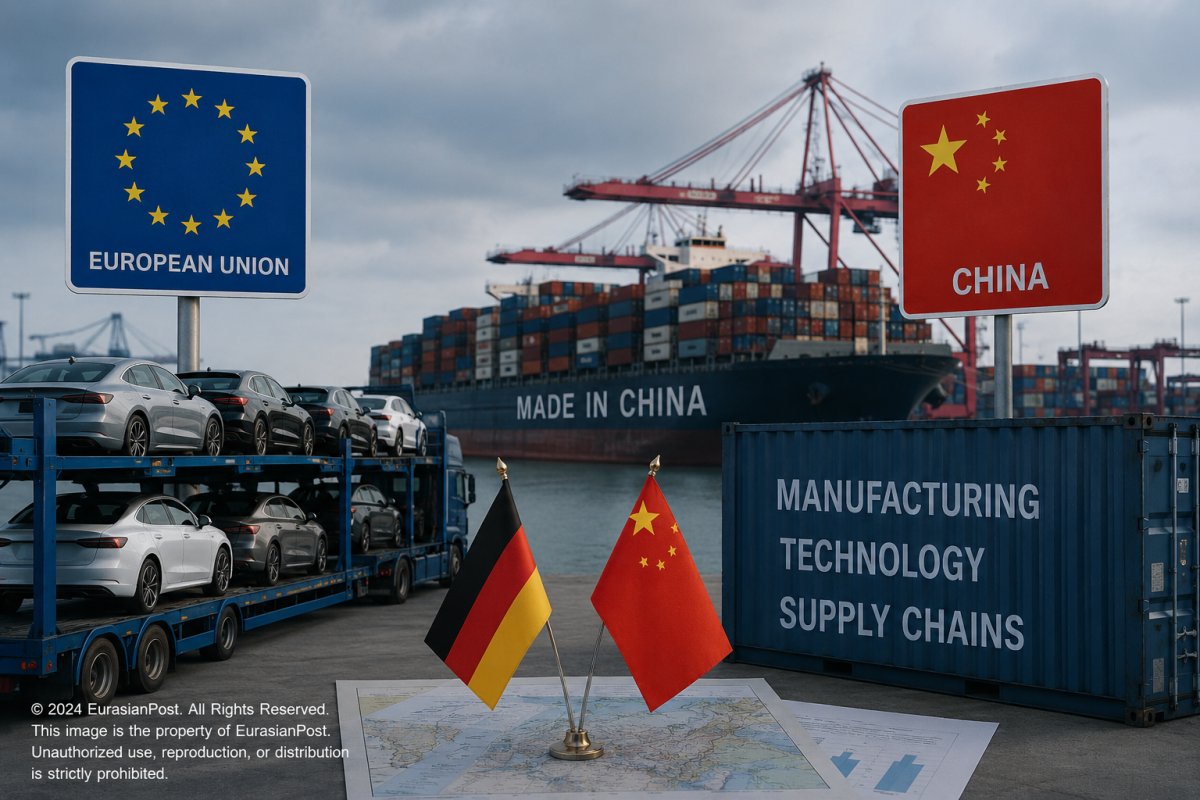
China Tightens Economic Grip as Germany Faces Growing Dependence
Summary: EurasianPost analysis examines the growing imbalance between China and Europe as Germany becomes increasingly dependent on Chinese manufacturing, technology, and supply chains. The report explores how Chinese dominance in electric vehicles, industrial production, and global exports is placing pressure on European economies while reshaping geopolitical and trade relations. Description: Germany and several European economies are struggling to balance industrial competitiveness with rising dependence on China’s manufacturing and technology sectors. EurasianPost analysis explores the growing influence of Chinese EV producers, trade imbalances, supply chain reliance, and the geopolitical tensions shaping China-Europe relations. The report also highlights Europe’s economic challenges as leaders attempt to maintain stable ties with both Beijing and Washington amid an increasingly competitive global economy.
What's Your Reaction?
 Like
1
Like
1
 Dislike
0
Dislike
0
 Love
0
Love
0
 Funny
0
Funny
0
 Wow
0
Wow
0
 Sad
0
Sad
0
 Angry
0
Angry
0

EurasianPost is an independent international news and analysis platform focused on geopolitics, global affairs, business, technology, energy, and strategic developments shaping the modern world. Covering stories across Europe, Asia, the Middle East, and beyond, EurasianPost delivers in depth reporting, expert commentary, and analytical perspectives on the political, economic, and security issues influencing global stability and international relations. With a strong emphasis on geopolitical analysis and emerging global trends, EurasianPost examines the intersection of diplomacy, trade, defense, energy markets, technology, and international policy. The platform aims to provide readers with clear, balanced, and insightful coverage that goes beyond headlines to explore the broader implications behind world events. EurasianPost also features opinion pieces, investigative reporting, multimedia content, and interviews with analysts, experts, and contributors from diverse international backgrounds. Its mission is to promote informed discussion, strategic understanding, and deeper awareness of the forces reshaping the global landscape in an increasingly interconnected world.








Comments (0)