

The Strategic Impact of Gulf Shipping Pressure on China’s Oil Imports
Summary: EurasianPost analysis examines how growing U.S. pressure on Gulf oil shipments and stricter sanctions on Iranian crude buyers may gradually redirect China’s energy demand toward Russia. The report explores the strategic importance of the Strait of Hormuz, rising risks surrounding maritime oil trade, and the expanding role of Russian pipeline infrastructure in China’s long term energy security strategy. Description: As Washington increases sanctions enforcement against Iranian oil exports and Chinese independent refiners, global energy markets are beginning to adjust to shifting geopolitical realities. EurasianPost explores how tightening restrictions in the Persian Gulf, rising shipping risks, and uncertainty surrounding the Strait of Hormuz may encourage China to deepen energy cooperation with Russia. The analysis also examines how pipeline networks, maritime vulnerabilities, and global oil market dynamics are reshaping strategic relationships between Beijing, Moscow, an
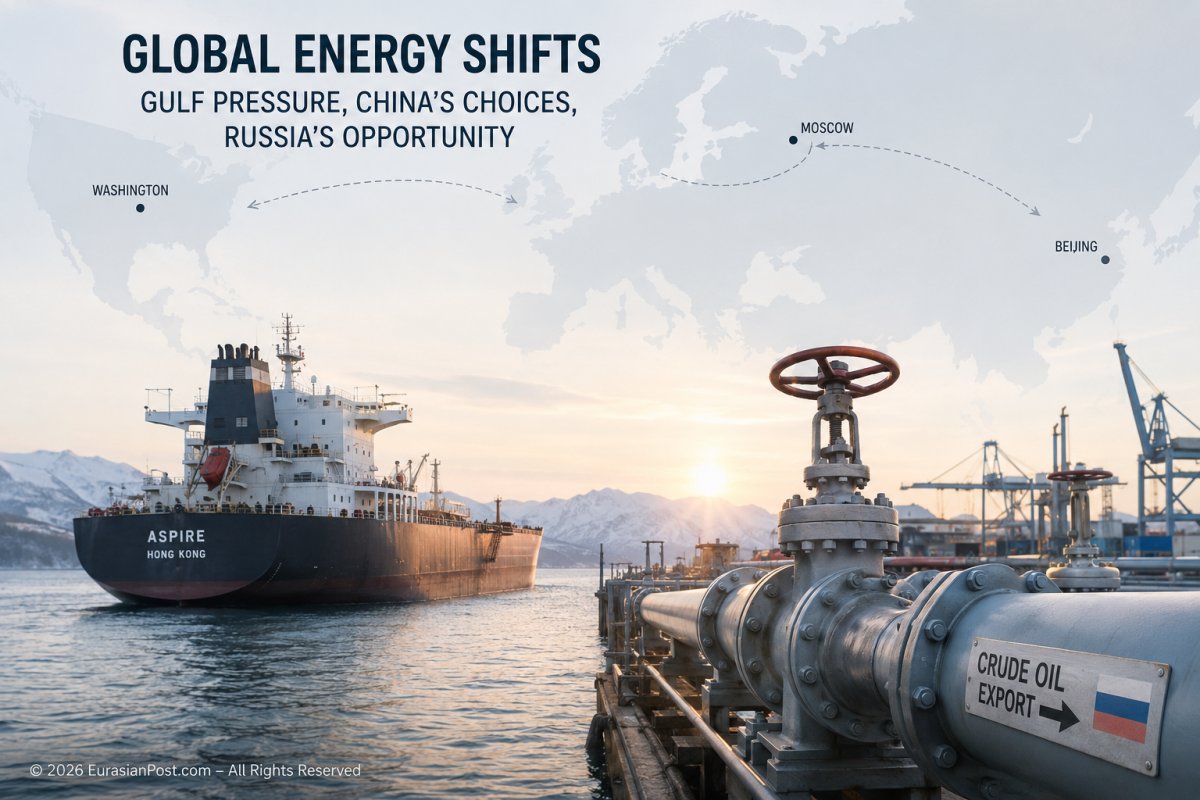
WASHINGTON/BEIJING/MOSCOW
On April 29, 2026, U.S. efforts to regulate maritime oil shipments in the Persian Gulf and implement stricter sanctions on Iranian crude purchasers present a significant challenge for energy markets: could these actions redirect China's oil demand towards Russia? Recent initiatives, partially stemming from policies enacted during President Donald Trump's administration, have broadened enforcement efforts beyond simply targeting shipping networks. They now also focus on Chinese independent refiners, colloquially known as “teapot” refineries, which have traditionally processed discounted crude from sanctioned nations such as Iran. This shift signifies a deeper engagement in the supply chain; rather than merely addressing tankers operating within so-called “shadow fleet” networks, authorities are now identifying those responsible for purchasing and refining the oil.
The strategy maintains a focus on the vulnerability of essential transit routes in the area, particularly the Strait of Hormuz, through which approximately one-fifth of global oil supplies pass. While there has not been any complete closure of this waterway, escalating tensions, stricter enforcement measures, and increased naval presence are amplifying perceived risks associated with shipments tied to sanctioned trade. According to traders and shipping data, rising freight costs, higher insurance premiums, and intensified compliance scrutiny are already affecting flows in certain regions of the Gulf. “Any increase in uncertainty regarding Hormuz alters purchasing behavior,” stated an oil trader based in Singapore. “Refiners tend to seek more reliable and less exposed sources.”
China remains the primary destination for Iranian crude exports, with recent estimates indicating that volumes often surpass 1 million barrels per day. Most of this crude is handled by independent refiners located in Shandong province, who possess greater flexibility compared to state-controlled operations. By targeting these buyers, Washington effectively restricts one of the key channels sustaining Iranian exports amid sanctions. Market analysts suggest that firms linked to substantial private refining operations are particularly susceptible to scrutiny due to their processing capabilities and reliance on global petrochemical markets.
Russia as an Alternative
As restrictions on Iranian supply chains tighten, Russia is emerging as a potential beneficiary. In recent years, Moscow has significantly increased its energy exports to China following Western sanctions imposed due to the Ukraine conflict. The development of pipeline infrastructure—specifically the Power of Siberia system—has raised the proportion of Russian hydrocarbons transported over land while reducing dependence on maritime routes. Sergei Lavrov has emphasized the need for enhanced energy cooperation with China, underscoring that expanding pipeline capacity and establishing long-term supply agreements are vital strategies. An energy analyst from a European research firm noted that "Pipeline deliveries provide stability that seaborne shipments cannot always assure in unstable environments."
Throughout this process, U.S. officials have consistently asserted that the purpose of sanctions is to limit revenue streams linked to Iran's regional activities while encouraging adherence to international prohibitions. There is no public evidence suggesting these policies aim at facilitating Russian-Chinese energy trade; however, market dynamics may lead to outcomes that differ from policy intentions according to analysts' observations. “We understand when you are constricting sea lanes while simultaneously shutting down limited suppliers that demand doesn’t vanish," he remarked. "It merely transfers elsewhere—and currently Russia stands as one of the few large-scale suppliers ready to accommodate this change.”
Thus far, global oil markets have remained relatively stable overall; however, shipping expenses and insurance costs related to Gulf transits have shown greater volatility. The long-term implications will depend largely on how consistently enforcement measures are applied and how quickly alternative supply routes develop. For China the world’s largest importer of crude—the balancing act between cost-effectiveness, reliability, and geopolitical risk is becoming increasingly complex. Meanwhile, Russia finds itself adapting within a changing landscape where it can solidify its position as a key strategic energy partner. For the United States, questions remain: Can pressure exerted at sea ultimately influence oil flow patterns well beyond just the Gulf?
What's Your Reaction?
 Like
0
Like
0
 Dislike
0
Dislike
0
 Love
0
Love
0
 Funny
0
Funny
0
 Wow
0
Wow
0
 Sad
0
Sad
0
 Angry
0
Angry
0

EurasianPost is an independent international news and analysis platform focused on geopolitics, global affairs, business, technology, energy, and strategic developments shaping the modern world. Covering stories across Europe, Asia, the Middle East, and beyond, EurasianPost delivers in depth reporting, expert commentary, and analytical perspectives on the political, economic, and security issues influencing global stability and international relations. With a strong emphasis on geopolitical analysis and emerging global trends, EurasianPost examines the intersection of diplomacy, trade, defense, energy markets, technology, and international policy. The platform aims to provide readers with clear, balanced, and insightful coverage that goes beyond headlines to explore the broader implications behind world events. EurasianPost also features opinion pieces, investigative reporting, multimedia content, and interviews with analysts, experts, and contributors from diverse international backgrounds. Its mission is to promote informed discussion, strategic understanding, and deeper awareness of the forces reshaping the global landscape in an increasingly interconnected world.
Comments (0)