

China’s Growing Reach in Central Asia and the Caucasus
Explore how China is expanding its economic, political, and strategic influence across Central Asia and the Caucasus.
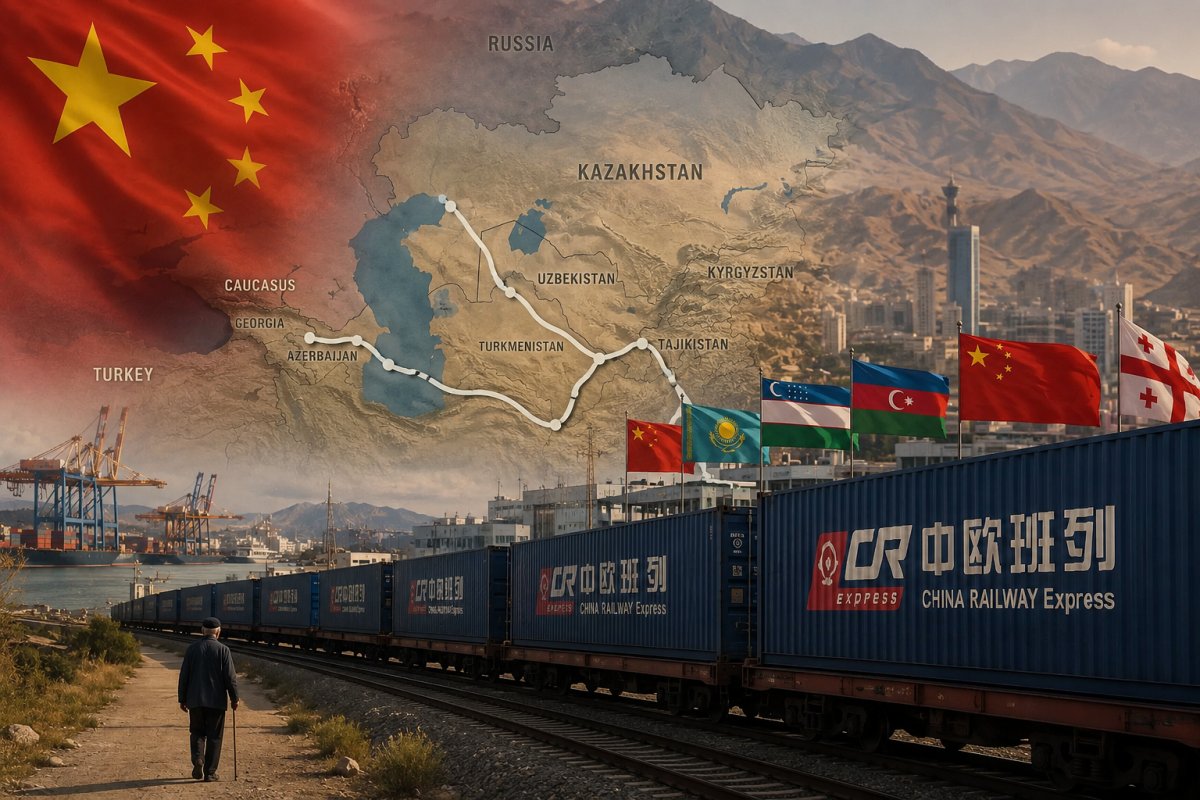
China's influence in Central Asia and the Caucasus has grown gradually in the past twenty years, spurred by trade, infrastructure financing, energy partnerships, and deepening diplomatic relations. What started as a strategy centered mostly on border security and access to resources has transformed into a wider influence across the region that ties into Beijing’s larger plan for Eurasian connectivity. As Russia’s ascension meets renewed stresses and Western involvement proves uneven, China has had more latitude to shape the economic and political configuration of this crucial corridor.
Central Asia is now a foundational pillar of China’s westward strategy. Kazakhstan, Kyrgyzstan, Tajikistan, Turkmenistan and Uzbekistan are along crucial overland routes connecting China to Europe, the Middle East and beyond. Under the Belt and Road Initiative, Beijing has funded roads, railways, logistics hubs and pipelines as well as industrial projects that will increase regional reliance on Chinese capital and markets. For landlocked states that seek investment and diversification, such projects prove to be attractive and have pragmatic benefits—but they also raise concerns over debt, transparency, and long-term leverage.
Energy continues to be central to this relationship. China has also poured money into pipelines transporting natural gas from Turkmenistan and oil from Kazakhstan, to minimize the need for sea routes that would threaten the relationship in a geopolitical crisis. Central Asian governments also gain a massive customer outside of traditional Russian channels. By shifting the landscape, such a transition has incrementally rearranged the regional balance, offering local states a greater degree of choice while tying them in even more stringently to Chinese demand and financing.
Economic power with political consequences. And when Beijing is promoting its role as principally economic, commercial relationships inevitably have a political impact. China’s presence and power in domestic decision-making is bolstered by Chinese loans, building contracts and tech export transactions. Regional governments usually welcome a partner that doesn’t publicly condition investment on political reform. At the same time, public opinion can be more skeptical. In a number of Central Asian countries, protests and criticism have developed over land use, labor practices, environmental threats, and worries about becoming overly dependent on China.
In the Caucasus, the role has faded, if not disappeared, but is becoming more visible. Azerbaijan and Georgia have drawn Chinese interest on account of their position in the so-called Middle Corridor, a trade route between Central Asia, the Caspian Sea and the South Caucasus that connects China to Europe. And the corridor is thus strategically significant as businesses and policymakers look for alternatives to war-affected, sanctioned, and unstable routes. Chinese firms have looked into new opportunities in ports, rail infrastructure and logistics, increasingly treating the region as a key conduit, as opposed to a primary sphere of influence.
China has also heightened its diplomatic profile with multilateral formats and high-level visits. Its message of stability, sovereignty and non-interference speaks to governments wary of outside pressure. Security cooperation, particularly around counterterrorism and border management has also expanded. Nevertheless, Beijing is wary of getting too wrapped up in local skirmishes, seeking to safeguard trade routes and capital without becoming a conventional security guarantor.
A changing regional order. China’s growth in terms of footprint does not equate to unchecked supremacy. Russia retains considerable historical, military and cultural links in much of the former Soviet space and Turkey, along with the European Union and other powers, is interested in their influence. But China’s advantage comes from its rich finances, infrastructure resources and patient, long-term planning. Its template is one that would be attractive to governments that have long prioritised development and the concept of strategic independence, even if wide public trust is not always gained.
For Central Asia and the Caucasus, China’s rise offers both opportunity and danger. New trade connections and investment can power growth, upgrade infrastructure and lessen isolation. But greater economic integration with Beijing may also constrain policy flexibility in the future. The future of the region would most likely be defined not by an easy shifting of power from one external actor to another, but by how local states cope with the competition among bigger powers and protect their own interests.
What's Your Reaction?
 Like
0
Like
0
 Dislike
0
Dislike
0
 Love
0
Love
0
 Funny
0
Funny
0
 Wow
0
Wow
0
 Sad
0
Sad
0
 Angry
0
Angry
0

EurasianPost is an independent international news and analysis platform focused on geopolitics, global affairs, business, technology, energy, and strategic developments shaping the modern world. Covering stories across Europe, Asia, the Middle East, and beyond, EurasianPost delivers in depth reporting, expert commentary, and analytical perspectives on the political, economic, and security issues influencing global stability and international relations. With a strong emphasis on geopolitical analysis and emerging global trends, EurasianPost examines the intersection of diplomacy, trade, defense, energy markets, technology, and international policy. The platform aims to provide readers with clear, balanced, and insightful coverage that goes beyond headlines to explore the broader implications behind world events. EurasianPost also features opinion pieces, investigative reporting, multimedia content, and interviews with analysts, experts, and contributors from diverse international backgrounds. Its mission is to promote informed discussion, strategic understanding, and deeper awareness of the forces reshaping the global landscape in an increasingly interconnected world.
Comments (0)