

The Team That Was Never Allowed to Stay
An in-depth analysis of how Iran's national football team faced extraordinary travel restrictions during the 2026 FIFA World Cup in the United States, raising questions about sports diplomacy, visa policies, international relations, and the ethics of punishing athletes for political disputes.
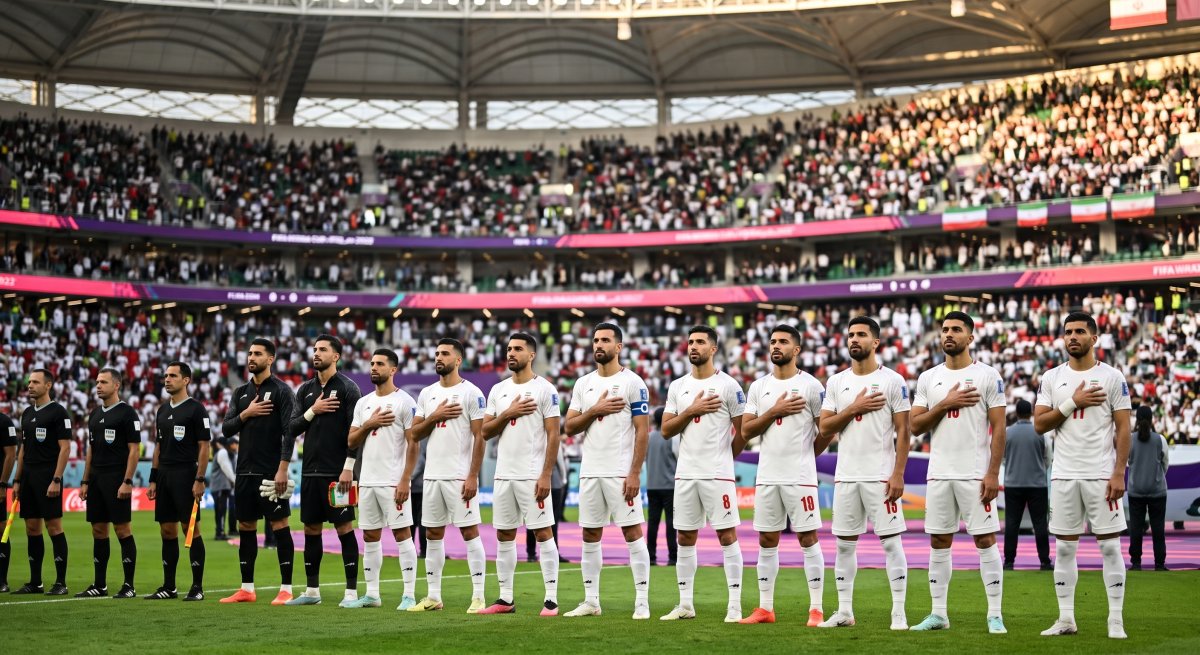
What the Treatment of Iran's World Cup Squad Reveals About Punishing the Wrong People
Try to imagine this for a second. You've flown five hours to play the biggest match of your life. You step off the plane and walk straight into a security line. Someone checks your phone, the other one asks you questions about a war you didn't start and can't control. Two hours later you're on the field, eighty thousand people watching, and you give everything you have for ninety minutes. And then before the sweat has even dried, before you've had a real shower, before your legs have stopped shaking you're back on a plane, sent out of the country you just played in.
That's just not a crazy story. That's what happened to Iran's national football team at the 2026 World Cup in USA.
Iran's players left the United States within hours of the final whistle after their opening match against New Zealand, a tense, politically loaded game that ended in a 2-2 draw in Los Angeles. They'd been given less than sixteen hours in the city beforehand nowhere near the twenty-four they'd asked for and had to cut their own training session short because of it. Iran's secretary-general didn't mince words. His said, his team, was the only one in the entire tournament confined to host cities for just twenty-four hours at a time, with real, measurable effects on the players' bodies and minds. Their coach reached for something even blunter. He said his players had been "oppressed."
Sit with what that actually means for a human being. These aren't soldiers. They aren't government representatives or diplomats. They're athletes! They are men, who grew up chasing a ball on dirt fields, who gave up ordinary lives for the discipline of professional sport, who clawed their way to the biggest tournament on earth through years of sacrifice that had nothing to do with politics. And the moment they arrived to compete, they weren't treated like guests at a global celebration of sport. They were treated like prisoners on furlough escorted in, watched the whole time, and shipped out the second the job was done.
A Punishment That Landed on the Wrong People
There is a war between the United States and Iran. That's real, and it's serious, and it carries grievances on both sides that deserve to be handled by the people whose actual job is to negotiate, sanction, deter, or fight. But these Iranian soccer players didn't start that war. Alireza Jahanbakhsh didn't start it either. Jahanbakhsh of Iranian team, stood in front of cameras and said, simply, that his team had come to call for peace and unity. The country hosting him answered that with a travel schedule tighter than almost any other nation got in the entire tournament.
That's the heart of what's wrong here. A government can run its foreign policy however it wants. What it shouldn't do is hand the bill for that policy to athletes who have no power to pay it. Right up until about ten days before the tournament began, nobody even knew for sure whether Iran's team would be allowed to play at all. When the visas finally came through, they came late and even then, several members of the support staff were turned away outright, including people whose only job was logistics, not politics. Among them was Mehdi Taj, the actual head of Iran's football federation. His job is football. Nothing else.
Now imagine carrying that uncertainty in your body for months. Training for years. Fighting through qualification against the odds. And not knowing, until ten days before kickoff, whether you'd even be let into the country hosting the tournament you'd given your whole career to reach. That's not a security measure. That's a weight placed on people who never had any say in what they're being made to carry.
The Small Cruelties That Add Up
What makes this hard to look away from isn't one big, dramatic decision. It's the pile-up of small ones each one explainable on its own, each one a little harder to stomach once you see them stacked together.
One of the Iranian players, Mehdi Torabi, ridiculously discovered his visa had simply expired after a single match. He'd been given a one-entry visa while his teammates got multiple-entry ones, and for a while nobody was sure if he'd even be allowed to keep playing. His team's captain, Mehdi Taremi, described what should have been a short hop from their base in Mexico to Los Angeles turning into five hours of travel and security checks five hours, for players who need calm minds and fresh legs before stepping onto a field the whole world is watching.
By their third match, against Belgium, nothing had changed, despite Iran filing a formal complaint with FIFA. A White House official confirmed the team still wouldn't be allowed to stay any longer, while pointing out that every player and coach technically had a visa. That's true. It's also not really the point. A visa that lets you into a country for sixteen guarded hours, with no time to recover, isn't generosity. It's the bare minimum, dressed up to look like more than it is.
And it wasn't only Iran. A respected Somali referee, scheduled to officiate World Cup matches, was denied entry entirely his only connection to any conflict being the country he happened to be born in. An Iraqi striker was held for nearly seven hours at the airport, his phone searched, before finally being let through. Afterward, he asked a simple question: why is America even hosting a World Cup if it's this hostile to the people visiting it? That's not a rhetorical question. It deserves a real answer.
What Sport Is Supposed to Mean
There's a reason the World Cup carries the weight it does, even for people who've never competed in anything in their lives. It's one of the last places left where people from countries at odds with each other are asked, for ninety minutes, to set all of that down and just play. It's supposed to be the one space where a young man from Tehran and a young man from Wellington stand on the same patch of grass as equals, judged only by what they do with the ball, not by what their governments have done to each other.
When a host nation strips that space of its meaning when it turns the one tournament built to bring people together into one more stage for an old grudge it doesn't just hurt the team on the receiving end. It chips away at the whole reason the tournament exists. Taremi said this himself, plainly: the visa denials and travel restrictions were damaging the country's image and creating real tension at an event meant to bring the world closer. He wasn't wrong. And there's something quietly devastating in the fact that it took an Iranian player a guest in a country that had just denied his own teammates somewhere to rest to say that out loud.
A Better Way to Hold a Grudge
None of this asks the United States to drop its disputes with Iran's government, or to pretend they don't matter. A country can vet the people crossing its borders. It can deny entry to anyone who poses a genuine threat. Nobody is asking it to look away from real risk.
But there's a real difference between security and punishment, and that difference was easy to see in how this tournament played out. Security looks like careful screening and background checks. Punishment looks like forcing a football team to sleep in a different country every single night of a tournament they earned the right to be at, because the people making the decisions, sitting in offices thousands of miles from any locker room, couldn't bring themselves to grant one extra day of basic human decency.
Soccer players aren't their government's foreign ministry. They don't speak for tanks or missiles or closed-door negotiations. They are, in the most human sense possible, simply the people their country sends out into the world the version of Iran that the rest of us might actually get to see up close: sweating, hoping, hugging each other after a goal, the same as anyone else. Punishing them for choices made by men they've never met, in rooms they'll never enter, doesn't weaken a government. It just adds one more small, unnecessary cruelty to a list of people who deserved, at the very least, a chance to shower before being sent home.
That's not a policy position. That's just what kindness looks like when nobody's paying close enough attention to demand it.
What's Your Reaction?
 Like
0
Like
0
 Dislike
0
Dislike
0
 Love
0
Love
0
 Funny
0
Funny
0
 Wow
0
Wow
0
 Sad
0
Sad
0
 Angry
0
Angry
0

As Guardian of the House of Afshar and an Ambassador of Peace affiliated with the UNESCO Center for Peace, much of my work revolves around cultural diplomacy, strategic analysis, conflict management, and preserving historical and civilizational heritage in a rapidly shifting geopolitical environment. My research and writing focus on Iranian and Turkish history, geopolitics, international security, diplomacy, and global governance. Over the years, I have worked at the intersection of geopolitics, international security, historical memory, and global governance, with a particular focus on the Middle East, Eurasia, the South Caucasus, and emerging multipolar power structures. Alongside geopolitical analysis and publishing, I have experience in media, organizational leadership, international communications, and business development. I also work across multilingual and cross-cultural environments including English, Persian, Turkish, and Azeri contexts.


Comments (0)