

Who Actually Won the Iran War?
The 2026 Iran War produced immense destruction, economic disruption, and geopolitical uncertainty across the Middle East and beyond. Yet the outcome remains far more complicated than official victory narratives suggest. This analysis examines the measurable consequences of the conflict, the terms of the U.S.-Iran Memorandum of Understanding, the strategic significance of the Strait of Hormuz, shifting Gulf security calculations, and the broader implications for American influence, Iranian leverage, and the evolving regional order. Rather than focusing on political rhetoric, the article evaluates the available evidence to assess which actors emerged with greater strategic advantages and how the war may reshape Middle Eastern geopolitics for years to come.
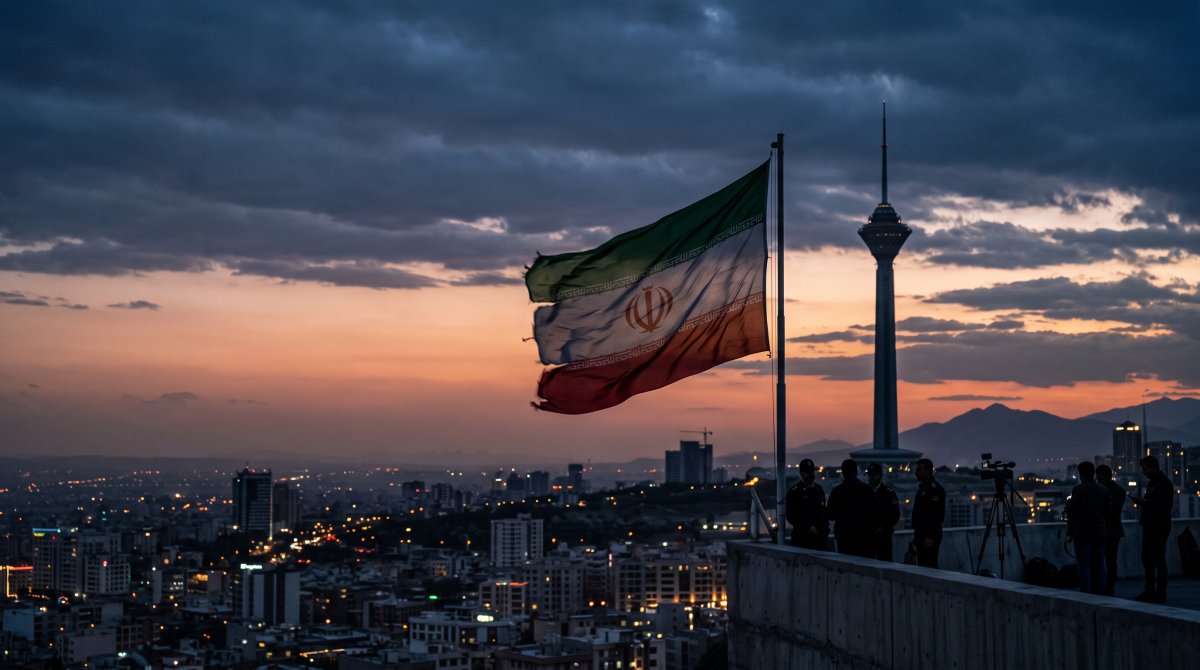
The Uncomfortable Answer Emerging From the Data
There's a particular kind of victory speech that starts sounding less convincing the longer you listen to it, and the one coming out of Washington this week is a good example. President Trump has called the U.S.-Iran memorandum of understanding a win. The numbers, and the actual text of the deal itself, tell a more complicated story one where the country that absorbed the most physical destruction may also be the one that comes out of this war with more leverage than it had walking in.
That's not a fringe theory. It's increasingly the consensus read among Iran specialists trying to make sense of a war that started with Washington promising regime change and ended with Washington's own negotiators sitting across the table from the regime, sixty days into a memorandum that resolves almost none of the war's original objectives.
The damage was real, and it didn't break what it was supposed to break
Start with what's verifiable. Iranian officials have put war damage at roughly $270 billion, a figure the New York Times reported as broadly consistent with independent estimates from Iranian economists, while the U.S.-based Foundation for Defense of Democracies put the range at $150 to $300 billion. The human toll, even by conservative counts, includes more than 3,300 Iranian deaths and 13 American service members killed, according to NPR's reporting on the war's costs. Iran's currency has been in free fall, and the Central Bank of Iran confirmed point-to-point inflation reaching 77.2 percent by June 1 the highest level since the Second World War, according to reporting from the National Council of Resistance of Iran, with food inflation cited above 115 percent and core goods inflation surpassing 113 percent. The World Bank, in its June assessment, cut its global growth forecast to 2.5 percent for 2026, citing the war as a major drag, and projected Gulf economies would grow just 1.3 percent this year, down sharply from 4.5 percent in 2025 while declining to even offer a forecast for Iran itself, citing what it called "exceptionally high uncertainty."
None of that is in dispute. What is increasingly in dispute is whether any of it accomplished what Washington said it was trying to accomplish. According to Britannica's documented timeline of the conflict, the war's origins trace back to a brutal government crackdown on protests beginning December 28, 2025, which Iran's Ministry of Health said killed at least 30,000 people when it spread nationwide in January. The expectation in Washington, by multiple accounts, was that this domestic uprising would combine with external military pressure to topple the regime outright. It didn't happen that way. Rather than fracturing under the strain of war, the same population that had risen up against the government in January is widely reported to have rallied around the flag once the conflict was framed as a war against Iran itself rather than against its government a well-documented pattern in how nationalist sentiment responds to external attack, observed in plenty of conflicts well beyond this one.
The strait became Iran's most valuable card
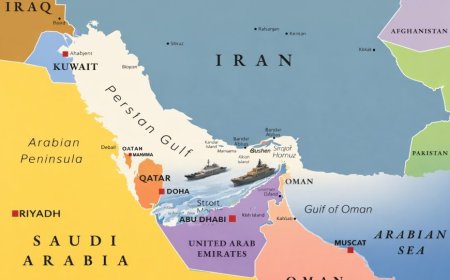
If there's one piece of leverage Iran clearly didn't have before this war and unambiguously has now, it's the demonstrated ability to shut down the Strait of Hormuz and force the issue onto the global economy's agenda. The reporting on the actual memorandum of understanding bears this out directly: Iran has insisted it will impose a transit fee on shipping once the sixty-day window in the current deal expires, language confirmed in NBC News's reporting on the deal's text. Iran International's own economic analysis pushed back hard on the wilder estimates of how much this is actually worth debunking claims that transit fees could net Iran $40 to $100 billion annually, and putting the more realistic figure closer to $1-2 billion a year given actual shipping volumes and the limits of international law. But the dollar figure somewhat misses the point. The capability itself proven, demonstrated, and now baked into Iran's negotiating position for the indefinite future is the asset, regardless of what it's worth in any given year.
The deal reads like Iran's wishlist more than Washington's
This is where the paper trail gets most interesting, because the architecture of the actual memorandum doesn't track with a narrative of American or Israeli victory. CFR's own roundup of regional experts reviewing the deal's text found that Iran's nuclear program isn't actually addressed in binding terms Tehran has signaled it won't ship out its highly enriched uranium and doesn't recognize the IAEA as a neutral verifier, according to CFR senior fellow Ray Takeyh's published assessment. CFR's Elliott Abrams, who served as the first Trump administration's special representative for Iran, wrote that Israelis are alarmed the deal allows continued uranium enrichment at some level and says nothing about Iran's missile program, while also tying U.S. hands on Israel's campaign against Hezbollah in Lebanon. Reuters and other outlets reported the memorandum is paired with a $300 billion reconstruction and development package for Iran, a detail Georgia Public Broadcasting and NPR both flagged as a striking signal of just how much war damage the deal itself implicitly acknowledges.
Strip away the diplomatic framing, and the deal looks less like a surrender document and more like the kind of negotiated settlement two parties reach when neither has the leverage to dictate terms outright which is, definitionally, not what "victory" was supposed to look like for the side that started the war with explicit demands for zero enrichment, full missile dismantlement, and regime change.
The trip to Beijing told its own story
If the Iran deal alone wasn't a clear enough signal, the broader pattern around it filled in the picture. Trump's May state visit to Beijing covered extensively by CNN, Time, Brookings, and CFR produced what CFR's own daily brief described as a trip "heavy on pageantry but light on concrete deliverables." Trump told reporters aboard Air Force One that "on Taiwan, [Xi] does not want to see a fight for independence," language CNN's chief national security analyst characterized on air as a win for Beijing, while Time reported Trump left a planned $14 billion Taiwan arms sale undecided following the visit. Brookings' own assessment was blunt: Beijing came away feeling "increasingly positive" about the summit specifically because of what it read as rhetorical concessions from Trump on Taiwan, while China's posture in the Middle East where Beijing has cultivated relationships with Iran, Saudi Arabia, and the UAE simultaneously rather than picking sides remained entirely unchanged by the war next door.
That's a relevant data point for assessing American leverage more broadly in 2026, not just in the Gulf. A White House that walked away from direct talks with Beijing without securing clarity on its own most sensitive Asia-Pacific commitment is operating from a different negotiating position than the one it occupied at the start of the year.
The Gulf states are already hedging, and they're saying so out loud
Perhaps the most concrete evidence that something has structurally shifted is the public behavior of America's own Gulf allies during the endgame of this war. Multiple outlets reported that Qatar whose own gas field was struck by Iran during the conflict played a prominent role in helping broker the eventual memorandum, alongside Pakistani mediation efforts confirmed by Pakistani Prime Minister Shehbaz Sharif's own social media statements when the deal was announced. That's a remarkable detail on its own terms: a country attacked by Iran working to help Iran reach a deal with the country that attacked it on Iran's behalf, rather than lining up uniformly behind Washington's maximalist position.
The broader logic isn't hard to follow. Decades of Gulf security strategy rested on a basic bargain buy American weapons, host American bases, and trust that Washington's military presence translates into protection. This war tested that bargain directly, with Gulf states absorbing direct Iranian retaliation for a conflict that, by most regional accounts, they did not want and had lobbied against starting in the first place. A security architecture that produces unwanted war rather than preventing it is not obviously worth what it used to be worth, and Gulf capitals reportedly began quietly exploring deeper hedges toward China, toward direct accommodation with Tehran, toward diversified security relationships well before the ink dried on any final agreement.
So who actually won?
The honest answer, based on the verifiable record rather than the press releases, is that this wasn't a war with a winner in the conventional sense. Iran absorbed catastrophic, verifiable economic damage a contracting economy, inflation not seen since World War II, a currency in collapse, and thousands of dead, including its own senior leadership. That is not survival without cost; it's survival at extraordinary cost. But survival is precisely the threshold Washington's own stated objectives regime change, zero enrichment, dismantled missile capability, an end to proxy support were measured against, and on that specific scorecard, the documented outcomes simply don't match the original promises. Iran's government remains in place. Its nuclear program remains unresolved rather than eliminated. Its demonstrated ability to threaten Hormuz is now a permanent feature of the region's risk calculus rather than a one-time event. And the war's broader fallout a rattled global economy, a wavering Gulf alliance structure, and an American president who left his own China summit without resolving the Taiwan question suggests the costs of this conflict extended well past Iran's borders, in directions that don't show up in anyone's victory speech.
What seems most durable, looking at the documented record rather than the rhetoric, is that the region's old architecture American primacy, enforced through bases and alliances, with Iran contained behind a wall of sanctions and hostile neighbors didn't survive this war intact, regardless of who claims to have won it. That's a harder thing to put in a headline than "victory" or "defeat." It also happens to be closer to what the evidence actually supports.
Sources referenced: New York Times (via Iran International reporting), Foundation for Defense of Democracies, NPR, Britannica, National Council of Resistance of Iran (NCRI), World Bank 2026 economic outlook, Iran International, NBC News, Council on Foreign Relations (Ray Takeyh, Elliott Abrams, and CFR's Daily News Brief), Georgia Public Broadcasting, Reuters, CNN, Time, Brookings Institution, and Wikipedia's documented timeline of the 2026 Trump-Xi Beijing summit.
Frequently Asked Questions
What's Your Reaction?
 Like
0
Like
0
 Dislike
0
Dislike
0
 Love
0
Love
0
 Funny
0
Funny
0
 Wow
0
Wow
0
 Sad
0
Sad
0
 Angry
0
Angry
0

EurasianPost is an independent international news and analysis platform focused on geopolitics, global affairs, business, technology, energy, and strategic developments shaping the modern world. Covering stories across Europe, Asia, the Middle East, and beyond, EurasianPost delivers in depth reporting, expert commentary, and analytical perspectives on the political, economic, and security issues influencing global stability and international relations. With a strong emphasis on geopolitical analysis and emerging global trends, EurasianPost examines the intersection of diplomacy, trade, defense, energy markets, technology, and international policy. The platform aims to provide readers with clear, balanced, and insightful coverage that goes beyond headlines to explore the broader implications behind world events. EurasianPost also features opinion pieces, investigative reporting, multimedia content, and interviews with analysts, experts, and contributors from diverse international backgrounds. Its mission is to promote informed discussion, strategic understanding, and deeper awareness of the forces reshaping the global landscape in an increasingly interconnected world.






Comments (0)