

Kyrgyzstan to Try Former Security Chief Behind Closed Doors
Kyrgyzstan will hold a closed trial for ex-security chief Kamchybek Tashiyev, raising questions about transparency, due process and political fallout.
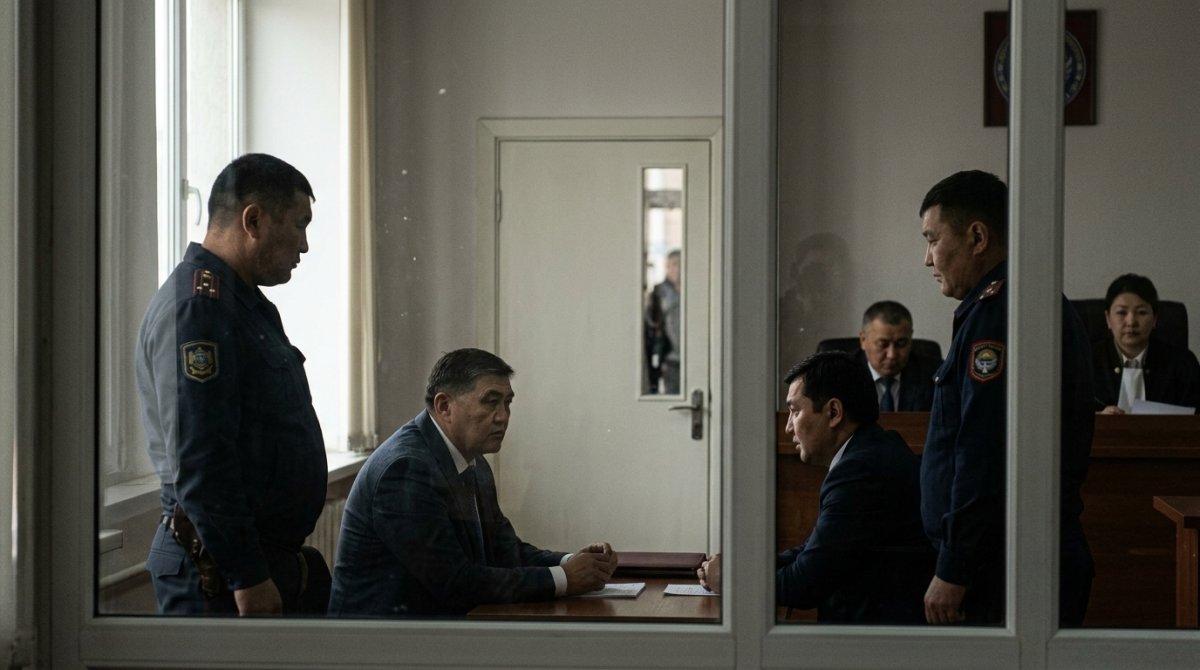
Kyrgyzstan is preparing to open a closed-door trial for a former senior security official in a case that has quickly become a focal point for debate over state secrecy, judicial independence and political accountability in the Central Asian republic. The decision to shield proceedings from public view has drawn attention because of the defendant’s former influence within the country’s security architecture and the wider implications for a political system that has repeatedly promised reform while remaining vulnerable to elite struggles and opaque legal processes.
According to court and law enforcement announcements, the former security chief faces charges linked to alleged abuse of office and other actions said to have taken place while he held one of the most powerful posts in the state. Authorities argue that a public hearing could expose classified materials, compromise ongoing investigations or reveal sensitive operational details tied to national security. That explanation, while familiar in politically charged cases across the region, has done little to quiet concern among lawyers, civil society groups and opposition figures who say secrecy can easily become a tool to limit scrutiny.
The case lands at a delicate moment for Kyrgyzstan, a country often described as more politically pluralistic than several of its neighbors but also marked by recurring upheaval, shifting alliances and abrupt changes in power. Former officials who once appeared untouchable have, in previous periods, found themselves under investigation after political tides turned. For that reason, every prosecution involving a high-ranking insider is examined not only on its legal merits but also through the lens of factional rivalry and the state’s uneven record on due process.
Supporters of the closed format insist that the court is acting within the law. They say cases involving intelligence files, covert operations or the identities of security personnel cannot be handled like ordinary criminal matters. In their view, the priority is to protect state interests while allowing judges to review evidence without external pressure. Officials have also stressed that a closed hearing does not automatically mean a predetermined outcome and that the defendant retains the right to legal representation and to challenge the prosecution’s claims.
Critics counter that such assurances are difficult to verify when journalists, independent observers and the broader public are excluded. In Kyrgyzstan, where trust in institutions has often been fragile, transparency is seen by many analysts as essential to establishing the legitimacy of any verdict, especially in a case involving a former member of the security elite. Human rights advocates warn that restricted access can limit reporting on procedural irregularities, reduce accountability for prosecutors and make it harder to assess whether evidence has been lawfully obtained and properly tested in court.
Why the case matters beyond one defendant
The importance of the trial extends beyond the personal fate of the former official. Security agencies in Kyrgyzstan have long played a central role in managing political crises, investigating corruption and responding to unrest. Their reach has often made them both indispensable and controversial. A prosecution of a former chief therefore touches on the broader question of whether the state is genuinely willing to police its own coercive institutions or whether selective justice is being used to settle scores after internal power shifts.
That distinction matters because Kyrgyzstan’s political history has been shaped by cycles of protest and leadership change. Governments have frequently pledged to break with the past by targeting corruption and abuse among previous officeholders. Yet such campaigns have sometimes been criticized for focusing on rivals while sparing allies. The closed trial now scheduled risks reinforcing those doubts unless authorities provide a clear legal rationale, consistent procedural safeguards and at least some public accounting of the evidence and judgment once restrictions permit.
Legal experts note that closed proceedings are not unusual in cases involving classified information, but international standards generally favor the narrowest possible use of secrecy. Courts are expected to justify why specific portions of a hearing cannot be public and, where feasible, to release redacted decisions or summaries that allow the public to understand the basis for the outcome. Whether Kyrgyz authorities will follow that approach remains uncertain, and much will depend on how the judiciary balances confidentiality with the public interest in oversight.
The defendant’s legal team is expected to challenge both the substance of the charges and the necessity of a fully closed hearing. Defense lawyers may argue that the prosecution is overstating security concerns to avoid external scrutiny or to frame administrative decisions as criminal conduct. They are also likely to focus on the chain of evidence, witness credibility and any procedural steps taken during the investigation, including searches, detentions and interrogations. In politically sensitive cases, such details can prove decisive, especially if appeals reach higher courts.
For the government, the stakes are also high. If prosecutors secure a conviction after a process widely viewed as opaque, officials may face renewed criticism from domestic activists and international partners monitoring rule-of-law commitments. If the case collapses or appears weak, the episode could undermine claims that the prosecution was driven by strong evidence rather than politics. Either way, the handling of the trial will influence perceptions of the current administration’s willingness to submit powerful institutions to transparent legal standards.
Regional and international scrutiny
Developments in Kyrgyzstan are closely watched across Central Asia, where security structures often sit at the heart of state power. A rare prosecution of a former intelligence or security leader can send a message about accountability, but only if the process is seen as credible. Diplomatic missions and rights organizations are likely to monitor the case for signs of fair-trial compliance, including access to counsel, the ability to present a defense and the eventual publication of judicial reasoning. Even limited official disclosure could shape whether the trial is viewed as legitimate law enforcement or a politically managed proceeding.
Public reaction inside Kyrgyzstan is likely to remain mixed. Some citizens, weary of long-standing allegations of corruption and abuse among senior officials, may welcome any effort to hold former power brokers accountable. Others may see the secrecy surrounding the trial as confirmation that the most consequential cases are still handled away from public scrutiny. That tension reflects a wider dilemma in transitional political systems: how to confront misconduct tied to national security without reproducing the opacity that allowed abuses to flourish in the first place.
- Authorities’ position: secrecy is needed to protect classified material and sensitive operations.
- Critics’ concern: closed hearings can weaken transparency and public confidence.
- Core issue: whether the judiciary can demonstrate fairness in a politically charged case.
As the proceedings begin, the most important question may not be whether the courtroom doors remain shut, but what information emerges afterward. A carefully reasoned ruling, even in redacted form, could help reassure the public that the court weighed evidence rather than political expediency. By contrast, a sparse or delayed explanation would likely deepen suspicion and keep the case at the center of arguments over secrecy and selective justice. In a country where legal outcomes often carry broader political meaning, the trial of a former security chief behind closed doors is set to become a test of both state authority and judicial credibility.
What's Your Reaction?
 Like
0
Like
0
 Dislike
0
Dislike
0
 Love
0
Love
0
 Funny
0
Funny
0
 Wow
0
Wow
0
 Sad
0
Sad
0
 Angry
0
Angry
0

EurasianPost is an independent international news and analysis platform focused on geopolitics, global affairs, business, technology, energy, and strategic developments shaping the modern world. Covering stories across Europe, Asia, the Middle East, and beyond, EurasianPost delivers in depth reporting, expert commentary, and analytical perspectives on the political, economic, and security issues influencing global stability and international relations. With a strong emphasis on geopolitical analysis and emerging global trends, EurasianPost examines the intersection of diplomacy, trade, defense, energy markets, technology, and international policy. The platform aims to provide readers with clear, balanced, and insightful coverage that goes beyond headlines to explore the broader implications behind world events. EurasianPost also features opinion pieces, investigative reporting, multimedia content, and interviews with analysts, experts, and contributors from diverse international backgrounds. Its mission is to promote informed discussion, strategic understanding, and deeper awareness of the forces reshaping the global landscape in an increasingly interconnected world.


Comments (0)