

US and China agree tariff relief on $30 billion of goods each way
Xi Jinping's state visit ended with reciprocal tariff relief on $30 billion in goods, a US coal pledge and a trade truce that now runs to Jan. 10.

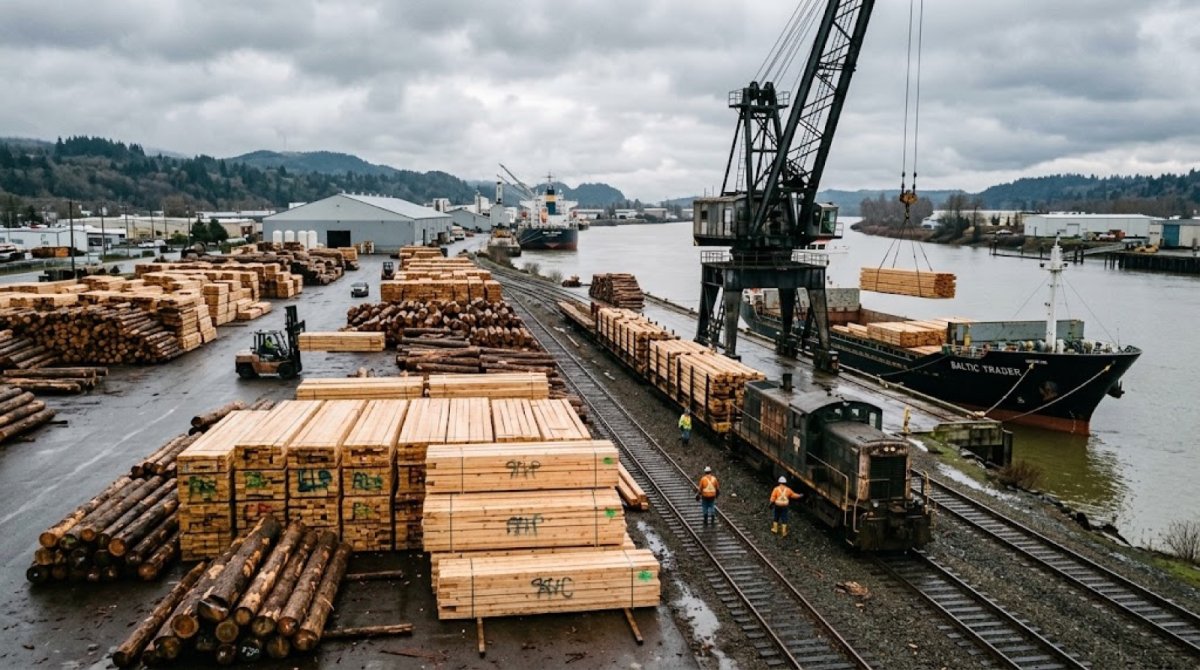
Washington and Beijing have agreed to recommend easier tariff terms on $30 billion worth of trade in each direction, the most concrete commercial result of Chinese President Xi Jinping's three-day state visit to the United States.
A White House fact sheet issued at the close of the visit said the two governments had agreed to recommend that each grant the other easier tariff terms on $30 billion of trade in what the document called non-sensitive goods. On the American side the categories named are agricultural produce, fish and seafood, cosmetics, medical devices, and logs and wood products. Beijing's list is made up of consumer manufactures: toys, holiday decorations, small appliances and children's car seats.
The same document set a Chinese purchase commitment of no less than 10 million metric tons of American coal in 2027, and the same volume again in 2028. In a section on drug enforcement, it said 21 Chinese citizens were arrested in August over the manufacture and distribution of precursor chemicals.
Rare earths left unresolved
On the issue that has caused the most disruption to manufacturers outside both countries, the fact sheet offered process rather than numbers. Work continues on American concerns about shortages in the supply of rare earths and other critical minerals, it said, with the stated goal of bringing shipment volumes back to appropriate levels. No volumes, licensing terms or deadline accompanied that sentence.
The summit also pushed back the expiry of the two countries' trade truce. US Treasury Secretary Scott Bessent said the arrangement, which had been due to lapse in November, now runs to Jan. 10, AFP reported. Tariffs between the two economies had earlier climbed above 100% before a sequence of pauses brought them down. Jamieson Greer, Trump’s top trade official, told CNBC that Washington views such extensions as "compliance periods," AFP reported, and Mary Lovely of the Peterson Institute for International Economics described Washington's approach as a wish to keep the relationship on a short leash.
Analysts who follow the relationship were cautious. Daniel Russel of the Asia Society Policy Institute said the two powers "remain locked in a bitter competition over trade, tech, Taiwan, defence, rare earths and industrial policy." Daniel Kritenbrink of The Asia Group said there was "no doubt that both leaders would like to see stability in the relationship, at least through the end of the year," while adding that US officials would say China "is doing just barely enough to maintain the agreement and no more."
Summitry as the next deadline
Beyond trade, the two sides agreed to support each other's hosting of the APEC leaders' meeting and the G20 summit, with each leader signaling an intention to attend the other's event, Xinhua reported. A separate US-China Super Intelligence Dialogue was established, with the next exchange due by November. The tariff package follows the preparatory trade talks held in Washington before the two leaders met.
US President Donald Trump framed the visit in broad terms, saying the two governments "made great strides, very positive for both countries." Al Jazeera correspondent Alan Fisher, reporting from Washington, offered a cooler reading: "There was a lot of ceremony and a lot of pomp. In fact, there was a lot more pomp than progress."
What it means: For exporters across Eurasia, the value of this package lies less in the headline figure than in the calendar. A truce that runs only to Jan. 10 tells traders, freight forwarders and port operators on the routes between China and Europe what tariff assumptions to price into first-quarter contracts, and nothing beyond that. The unresolved rare earths language matters most to the industrial economies sitting between the two giants, because it leaves licensing risk in place for every buyer of Chinese critical minerals. And the coal commitment, modest in tonnage next to global seaborne trade, is a reminder that energy volumes have become the currency in which these bargains are settled, a logic that Caspian and Central Asian suppliers competing for the same Chinese demand will read closely.
What's Your Reaction?
 Like
0
Like
0
 Dislike
0
Dislike
0
 Love
0
Love
0
 Funny
0
Funny
0
 Wow
0
Wow
0
 Sad
0
Sad
0
 Angry
0
Angry
0













Comments (0)