

Trump signs Graham Act, arming tariff threat against Russia's oil buyers
New law hits Russia's energy and defense sectors and lets Washington levy up to 100% tariffs on top importers of Russian oil and gas, days before Xi's visit.

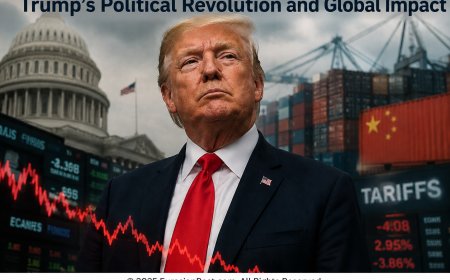
President Donald Trump on Friday signed into law a sanctions package aimed at pressuring Russia over the war in Ukraine, a measure that also gives him the power to impose tariffs of up to 100% on the biggest buyers of Russian oil and gas, a category that includes China and India.
The legislation, known as the Graham Act, targets Russia's energy and defense sectors, President Vladimir Putin and other senior officials, oligarchs and their relatives, Russian banks and financial institutions, and foreign persons, TRT World reported. It also goes after the so-called shadow fleet of tankers Moscow uses to get around Western sanctions, covers companies and foreign actors that support Russia's military, and extends sanctions involving Iran.
How the Tariff Clause Works
The law requires Trump, within 30 days, to put tariffs of as much as 100% on every good the United States imports from the biggest importers of Russian crude or gas. Countries that knowingly make fresh purchases of Russian oil or gas once 30 days have passed since enactment, or that rank in the top five for helping Russia dodge sanctions, face the same treatment. There is a carve-out for countries that account for less than 15% of Russia's gas exports and have made significant moves to reduce them.
No country is named in the text, and the method for compiling the top-five lists is not defined. Critics quoted by TRT World say that leaves U.S. officials with wide latitude in choosing targets. India said Thursday it would keep buying oil "through diversified sourcing."
The House of Representatives, controlled by Republicans, approved the measure 262-159 on Wednesday. The tariff powers produced an unusual split among Democrats, who largely back Ukraine but have resisted handing Trump broader authority over trade. Nikkei Asia reported that the signing came only days ahead of Xi Jinping's trip to Washington; TRT World put the meeting a week away.
Kyiv Welcomes the Law
Ukrainian Foreign Minister Andrii Sybiha called the signing a truly historic day, saying the Kremlin's calculations were once again failing and its hopes of eroding international support for Kyiv would not be realized, TRT Russian reported. Sybiha said Ukraine deeply valued the strong bipartisan support in the United States and honored the commitment of the late Sen. Lindsey Graham, for whom the law is named, and he urged European Union partners and Group of Seven countries to synchronize similar steps.
President Volodymyr Zelenskyy had earlier described the bill's passage as symbolic and thanked U.S. lawmakers. "The best way to honour Lindsey's memory would be to implement the provisions of this law fully and as quickly as possible," Zelenskyy said Friday.
What It Means: The Graham Act shifts the sanctions fight from Russia's own economy to its customers. By tying the tariff trigger to the largest importers of Russian crude and gas, the law places China and India, which TRT World describes as among the biggest buyers, in the line of fire, while the absence of named countries and undefined top-five lists gives the White House room to decide who is actually hit. That discretion matters most in the coming week: Xi is due in Washington, and He Lifeng's trade delegation is already scheduled to hold talks in the United States. India's stated intention to continue buying through diversified sourcing suggests New Delhi is not planning to change course before the 30-day clock runs. For Eurasian energy flows, the question is whether Washington uses the law as leverage in those talks or as a tariff it intends to collect.
What's Your Reaction?
 Like
0
Like
0
 Dislike
0
Dislike
0
 Love
0
Love
0
 Funny
0
Funny
0
 Wow
0
Wow
0
 Sad
0
Sad
0
 Angry
0
Angry
0












Comments (0)