

Claims that Trump urged Poland's defense minister to quit Tusk's coalition rattle Warsaw
Polish reports say Trump pressed Kosiniak-Kamysz to leave Tusk's coalition. Tusk says the March talk was about Poland's internal situation.

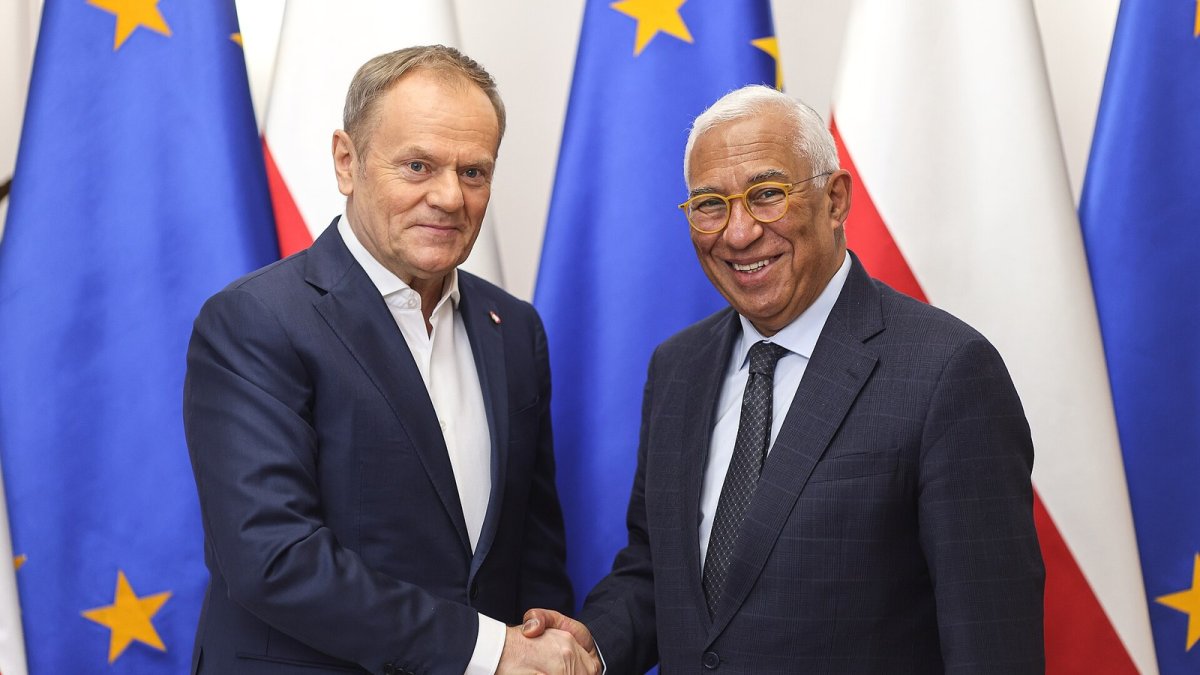
Polish media reports that President Donald Trump urged Poland's defense minister to abandon Prime Minister Donald Tusk and govern with the right-wing opposition have set off a political row in Poland, a key U.S. ally on NATO's eastern flank. The claims concern a short, previously undisclosed exchange at the White House on March 2 between Trump and Władysław Kosiniak-Kamysz, who leads the Polish People's Party (PSL), one of the partners in Tusk's governing coalition.
Accounts of the conversation began circulating on Sept. 21, according to Notes from Poland, which pulled together what is known about the episode on Oct. 5. One came from Gazeta Wyborcza journalist Dominika Wielowieyska, who wrote that "Trump suggested to Kosiniak-Kamysz that it would be best if he formed a coalition with the right." Eurasian Post has not independently verified the allegation, and it found no public response from the White House or the U.S. Embassy in Warsaw in the coverage it reviewed, and none of the participants has publicly confirmed the reported remark.
The two men spoke on the margins of a Medal of Honor ceremony for U.S. Sgt. Michael Ollis. Kosiniak-Kamysz has confirmed the encounter but declined to describe its substance, calling it an informal meeting. He said his main message had been thanks "for the presence of American soldiers in Poland," and he rejected suggestions that a permanent U.S. base was discussed, saying the subject had not yet arisen in March.
Tusk confirms a briefing, not the details
Tusk, whose Civic Platform leads the coalition, has confirmed he was briefed on the exchange but will not disclose what was said. "Bases were not the topic of that conversation," he said in remarks reported on Oct. 5 by Wirtualna Polska and by the PAP news agency via Bankier.pl. He said the talk had been confidential, so he felt bound to discretion, and that it "concerned rather the internal situation in Poland, to put it most delicately." Tusk also described it as "too interesting a conversation to talk about publicly" and said history would learn about it one day.
Foreign Minister Radosław Sikorski took a sharper line. He said no memo on the conversation had reached the Foreign Ministry and argued that the organizer of so important a meeting was obliged to write one. "Could that be because the meeting also served as an attempt to involve a foreign state in our internal politics?" Sikorski said, as quoted by Notes from Poland. He added that the ministry had never authorized Adam Bielan, a member of the European Parliament, to conduct talks abroad.
An opposition channel and a base in play
Bielan, of the opposition Law and Justice (PiS) party, has said he helped set up the defense minister's meeting with someone "much more important" than Pete Hegseth, the Pentagon chief, and has framed the effort as a way to unblock talks on a U.S. base. In September, Trump announced "great progress" toward a U.S. Army base in Poland, with Poznań, Wrocław and Bydgoszcz in the west of the country mentioned as possible sites, Bankier.pl reported. The row also unfolds alongside Tusk's uneasy coexistence with President Karol Nawrocki, a Trump ally, a political standoff that Moody's cited when it cut Poland's credit rating to A3.
What it means: Whatever was said in March, the dispute shows how far relations between Warsaw and Washington now run along Polish party lines. If the reports are accurate, the episode would amount to a U.S. president weighing in on coalition politics in an allied democracy, just as Warsaw seeks a permanent American base. Until the White House addresses the claims, the account rests on Polish reporting and on carefully worded remarks from Tusk and Sikorski, while Kosiniak-Kamysz, whose party sits at the hinge of any coalition arithmetic, is left defending a meeting he describes as informal. For NATO's eastern flank, the larger risk is that security ties with the United States, long a matter of broad agreement in Poland, become one more front in a polarized domestic fight.
What's Your Reaction?
 Like
0
Like
0
 Dislike
0
Dislike
0
 Love
0
Love
0
 Funny
0
Funny
0
 Wow
0
Wow
0
 Sad
0
Sad
0
 Angry
0
Angry
0











Comments (0)