

Fidan says Mecca defense pact nears final stage after allies agree Saudi deployment
Turkish FM Hakan Fidan said work to institutionalize the Mecca alliance is in its final stage, a day after the pact was activated over Houthi attacks.

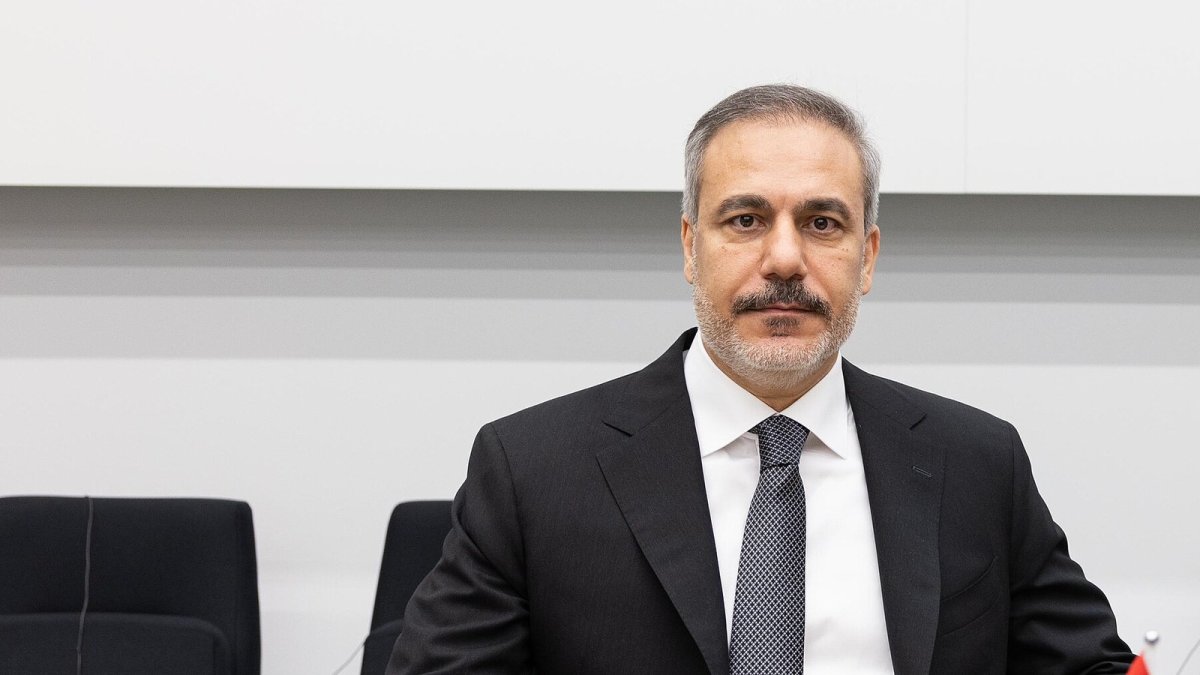
Turkish Foreign Minister Hakan Fidan said Oct. 6 that the effort to give the Mecca Defense Alliance a permanent institutional structure is nearly complete, a day after Türkiye, Saudi Arabia and Pakistan agreed in Riyadh to move forces into the kingdom in response to Houthi attacks. The two steps together turn a two-month-old political pledge into a working military arrangement.
"A great deal of work has been carried out to institutionalize the signed Mecca Defense Alliance," Fidan said, according to Report.az, which cited TRT Haber. "We are now reaching the final stage of these efforts." He described the talks in the Saudi capital as "a productive day" and said Riyadh had shown "a genuinely constructive approach to resolving this issue."
From pledge to deployment
Fidan spoke after a meeting of the alliance's Strategic Political and Defense Committee, which he attended together with Turkish Defense Minister Yasar Guler and Chief of General Staff Gen. Selcuk Bayraktaroglu, Report.az said. The agenda covered the structure of a secretariat, the appointment of a new secretary-general and other organizational issues, as well as possible peace and dialogue initiatives between Yemen and Saudi Arabia. Turkish defense officials put forward military, operational and technical proposals, the agency reported.
The Riyadh session on Oct. 5 was the first time the pact had been invoked since it was signed on Aug. 7, Al Jazeera reported. The three governments agreed to activate collective deterrence measures and to deploy military forces to Saudi Arabia rapidly. Saudi Defense Minister Khalid bin Salman said the committee had decided "to activate collective deterrence measures, within the framework of the Alliance, in response to the attacks," and that it had "reaffirmed the solidarity and unity of our countries, in confronting the heinous attacks against the Kingdom." The sources reviewed did not give troop numbers, units or a timetable for the deployment. The meeting followed a session of the three armies' chiefs in Riyadh in September.
The Yemen backdrop
The decision comes as the war in Yemen widens. The Houthis claimed attacks on King Khalid International Airport in Riyadh and on an Aramco refinery, claims Saudi officials did not confirm, according to Al Jazeera. Yemen's government forces have launched a counteroffensive against the Iran-aligned group and reportedly retook the Red Sea port of Mocha, the network said. Ankara had already signaled it was weighing military support for Saudi Arabia as the strikes on the kingdom mounted.
Pakistani Defense Minister Khawaja Asif had said in September that the agreement would come into force in the event of attack. "If there is unprovoked aggression ... definitely the Mecca agreement will become operational," he said, as quoted by Al Jazeera. Abdulaziz Alghashian of the Gulf International Forum told the network that Houthi attacks and provocations had "really hastened the Mecca alliance."
The pact was signed in Mecca by Turkish President Recep Tayyip Erdogan, Saudi Crown Prince Mohammed bin Salman and Pakistani Prime Minister Shehbaz Sharif. Under its terms, an attack on one signatory counts as an attack on all, Türkiye Today reported ahead of the meeting. The outlet said the secretariat would be based in Riyadh, that retired Pakistani Lt. Gen. Nauman Mahmood had been nominated as secretary-general, and that six countries reportedly wanted to join. Al Jazeera put the combined forces of the three states at about 1.4 million active troops, 3,400 military aircraft and 6,000 tanks.
What it means
The Riyadh decisions mark the point where the Mecca alliance stops being a declaration and starts to function as a collective defense bloc, with a secretariat, a secretary-general and a deployment order. For Türkiye, a NATO member, it creates a second set of mutual defense obligations, this one tied directly to a live conflict on the Arabian Peninsula. For Pakistan, it formalizes a standing security role in the Gulf. For Saudi Arabia, it spreads the military and political burden of the Yemen war beyond the kingdom. Key questions remain open: how many troops Ankara and Islamabad will actually send, where they will be stationed and under whose command. Fidan's emphasis on Riyadh's constructive approach and on peace initiatives for Yemen suggests Ankara wants the alliance to be seen as a deterrent first, not a new front in the war.
What's Your Reaction?
 Like
0
Like
0
 Dislike
0
Dislike
0
 Love
0
Love
0
 Funny
0
Funny
0
 Wow
0
Wow
0
 Sad
0
Sad
0
 Angry
0
Angry
0










Comments (0)