

Türkiye weighs military support for Saudi Arabia as Houthi strikes hit Riyadh
Foreign Minister Hakan Fidan says Ankara is studying how to meet Saudi military needs under the pact with Pakistan as Houthi attacks reach the capital.

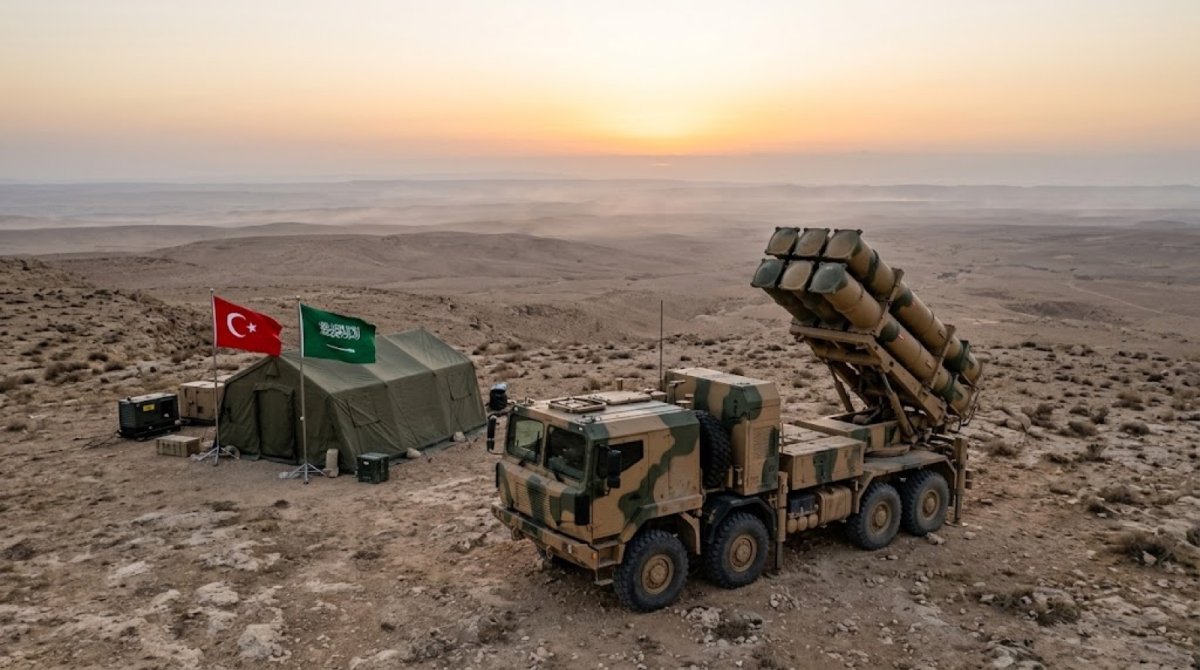
Türkiye is examining how it can provide military support to Saudi Arabia under the three-way defense pact it signed with Riyadh and Islamabad, Foreign Minister Hakan Fidan said Saturday, as Yemen's Houthis claimed a fresh missile and drone attack on the Saudi capital.
Speaking to Turkish broadcaster NTV, Fidan said the kingdom faced serious threats to its territory and that the alliance agreement carried obligations. "We see there are very serious attacks on Saudi Arabia's territorial integrity, sovereignty. We have an alliance agreement in our pact," he said, according to Reuters.
Fidan said Riyadh "may have some military needs, especially on some technical issues," and added: "We would have no issues in meeting these." He did not spell out what form the assistance might take, saying only that Ankara was "engaged in certain discussions and consultations that have not been made public."
A pact moving from paper to practice
The joint defense agreement among Türkiye, Saudi Arabia and Pakistan was signed last month and stipulates that an armed attack on any one of the three is treated as an attack on all, Reuters reported. Ankara, which fields NATO's second-largest army, has said the arrangement is open to new members and is not intended to replace existing alliances.
The pact is now being tested in real time. The Houthis have kept up attacks on Saudi cities, energy infrastructure and shipping since declaring a naval blockade against the kingdom in July, disrupting trade and energy flows. On Saturday the group said it had struck sensitive sites in Riyadh with missiles and drones, and smoke was seen near the city's main airport as a fire hit an Aramco depot. U.S. President Donald Trump has turned down Saudi requests for military help against the Houthis, who agreed to a ceasefire with Washington last year after a two-month U.S. bombing campaign.
Fidan framed the strikes as unprovoked. "Frankly, we condemn such provocative attacks carried out against Saudi Arabia even though it did not attack anyone," he said, adding that Ankara would not accept the kingdom being drawn into the standoff between Iran and the United States. "At this stage, as members of the Mecca Alliance, we are closely monitoring the situation," he said.
Deadlock between Washington and Tehran
The Turkish minister tied the Red Sea escalation directly to the stalled U.S.-Iran track. "There has been a deadlock in the negotiations between the United States and Iran over the past few months," Fidan said, according to TASS, pointing to the two sides' attacks on each other and to the situation in the Bab el-Mandeb Strait on the Yemeni side. He said new terms had been put to the parties, which have been exchanging conditions through Qatari mediators. "There are new proposals, I hope they accept them," he told NTV. "Otherwise, the crisis was tolerated until a certain point, but the economic reflections have started to exceed the point of being tolerable."
What it means: Fidan's remarks are the first public signal that Ankara is preparing to act on the mutual-defense clause rather than treat the pact as a diplomatic statement. By limiting the offer to "technical" needs and stressing unpublicized consultations, Türkiye keeps room to calibrate its response while positioning itself as a security guarantor at a moment when Washington has declined to step in. For the Gulf, that shifts part of the deterrence question toward an Ankara-Riyadh-Islamabad axis; for Türkiye, it links its own economic exposure to the Red Sea crisis with a tangible stake in whether the U.S.-Iran deadlock is broken.
What's Your Reaction?
 Like
0
Like
0
 Dislike
0
Dislike
0
 Love
0
Love
0
 Funny
0
Funny
0
 Wow
0
Wow
0
 Sad
0
Sad
0
 Angry
0
Angry
0












Comments (0)