

Schröder's birthday visit to Putin draws cross-party fire in Germany
The former chancellor spent Putin's 74th birthday at his Moscow home, the Kremlin said, on a day Russia struck Ukraine with missiles and drones.

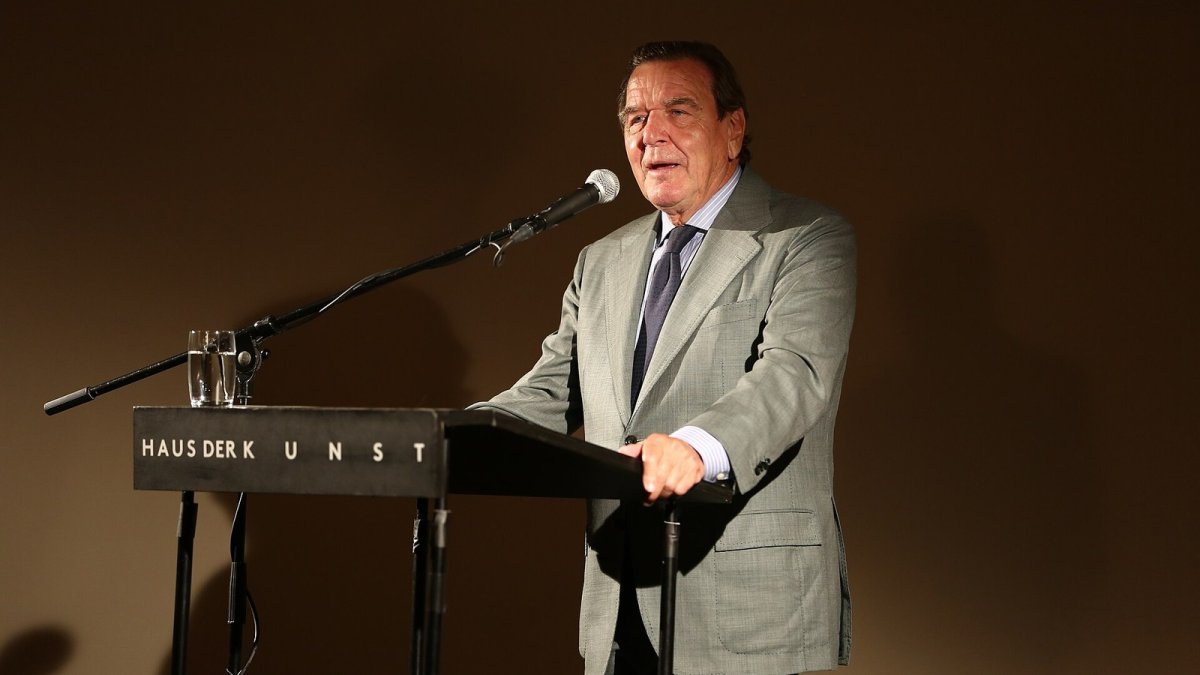
Former German Chancellor Gerhard Schröder spent Russian President Vladimir Putin's 74th birthday at the Kremlin leader's home in Moscow, the Kremlin said, prompting sharp condemnation from German and European politicians. The visit fell on Wednesday, the same day Russia launched its first combined missile and drone assault on Ukraine this autumn.
According to the Kremlin press service, Putin learned from media reports on Wednesday morning that Schröder was in Moscow on business and asked him over. "The president invited his old friend to his home," the Kremlin said in a Telegram post. Photos released by the Kremlin show the two men shaking hands beside a traditional Russian stove.
Earlier that day, Schröder, 82, had visited a Moscow branch of the Russian arm of the German supermarket chain Globus and given a welcome speech to employees, dpa reported. He had been appointed to the company's supervisory board shortly before the trip.
Greens, liberals and conservatives line up
Green Party politician Katrin Göring-Eckardt wrote on X: "A disgrace for Germany. A betrayal of Europe. A disservice to peace." She added that she had expected nothing different from him. Marie-Agnes Strack-Zimmermann of the Free Democrats, who chairs the European Parliament's defense committee, described Schröder as Germany's most brazen pensioner. "Too sick for committees of inquiry (very bad burnout), but well enough for well-paid mandates in Russia and a birthday party at the home of war criminal Putin. An unparalleled disgrace," she wrote.
Dennis Radtke, who heads the social wing of the Christian Democrats, made the same point about Schröder's health, saying he was too ill for an inquiry yet fit enough for Moscow, Putin and "a fresh load of rubles." He added: "Miracle healing a la Rasputin for Gerhard Schröder." In 2025, Schröder repeatedly canceled testimony before a committee investigating the Mecklenburg-Western Pomerania climate foundation, a body tied to the construction of the Nord Stream 2 gas pipeline, citing burnout.
Strikes on Ukraine the same day
On Wednesday, Russia hit Ukraine with ballistic missiles, cruise missiles and attack drones. Ukrainian President Volodymyr Zelenskyy said at least 25 people were killed and more than 100 injured, and he called the attack a "birthday present for Putin." The dpa report did not carry a Russian statement on the targets of the strikes.
A long Russian connection
Schröder, chancellor from 1998 to 2005, is a close friend of Putin and has faced criticism for years over that bond and his work for Russian energy companies. After leaving politics, he chaired the board of directors of Nord Stream 2 AG, a subsidiary of the Russian energy giant Gazprom. The pipeline was completed at the end of 2021 but never went into service: after Russia's full-scale invasion of Ukraine on Feb. 24, 2022, the government of then-Chancellor Olaf Scholz of the Social Democrats withheld its operating permit. Schröder has met Putin several times since the war began.
Moscow presents him differently. TASS said the two men have been close since Schröder led the German government and that Putin has called him trustworthy, suggesting he could represent Europe in negotiations to settle the conflict in Ukraine. In May, Putin floated Schröder as a possible mediator between Russia and Ukraine, a suggestion that met clear skepticism in the German government, according to dpa. The idea fits a broader Kremlin message to European audiences, including Putin's recent claim that Russia has no designs on Europe.
What it means: The criticism came from the Greens, the Free Democrats and the Christian Democrats alike, which underlines how little political cover Schröder retains at home. For the Kremlin, the episode offers a familiar European face willing to appear at Putin's side while Russian missiles hit Ukraine, and it keeps alive the notion that Moscow can pick its own interlocutors in Europe. For Berlin, the visit reopens an uncomfortable chapter: Schröder embodies the energy-led partnership with Russia that ended with an idle Nord Stream 2 pipeline, and each new appearance in Moscow forces German politicians to restate how far the country has moved from that model.
What's Your Reaction?
 Like
0
Like
0
 Dislike
0
Dislike
0
 Love
0
Love
0
 Funny
0
Funny
0
 Wow
0
Wow
0
 Sad
0
Sad
0
 Angry
0
Angry
0










Comments (0)