

Putin says Russia has no designs on Europe as Medvedev urges force in reply to US sanctions
Putin offers cooperation to Europe while warning Moscow will respond if pressed; Medvedev calls for military deterrence and asset seizures after the Graham Act.

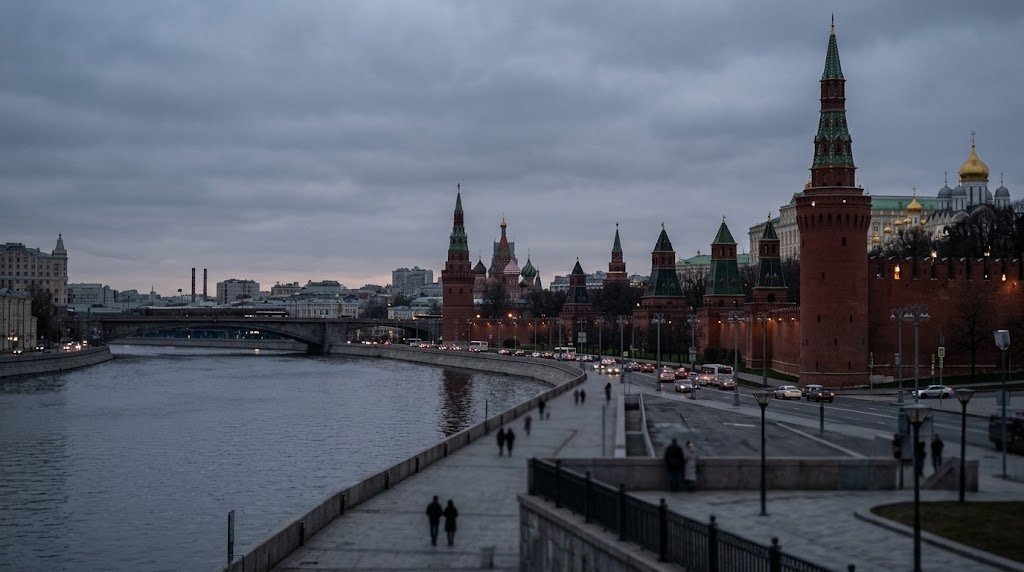
Russian President Vladimir Putin said Friday that Russia has no aggressive intentions toward Europe and is ready to restore relations with its European neighbors, even as his deputy on the Security Council, Dmitry Medvedev, said Moscow should answer new U.S. sanctions with "the language of direct military deterrence" and the outright seizure of Western assets. The two statements, delivered within hours of each other, came a day after U.S. President Donald Trump signed the Lindsey O. Graham Sanctioning Russia and Iran Act of 2026 into law.
Speaking at a meeting of Russia's Military-Industrial Commission, Putin accused some European leaders of preparing for war with Russia and of using the conflict in Ukraine and what he called the alleged Russian threat to justify their policies, TRT World reported. "I want to state once again: Russia has no aggressive intentions toward Europe or European countries," he said. "There are simply no grounds for this whatsoever. We are ready for cooperation and for restoring relations with our European neighbours."
He paired the offer with a warning. Criticizing European military exercises in the Baltic Sea, which he said included preparations to seize civilian vessels, Putin said Moscow would respond if necessary. "Let us live in peace — otherwise, we, too, will be forced to respond," he said.
Attacks on Kyiv's legitimacy
Putin also questioned European portrayals of Ukraine as a defender of democracy, saying its government had "degenerated into a dictatorship," that elections were not being held and that the authorities were using martial law and the war to stay in power. He accused Ukraine of trying to interfere with elections in Russia, citing an attack on the home of a precinct election commission chairwoman in the village of Oktyabrskoye in the Zaporizhzhia region in which he said she was killed. That claim could not be independently verified. "Representatives of the Kiev regime — its leadership — speak of peace and propose resuming so-called negotiations. Yet, by committing crimes of this nature, they themselves do everything to ensure that there is no peace and no negotiations," he said.
Kyiv's position on the sanctions law was set out separately by Ukrainian President Volodymyr Zelenskyy, who thanked Trump for signing it, Radio Free Europe/Radio Liberty reported. "Peace comes through strength. Calm comes through security. And the best guarantee of security is resolve," Zelenskyy said. He recalled that Graham, the late South Carolina senator for whom the law is named, had argued during visits to Ukraine that pressure on Russia should not be eased.
Medvedev's answer to the Graham Act
Medvedev, writing on his Telegram channel, took a harder line than the president, according to TRT Russian. He said Washington understands only "the language of direct military deterrence" and that Russia should respond to the sanctions in those terms. He argued that European countries were already waging a direct war against Russia by supplying weapons, intelligence and financing to its adversary and by imposing sweeping restrictions on Russian business, citizens and cultural ties. Russia, he said, should move from placing Western companies' assets under temporary management to confiscating them outright for the state, in the manner of Soviet-era decrees, because the West "understands only brute force."
The law that prompted the remarks passed the Senate 86-11 in August and the House 262-159 on Sept. 16 and was signed Sept. 18, RFE/RL reported. It authorizes tariffs of up to 100% on countries that import Russian oil and gas or help Moscow evade sanctions, targets the tanker "shadow fleet" and the Yamal LNG and Arctic LNG 2 projects, gives the president waiver authority on national-interest grounds and extends the Iran Sanctions Act through 2031. Luke Coffey of the Hudson Institute told RFE/RL he would not expect major new sanctions or tariffs to be implemented overnight as a result of the legislation.
Rearmament priorities
At the same commission meeting, Putin set out priorities for a new State Armament Program, naming the strengthening of Russia's nuclear triad as its "absolute priority" and saying 92% of the Strategic Missile Forces are equipped with modern weapons. He also listed air defense, unmanned and robotic systems, precision-strike weapons and completion of Russia's orbital satellite constellation, which he said would improve reconnaissance, navigation, communications and real-time command and control of troops.
What it means
The Kremlin is speaking on two tracks at once. Putin's language toward Europe is conciliatory in form but conditional in substance: cooperation is offered alongside a pledge to respond to Baltic exercises, and the same speech ranks the nuclear triad first in a multiyear rearmament plan. Medvedev's call for military deterrence and confiscation gives the harder edge that Putin leaves implicit. For European governments and for the Asian buyers of Russian energy exposed to the law's 100% tariff authority, the practical question is not the rhetoric but the sequencing: whether Washington uses its new powers or, as Coffey suggests, lets them sit, and whether Moscow's response takes the form Medvedev describes or stays at the level of the presidential offer to talk.
What's Your Reaction?
 Like
0
Like
0
 Dislike
0
Dislike
0
 Love
0
Love
0
 Funny
0
Funny
0
 Wow
0
Wow
0
 Sad
0
Sad
0
 Angry
0
Angry
0












Comments (0)