

Record heat stress gripped half of Europe this summer, EU climate monitor finds
Copernicus says 52% of Europe faced 'very strong' heat stress in summer 2026, while western Europe logged its hottest summer and rivers ran at record lows.

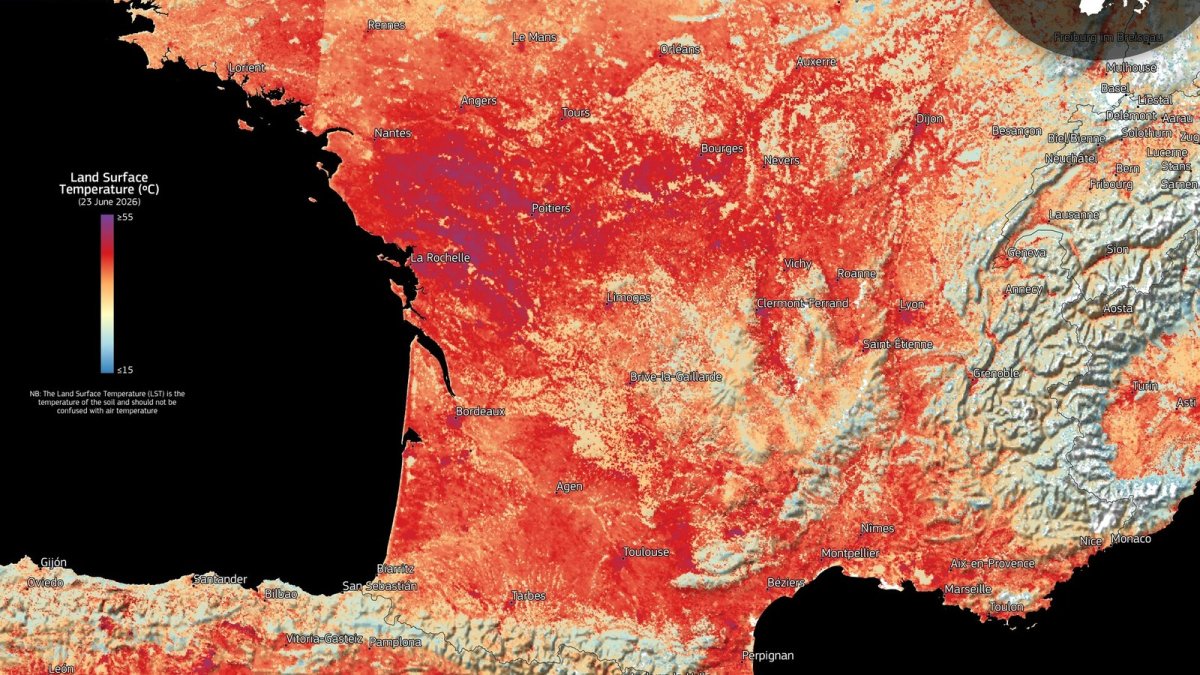
More than half of Europe endured "very strong" heat stress during the summer of 2026, the largest share on record, the European Union's Copernicus Climate Change Service (C3S) said on Oct. 2. By the end of the season, 52% of the continent had been exposed to conditions in which the temperature felt like 38 degrees Celsius (100 degrees Fahrenheit) or higher.
The seasonal assessment describes a summer in which several extremes struck at once. Europe as a whole recorded its third-warmest summer, while western Europe had its warmest since records began, with an average temperature of 21.7 C, or 2.5 C above the 1991-2020 norm. That beat the previous benchmark set in 2003.
Heat that lasted, not just peaked
The Copernicus data point to how persistent the heat was in western Europe. On 17 days, at least 60% of the region saw temperatures above 30 C, compared with 11 such days in 2003 and seven in 2025. The region logged 41 days of "strong" heat stress, five more than in 2003, and a record 13 days of "very strong" heat stress.
Heat stress occurs when heat and humidity prevent the body from cooling itself through sweat. It can raise the heart rate and cause nausea and dizziness, and in severe cases it can lead to life-threatening heat stroke, Reuters reported in its coverage of the findings.
"Europe experienced a summer of compounded climate extremes in 2026," said Samantha Burgess, strategic lead for climate at the European Centre for Medium-Range Weather Forecasts, which runs C3S. "Record heat stress, widespread dry conditions, exceptionally low river flows, and unusually warm seas occurred together across large parts of the continent."
Rivers, fires and coasts
The dry heat left a visible mark on Europe's waterways. River flows fell to their lowest summer levels since 1992, when the records of the European Flood Awareness System begin, with record or near-record low flows reported on major rivers including the Rhine, Danube, Po, Loire, Rhone and Seine in July and August. By Sept. 2, the area burned by wildfires across the EU had reached nearly double the 2006-2025 average for the date, with Spain and France particularly affected, and wildfire emissions ranked among the 10 highest since 2003. Marine heat waves along the Atlantic and Mediterranean coasts added to the heat felt by coastal populations.
The World Meteorological Organization has identified Europe as the fastest-warming continent, a trend it attributes to human-caused climate change. The findings add weight to an increasingly contentious global debate over who should carry the burden of cutting emissions, a theme India's prime minister raised recently when he argued that rich countries emit six times more per head than India.
What it means: The Copernicus figures move summer heat from a weather story to a question of public health, infrastructure and economic planning. When more than half of a continent faces feels-like temperatures of 38 C or more, cooling for hospitals, care homes and workplaces becomes a policy priority, not a seasonal inconvenience. The record-low river flows matter just as much: the Rhine and Danube are freight arteries, and low water raises costs for barge transport and strains hydropower and the cooling of power plants. For European governments already managing high energy prices, a summer in which heat, drought, fire and warm seas arrived together is a preview of the pressures that adaptation budgets will have to absorb in coming years.
What's Your Reaction?
 Like
0
Like
0
 Dislike
0
Dislike
0
 Love
0
Love
0
 Funny
0
Funny
0
 Wow
0
Wow
0
 Sad
0
Sad
0
 Angry
0
Angry
0















Comments (0)