

Munich leans on crowd-tracking software as Oktoberfest hits its peak weekend
Oktoberfest reaches its midpoint on the 'Italian weekend,' the stretch that forced Munich to close the festival grounds on overcrowding in 2025.

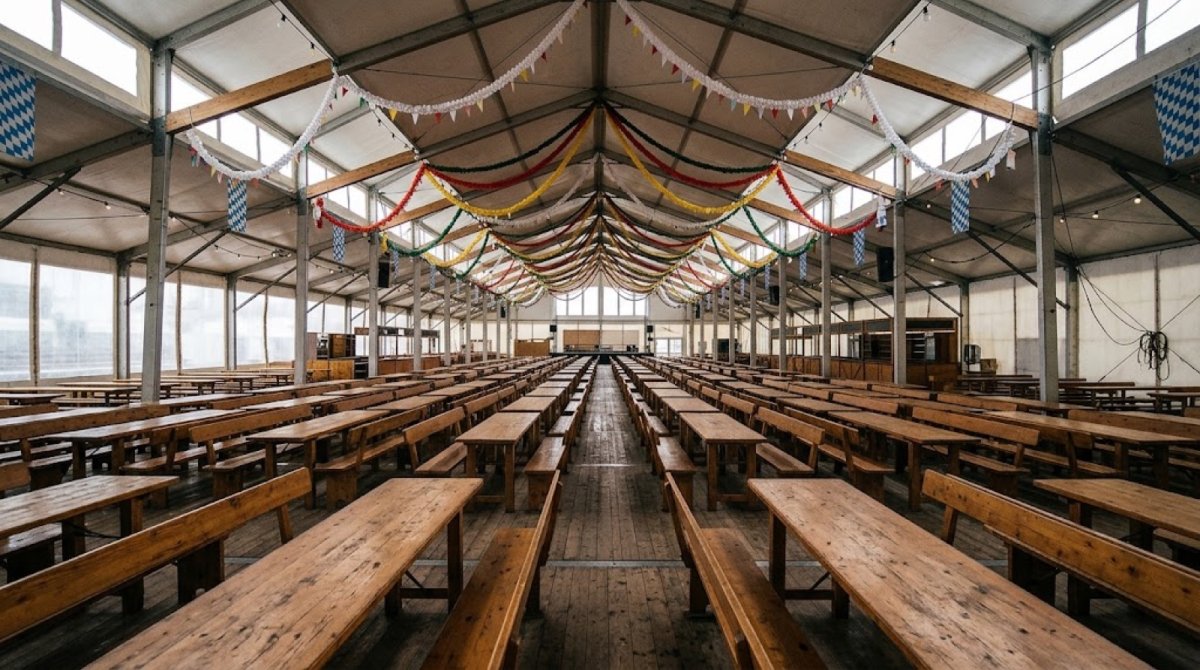
Oktoberfest passes its halfway mark on Sept. 26 and 27, and the timing puts Munich's crowd management under its hardest test of the year. The midpoint coincides with what the festival's press office calls the "Italian weekend," the busiest stretch of the festival.
The label is a matter of geography rather than folklore. Northern Italy sits a short drive from Bavaria over the Brenner Pass, and Italian public holidays fall in the same window, so the Theresienwiese grounds absorb a surge of weekend visitors from across the Alps.
Last year that surge overwhelmed the site. The grounds reached full capacity on the middle Saturday and access was temporarily closed. Congestion on Wirtsbudenstrasse, one of the main lanes between the beer tents, grew severe enough that movement became impossible. Visitors afterward described the scenes as nightmarish and said the crush felt close to mass panic.
Cameras, software and cross-border crews
Munich's answer this year is measurement. The city is running AI-based crowd-tracking software alongside surveillance cameras on the grounds, with the aim of identifying pressure points before they harden into a crush rather than closing the gates after one forms.
Munich police are also working alongside Italian Carabinieri and fire crews from Bolzano, an arrangement that reflects how much of the weekend's traffic originates on the Italian side of the pass. Officers from the visitors' own jurisdiction can handle language and identification problems that would otherwise consume German police time.
The data collected so far suggests the pressure is building in a different way than a simple head count would show. Analysis of mobile phone data indicates that visitors this year have stayed on the grounds about 15 minutes longer on average than in 2025. During the first week, the busiest period fell between 5 p.m. and 6 p.m. each day.
Fifteen minutes sounds trivial, but in a fixed-capacity site it is not. Dwell time, not arrivals, determines how many people occupy the grounds at any given moment, and a longer average stay raises the peak density even if the same number of people pass through the gates.
What it means: Oktoberfest has become a case study in a problem facing every European city that hosts a mass event on a site it cannot enlarge. Demand is international and growing, the footprint is fixed, and the only remaining levers are surveillance, flow control and, as a last resort, shutting the entrance. Munich's shift from reacting to a closure toward predicting one is the direction most large public events are moving. It also comes with a trade-off the city has not been asked to justify in detail: continuous monitoring of hundreds of thousands of visitors, including phone-based movement data, as the price of keeping the grounds open. How well the software performs this weekend will shape how quickly other festival cities adopt the same tools.
What's Your Reaction?
 Like
0
Like
0
 Dislike
0
Dislike
0
 Love
0
Love
0
 Funny
0
Funny
0
 Wow
0
Wow
0
 Sad
0
Sad
0
 Angry
0
Angry
0














Comments (0)