

Moscow offers to broker Hormuz calm as Trump rejects Iran's seven-day plan
Lavrov told the UN that Russia is ready to help stabilize the Strait of Hormuz, hours after Trump turned down an Iranian offer relayed via Qatar.

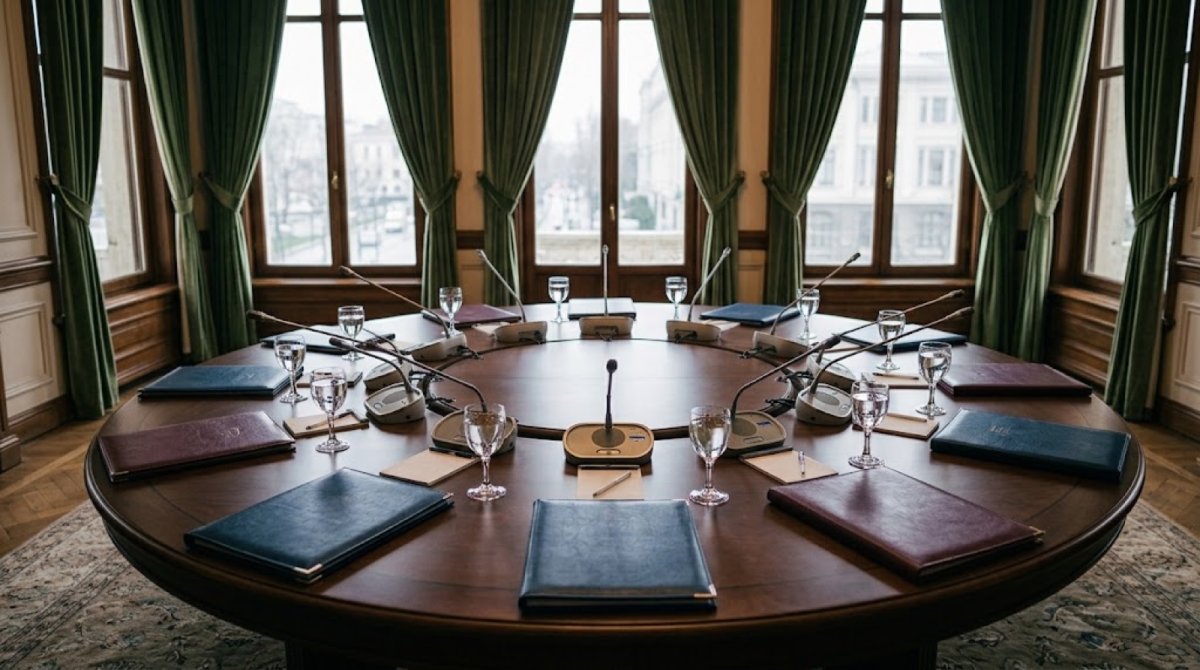
Russia offered itself on Saturday as a stabilizing hand in the Strait of Hormuz, hours after President Donald Trump publicly turned down an Iranian proposal to reopen the waterway. Foreign Minister Sergei Lavrov made the offer at the UN General Assembly, Middle East Eye reported.
"Russia, together with other responsible states, stands ready to constructively contribute to stabilizing this strategically important region," Lavrov said. He put the diagnosis before the remedy: "We need trust in the relationships between the Gulf states, the Arab states, and Iran." In its account of the speech, TASS reported him going further and calling that trust a precondition, saying Moscow views "establishing trust in relations between the coastal [Persian] Gulf states — Arab nations and Iran — as a precondition for resolving the [Hormuz] crisis."
Washington shuts a door the same afternoon
Trump had already given his answer to the diplomatic track. Speaking to reporters at the White House, he rejected an Iranian initiative, floated at the General Assembly and passed to Washington through Qatari mediators, that proposed reopening the strait and ending the fighting within seven days. "I reject their proposal," Trump said, adding: "I rejected their deal."
His reasoning was economic rather than diplomatic. "They want to make a deal to open the Hormuz Strait immediately because they're losing so badly. We're winning tremendously," he said, according to Middle East Eye. "They have no money coming in, because they get their money from the Hormuz Strait." Tehran's own framing of the same week has been that pressure, not obstinacy, is what keeps the strait shut; Iranian officials have paired talk of negotiations with demands about sanctions and inspections, a posture visible in President Masoud Pezeshkian's mix of distrust and an opening on inspectors.
Why Moscow wants the file
Russia is not a Gulf littoral state and has no navy patrolling the strait, so what it is offering is convening power rather than enforcement. That has value precisely because Washington has closed the Qatari channel for now. Moscow keeps open channels with Tehran and with the Arab producers on the other shore. A mediation role would also let Russia present itself in New York as a problem-solver at a moment when its own war in Ukraine dominates Western agendas. It would give Gulf governments a second address to call if the US-led effort keeps failing to restore normal traffic.
The Qatari channel itself is not new. Earlier this year Tehran set out conditions for renewed talks with Washington and used Doha as the go-between, a sequence Eurasian Post reported when Iran laid out three conditions through Qatari mediators. What changed on Saturday is that the intermediary produced an offer specific enough to be refused in public.
What it means: Two competing theories of the crisis were on display in the same hall. Trump's is that Iran is running out of money and will accept worse terms later, which makes waiting the cheapest option for Washington. Lavrov's is that the blockage is political and will not clear until Gulf states and Iran can hold a conversation, which makes a convener valuable now. Whoever is right, the practical effect of a rejected seven-day plan is more weeks of unreliable traffic through the world's most concentrated oil chokepoint, and every additional week widens the opening for outside powers to convert the crisis into standing influence over how the Gulf is policed.
What's Your Reaction?
 Like
0
Like
0
 Dislike
0
Dislike
0
 Love
0
Love
0
 Funny
0
Funny
0
 Wow
0
Wow
0
 Sad
0
Sad
0
 Angry
0
Angry
0











Comments (0)