

Pezeshkian pairs distrust of Washington with an opening on inspectors
Iran's president says he has no trust in Washington, yet signals UN nuclear inspectors could return as part of a seven-day sequence Trump has rejected.

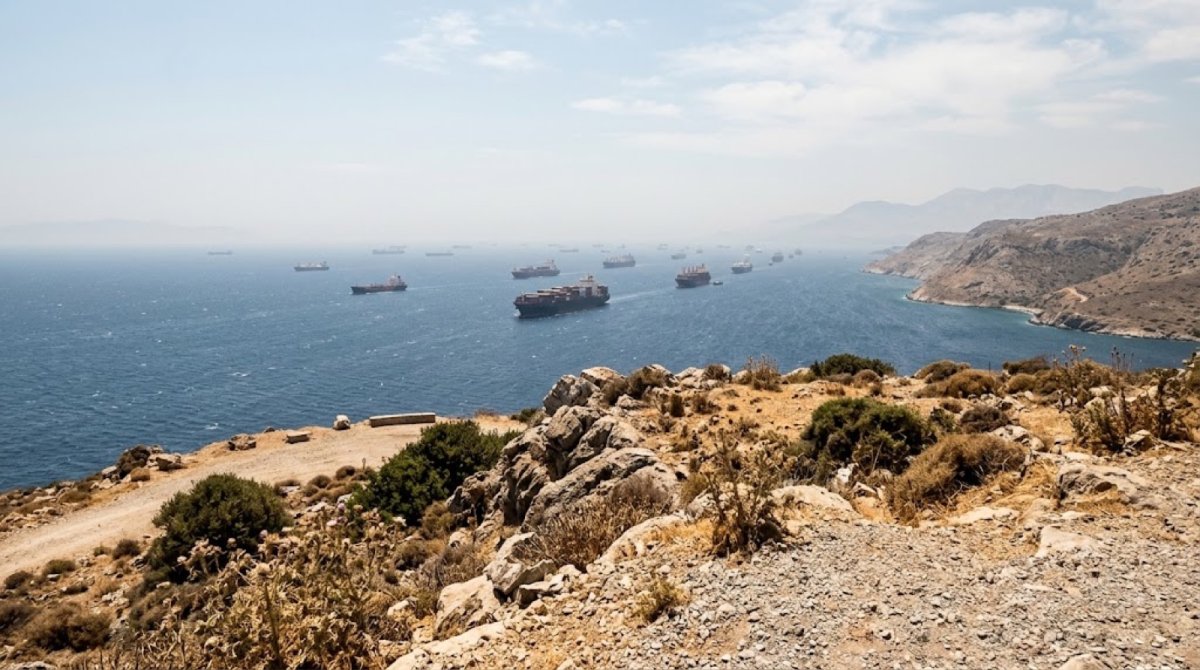
Iranian President Masoud Pezeshkian said his government has no confidence in negotiations with Washington, then indicated that UN nuclear inspectors could be allowed back into the country as part of a negotiated package.
"We have no trust in the American side and do not know on what basis an understanding can be reached with it," Pezeshkian said, in remarks reported by Al Jazeera. He said the United States had "closed the routes before us" and described Iran's conduct as "a natural response when routes are cut off to Iran."
Speaking to CBS News, he was more accommodating on inspections. "If they wish to come in and have inspections, we can reach accords and agreements vis-a-vis that specific topic within the negotiations," Pezeshkian said, according to Middle East Eye.
A seven-day sequence
The opening on inspectors follows a timetable set out by Foreign Minister Abbas Araghchi. Under it, initial steps would take four to five days and the Strait of Hormuz would reopen on day six. In Araghchi's words, "on day seven, the talks with the US will be started for the final deal on mutually agreed subjects." The proposal also envisages the release of $12 billion in frozen Iranian assets, Al Jazeera reported.
Al Jazeera, citing US media accounts, reported that President Donald Trump has rejected the seven-day ceasefire proposal. Araghchi's reply was that "the choice now rests with the United States," adding that "Iran does not accept coercion, threats or intimidation." Qatar and Pakistan have acted as mediators, and a memorandum of understanding reached in June lapsed last month, according to Al Jazeera. Tehran's terms for renewed contact have been laid out before, including three conditions relayed through Qatari mediators.
Roughly one-fifth of the world's traded oil and natural gas passes through the Strait of Hormuz in peacetime, Al Jazeera reported, which is why the waterway anchors the sequencing dispute. Eurasian Post has reported US Central Command figures putting traffic through the strait at a six-month high.
Divided reading in Washington
Analysts cited by Al Jazeera disagreed on what the United States does next. Thomas Warrick of the Atlantic Council said "the best we can hope for is that this offer from the Iranian foreign minister does lead to further discussions to try to clarify what preconditions Washington is willing to work with." Paul Musgrave of Georgetown University in Qatar said Trump "doesn't want to end the war on unfavourable terms" and could opt for "unilateral actions, including perhaps a resumption of warfare," because accepting the Iranian sequence would mean Tehran "would have delivered a really stinging political blow to President Trump."
Pezeshkian struck a harder register elsewhere in his remarks. He said Iran "withstood the American and Israeli attacks, and we will continue to stand firm," that "we do not need a regional policeman," and that Iranians would "not be warmongers." He described what he called unprecedented unity and cohesion at home, and said that "a brother should not fight his brother."
What it means: Tehran is bidding with the two assets it still controls: the waterway and the inspectors. Offering to reopen the strait on day six and to discuss IAEA access inside the negotiation, while publicly disowning trust in the counterparty, is a way of setting the order of concessions rather than their content. That order is the real dispute. Washington is being asked to accept sanctions relief and a ceasefire before verification, and to do so on a clock Tehran wrote. For the Gulf states whose export revenue and shipping insurance track the strait, and for the Asian refiners buying through it, the practical signal is that the corridor's status is now an explicit bargaining chip rather than a background risk, and that every published timetable should be read as a negotiating position, not a schedule.
What's Your Reaction?
 Like
0
Like
0
 Dislike
0
Dislike
0
 Love
0
Love
0
 Funny
0
Funny
0
 Wow
0
Wow
0
 Sad
0
Sad
0
 Angry
0
Angry
0











Comments (0)