

Baghdad asks Washington to spare Iranian flights for pilgrims and students
Iraq wants the United States to exempt humanitarian travel from aviation sanctions that grounded Iranian flights at four of its airports.

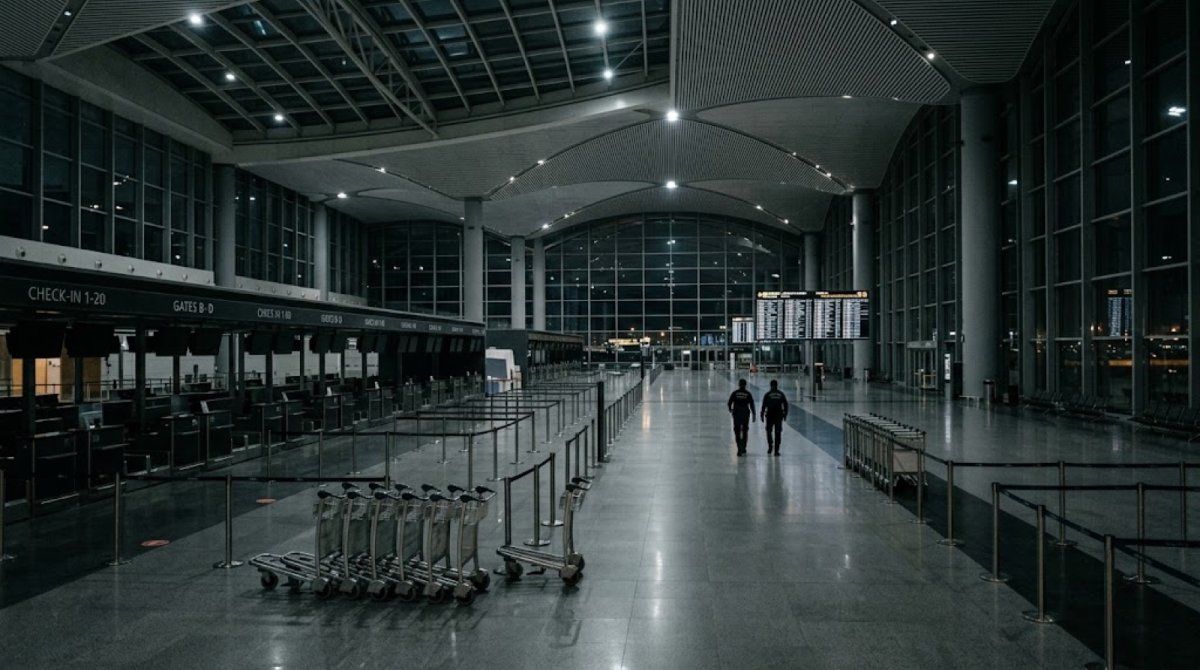
Iraq has asked the United States to carve out exemptions from aviation sanctions that have halted Iranian flights into the country, arguing that the measure falls hardest on travelers with no role in the dispute between Washington and Tehran.
Four Iraqi airports have suspended flights to and from Iran since the new US aviation sanctions took effect: Baghdad, Najaf, Erbil and Sulaimaniyah. The suspension covers the two routes that carry the heaviest traffic, the corridor into the capital and the pilgrimage route into Najaf.
Prime Minister Ali al-Zaidi's office said Baghdad is seeking relief "on humanitarian grounds related to medical treatment, education, religious visits, and the interests of civilians." A government statement warned that "the continuation of crises further complicates the situation."
A border that runs on daily traffic
The numbers behind the request are unusually large for a bilateral air link. About 100,000 Iraqi students attend Iranian institutions, and hundreds of thousands of Iraqis live in Iran. Thousands of people cross the land border between the two countries every day. With flights grounded, passengers who once flew are now facing land journeys of more than 12 hours.
The Hawza of Najaf, the Shia seminary that carries wide authority among Iraqi Shia, weighed in on the disruption, saying "the peoples of the region are most in need of strengthening the bonds of brotherhood." Demonstrators in Baghdad also protested the flight suspensions.
Both governments have signaled that they expect the link to be restored. Iraq's ambassador to Tehran, Yasser al-Hajjaj, said Iraqi-Iranian ties are "too deep to be affected by a temporary crisis." Iran's ambassador to Iraq, Mohammad Kazem al-Sadegh, indicated that contacts on resuming air traffic are continuing.
The episode illustrates the narrow ground Baghdad occupies. Al Jazeera correspondent Jack Hewson said Iraq "is in a difficult situation, allied both to America and to Iran." That squeeze has surfaced repeatedly this year as Tehran has set out its own terms for dealing with Washington, from the three conditions it placed on renewed talks to President Masoud Pezeshkian's more recent pairing of public distrust with an opening on inspections. Each round leaves Iraq absorbing the practical cost of decisions taken in other capitals.
An exemption request is also a test of how finely US sanctions can be tuned. Aviation designations are designed to be blunt, targeting carriers and aircraft rather than passenger categories, and separating a pilgrim from a paying customer on the same aircraft is an administrative problem as much as a political one.
What it means: Baghdad is not contesting the sanctions; it is asking to be treated as a special case, which is the most it can do without picking a side. That framing is deliberate. By building its case on students, patients and pilgrims rather than on sovereignty, Iraq gives Washington a way to grant relief without appearing to soften on Tehran. The risk is that the request goes unanswered and the land border absorbs the traffic instead, turning a diplomatic irritant into a durable daily cost for ordinary Iraqis. How Washington replies will say more about the limits of its Iraq policy than about its Iran policy.
What's Your Reaction?
 Like
0
Like
0
 Dislike
0
Dislike
0
 Love
0
Love
0
 Funny
0
Funny
0
 Wow
0
Wow
0
 Sad
0
Sad
0
 Angry
0
Angry
0










Comments (0)