

Washington drops Eritrea sanctions as Red Sea shipping strain deepens
Trump declines to renew 2021 Tigray-era measures against Asmara, citing US regional interests as Hormuz closure pushes oil traffic through the Red Sea.

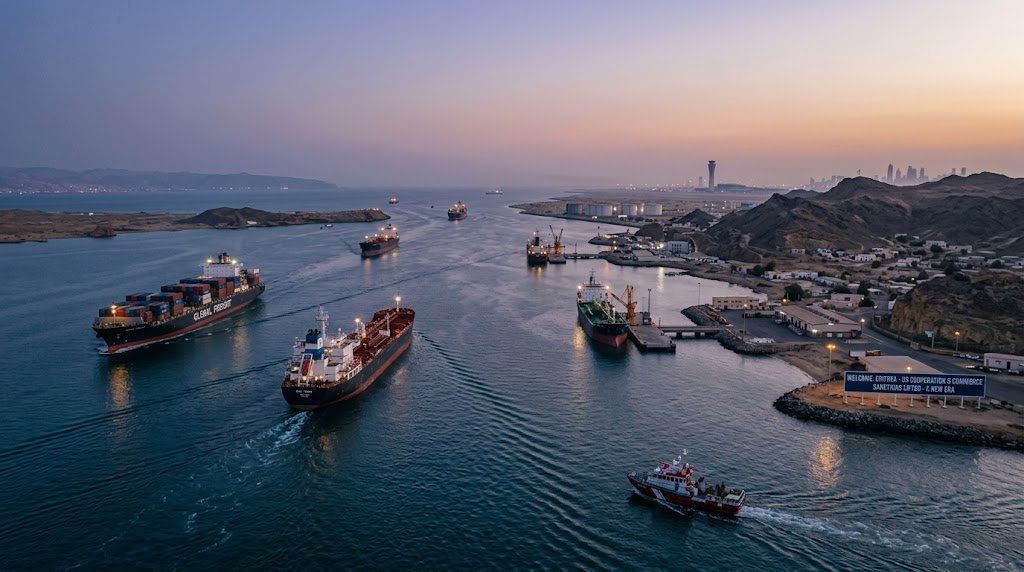
The United States has ended its sanctions regime on Eritrea after President Donald Trump chose not to renew a 2021 measure targeting the Red Sea state, the State Department said, framing the decision as a step "to advance US regional interests," Al Jazeera reported on Sept. 19.
The move came on Friday, when the U.S. Treasury published a notice stating that the presidential "national emergency" underpinning the sanctions had "expired." That declaration had been renewed every year since it was first issued, including in 2025 by the Trump administration itself.
Sanctions Born of the Tigray War
The administration of former President Joe Biden imposed the measures in November 2021, during the conflict in Ethiopia's Tigray region. They targeted Eritrean forces, the People's Front for Democracy and Justice, the party of President Isaias Afwerki, and other actors in the state. Eritrean troops, which fought alongside the Ethiopian federal army, were accused of atrocities during the war.
The conflict ended in late 2022 with a peace agreement between Addis Ababa and Tigray rebels. It killed at least 600,000 people, produced a major humanitarian crisis and left several hundred thousand people still displaced, according to the report.
A State Department spokesperson told AFP that implementation of the peace deal had been "uneven," but that Washington believed it was "time to adapt our foreign policy to current realities and collaboratively engage with both countries to advance US interests."
Asmara Welcomes the Reversal
Eritrea greeted the decision, saying the sanctions had inflicted incalculable damage on the country. "The unilateral sanctions imposed by the Biden administration five years ago were not warranted by any metrics … In this respect, we welcome the gesture and remedial measures by the Trump administration," Information Minister Yemane Gebremeskel told Reuters.
The timing is tied to the wider security picture in the region. With the Strait of Hormuz blocked during the ongoing U.S.-Israel war on Iran, the Red Sea has become a key route for oil shipments. Traffic through the Bab al-Mandeb strait, however, is under mounting pressure following recent Houthi advances in Yemen against forces of the country's internationally recognized government.
What It Means: The decision signals that Washington now weighs Eritrea's coastline more heavily than the accountability agenda that produced the 2021 sanctions. Eritrea sits on the western shore of the southern Red Sea, opposite Yemen, at the approach to Bab al-Mandeb. As Hormuz remains shut and the Houthis gain ground, the United States appears to be recruiting Horn of Africa partners to shore up the Suez-Bab al-Mandeb corridor, the main alternative artery for Gulf energy exports. The State Department's own admission that the peace deal's implementation has been "uneven" indicates the reversal rests on strategic need rather than a changed assessment of Asmara's record, a trade-off other governments along the corridor will note.
What's Your Reaction?
 Like
0
Like
0
 Dislike
0
Dislike
0
 Love
0
Love
0
 Funny
0
Funny
0
 Wow
0
Wow
0
 Sad
0
Sad
0
 Angry
0
Angry
0













Comments (0)