

EU Council working party tours Aghdam as Baku showcases demining and rebuilding
A delegation from the EU Council's Eastern Europe and Central Asia working party visited Aghdam, where Azerbaijani officials briefed it on mines and rebuilding.

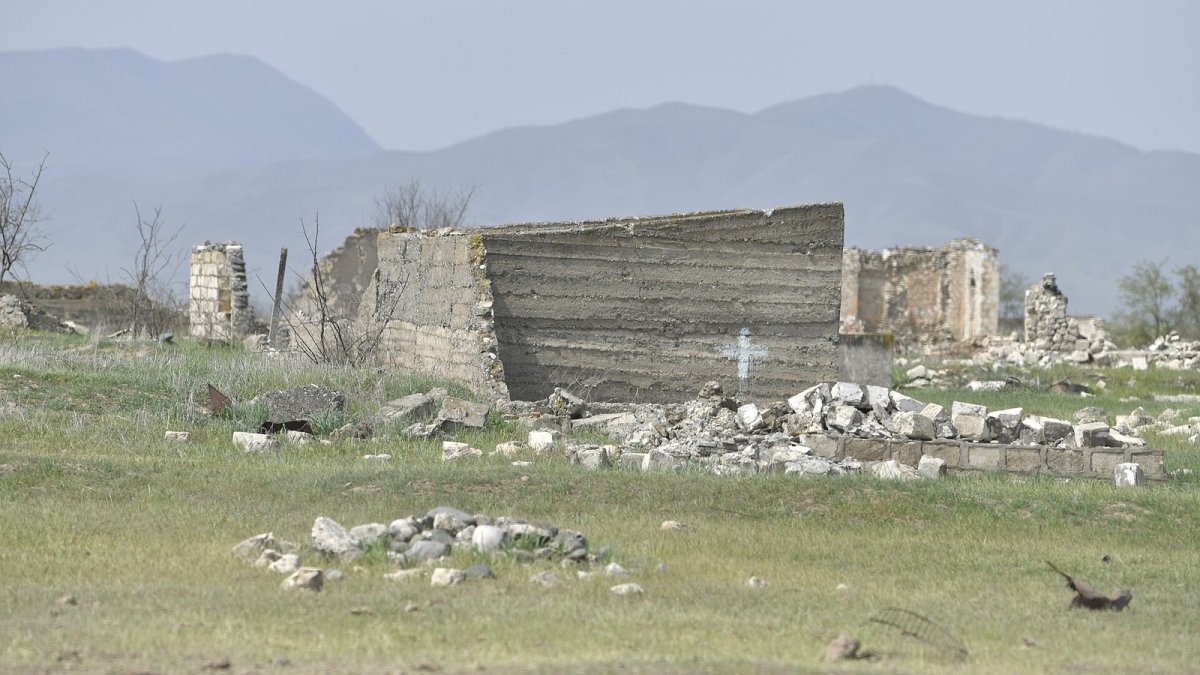
A delegation from the Council of the European Union's working party on Eastern Europe and Central Asia, known as COEST, visited Azerbaijan's Aghdam district on Oct. 2, where officials in Baku briefed the diplomats on landmine clearance, reconstruction and the search for missing persons.
The visit, reported by the Azerbaijani outlets Report.az and Trend, was part of a wider trip to the territories Baku regained from Armenian forces. Before reaching Aghdam, the delegation had stopped in the cities of Shusha and Khankendi.
Mines at the center of the briefing
Representatives of the Azerbaijan National Agency for Mine Action, or ANAMA, told the visitors that Aghdam ranks among the districts worst affected by landmines and unexploded ordnance, and blamed Armenian forces for the contamination, Trend reported. The delegation then watched clearance teams at work near the village of Saricali.
The group also met Emin Huseynov, the Azerbaijani president's special representative for the Aghdam, Fuzuli and Khojavend districts. He outlined the reconstruction and development projects under way across the area, according to Report.az, which cited a social media post by his office.
A representative of Azerbaijan's State Commission on Prisoners of War, Hostages and Missing Persons briefed the delegation on efforts to locate mass graves in the regained territories and to trace Azerbaijani citizens who remain missing.
Why Aghdam matters
Aghdam was held by Armenian forces from 1993 until it was returned to Azerbaijani control in November 2020 under the ceasefire that ended that year's war, and the town was left largely in ruins. Baku has since made the district a flagship of its rebuilding program, and it regularly brings foreign officials there to see clearance work and new construction. Recent cultural events have carried the same message, with a documentary and a Turkic art symposium in Khankendi also framing the region's reconstruction.
COEST is the Council body where EU member states' diplomats prepare the bloc's policy toward Eastern Europe and Central Asia, including the South Caucasus. A field trip by the working party gives national capitals a direct view of conditions on the ground as the EU weighs its role in the region after Armenia and Azerbaijan moved toward a peace settlement, a process Baku has described as producing a peace dividend. The reports on the visit did not include comment from the delegation itself or from Yerevan.
What it means: For Baku, hosting EU Council diplomats in Aghdam serves two goals: it puts mine contamination, one of the largest obstacles to resettlement, in front of potential funders, and it signals that Brussels is engaging with Azerbaijan's postwar agenda on Baku's own ground. For the EU, which has spent years balancing ties with both Yerevan and Baku, the trip is a low-cost way to build relationships with Azerbaijani institutions as the peace track matures. Whether it translates into EU money for demining or reconstruction will depend on decisions in Brussels that the visit itself did not address.
What's Your Reaction?
 Like
0
Like
0
 Dislike
0
Dislike
0
 Love
0
Love
0
 Funny
0
Funny
0
 Wow
0
Wow
0
 Sad
0
Sad
0
 Angry
0
Angry
0












Comments (0)