

Suicide bombing at a Pakistani police checkpoint kills at least 11
A bombing at a roadside checkpoint in Dera Ismail Khan killed at least 11 security personnel and wounded about 30. The Pakistan Taliban claimed it.

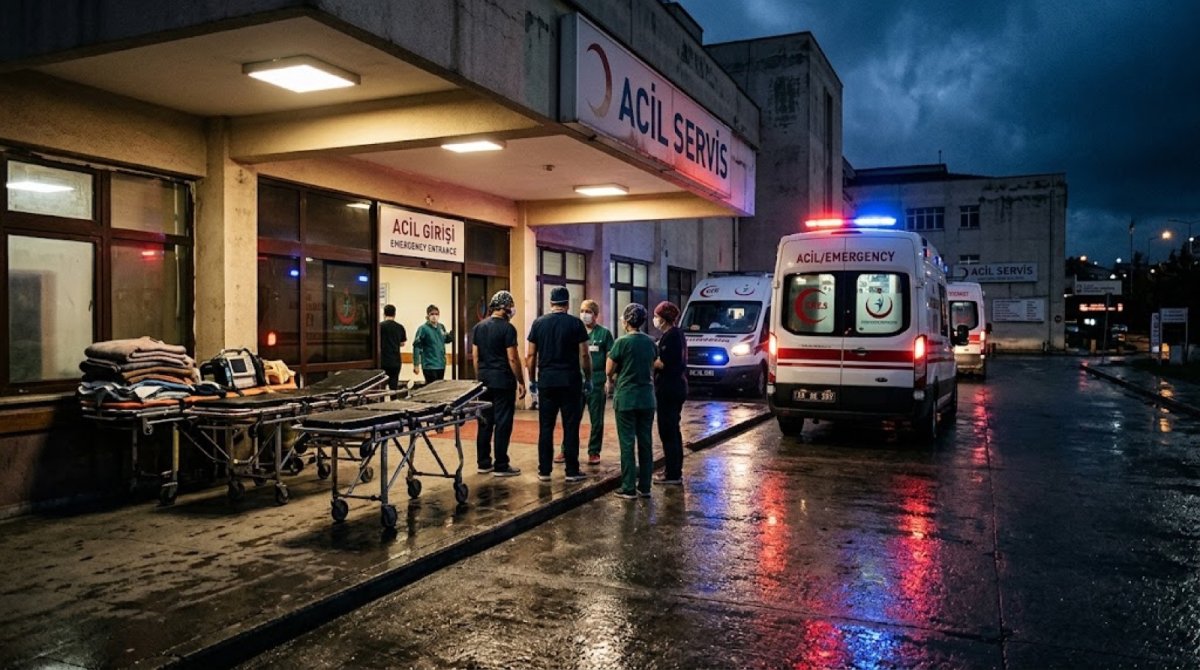
At least 11 members of Pakistan's security forces were killed and about 30 wounded when a bomb hit a police checkpoint beside a road in the country's northwest, the latest mass-casualty strike on the state's frontline police posts.
The bombing took place on Saturday in Dera Ismail Khan district in Khyber Pakhtunkhwa province, Al Jazeera reported. Euronews, citing provincial emergency service spokesperson Bilal Faizi, said a vehicle laden with explosives was detonated at the checkpoint. Al Jazeera described the attack as a suicide bombing. Both outlets put the toll at 11 dead and around 30 wounded.
The Pakistan Taliban, known by the acronym TTP, claimed responsibility in a statement, according to Al Jazeera, which labeled its account a developing story. Casualty figures in attacks of this kind have risen after first reports: Eurasian Post covered the assault on the Kohat police lines, also in Khyber Pakhtunkhwa, where the toll climbed to 23.
Who the TTP is
The TTP was founded in late 2007 and is described by the Counter Extremism Project as a "conglomerate" of roughly 40 tribal and non-tribal militant groups, Euronews reported. The group is allied with the Afghan Taliban, which returned to power in Kabul in 2021, and stages attacks on security forces, civilians and political figures in both Pakistan and Afghanistan.
Euronews reported that Pakistan has seen an increase in militant attacks in recent years. Khyber Pakhtunkhwa, which borders Afghanistan, has absorbed much of that violence, and roadside checkpoints of the type hit on Saturday are among the most exposed positions the provincial police and paramilitary forces hold.
A crowded domestic calendar
The bombing lands in a tense political week. Eurasian Post has reported on opposition marches converging on Islamabad over fuel levies and electricity tariffs, a mobilization that pulls police and paramilitary units toward the capital at the same time as the provinces demand reinforcement.
Neither Al Jazeera nor Euronews reported how the vehicle reached the checkpoint, whether the attacker was among the dead, or the units to which the casualties belonged. The claim rests on the group’s own statement, and neither outlet reported independent evidence tying the TTP to the bombing.
What it means: The significance of this attack is not its novelty but its arithmetic. Pakistan's security posture in Khyber Pakhtunkhwa rests on a dense grid of fixed checkpoints, which is precisely what makes it legible to an attacker with a vehicle and a target list; each successful strike on a static position argues for consolidating into fewer, harder posts, and every consolidation cedes ground and road access. That trade-off is sharpened when the same forces are being drawn toward Islamabad for crowd control. For Pakistan's partners in the Gulf and in Beijing, who have tied port, pipeline and corridor investment to the assumption that the state can hold its western roads, the relevant measure is not the death toll in any single bombing but how quickly the tempo of such attacks is rising.
What's Your Reaction?
 Like
0
Like
0
 Dislike
0
Dislike
0
 Love
0
Love
0
 Funny
0
Funny
0
 Wow
0
Wow
0
 Sad
0
Sad
0
 Angry
0
Angry
0












Comments (0)