

Oil storage plan and summit snub expose Hungary's cold peace with Kyiv
Budapest disowned its seat at the Carpathian Eight summit and ruled out storing Ukrainian crude, even as it expelled Russian diplomats.

A regional summit Hungary insists it never joined, and an oil-storage memorandum Budapest says it will never allow, have together shown how little Hungary's change of government has settled with Kyiv.
The Carpathian Eight — Ukraine, Romania, Serbia, Poland, Slovakia, the Czech Republic, Austria and Hungary — met last week in Bukovel, in western Ukraine, with President Volodymyr Zelenskyy as host. Six foreign leaders attended, among them Polish Prime Minister Donald Tusk and Serbian President Aleksandar Vucic. Hungarian Prime Minister Peter Magyar did not. Budapest sent its charge d'affaires, who declined to sign the closing statement.
Kyiv counted the envoy's presence as participation. Budapest rejected that reading. "To claim that a sovereign country is a member of an international cooperation without prior consultation or consent is completely unacceptable," Magyar said. Hungarian officials quoted by Euronews said the diplomat had been there only as an observer. Ukrainian Foreign Minister Andrii Sybiha said Kyiv was struggling to read the signals: "What we've been hearing from Budapest lately leaves us confused."
A storage plan that landed badly
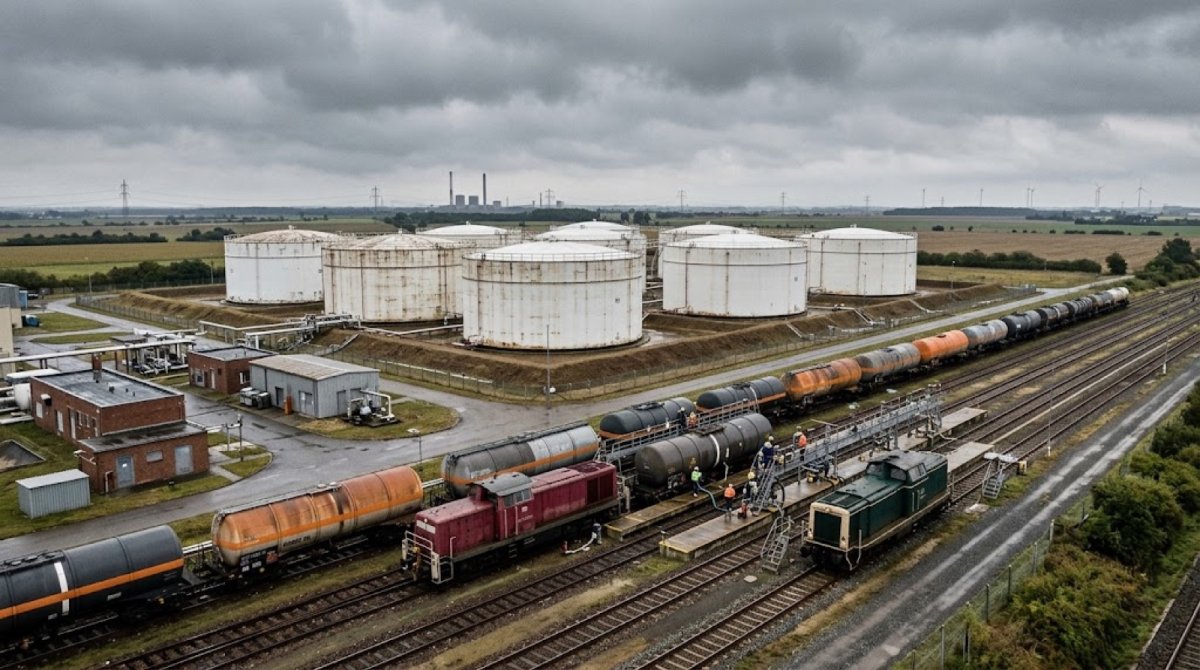
The second rupture was commercial. MOL, the Hungarian energy group in which the state holds a 25% stake, signed a memorandum with Ukraine's Naftogaz to examine storing Ukrainian crude oil at Hungarian facilities. The plan would use spare capacity on the Hungarian side and put the barrels beyond the reach of Russian strikes. MOL described the document in modest terms, saying such agreements "typically represent the first step in exploring potential areas of cooperation."
Magyar's answer, after Naftogaz disclosed the memorandum publicly, was flat: "Under my government, no such storage will be built at the Hungarian-Ukrainian border, or anywhere else." The argument sits inside a wider contest over where Central Europe keeps its fuel and how safely, a question sharpened by the record drone raid on Moscow's refinery belt.
Toward Russia itself, Magyar's government has moved further than its predecessor. Hungary expelled 10 Russian diplomats over activities it called unacceptable, and Economy Minister Istvan Kapitany said the country could decouple from Russian energy supplies within a year. In Moscow, Igor Yushkov of Russia's National Energy Security Fund presented that as a lever that cuts both ways: "Theoretically, we could halt supplies, especially now that Hungary has seen a significant leadership change." The shift also runs alongside Washington's new sanctions law aimed at Russia's oil buyers.
What has not moved is the minority file. About 100,000 ethnic Hungarians live in Ukraine's Transcarpathia region, and Magyar has made bilateral meetings conditional on Ukrainian legislation expanding their language and cultural rights. The two governments agreed an action plan in June, and Hungary has tied the opening of further EU accession chapters to Ukraine's parliament adopting the relevant laws by the end of the year, a deadline still outstanding. Magyar has called the relationship a "cold peace" rather than hostility.
What it means: The change of government in Budapest altered Hungary's tone toward Moscow without dissolving its leverage over Kyiv. A storage arrangement that would have quietly deepened energy ties became a sovereignty dispute instead, and a summit chair became a test of consent. For Ukraine, the fastest available way to shield its fuel stocks from bombardment runs through the one EU neighbor whose cooperation is conditional. For the European Union, it is a reminder that unity on sanctioning Russia and unity on admitting Ukraine are separate questions, and that Hungary remains the member state able to keep them apart.
What's Your Reaction?
 Like
0
Like
0
 Dislike
0
Dislike
0
 Love
0
Love
0
 Funny
0
Funny
0
 Wow
0
Wow
0
 Sad
0
Sad
0
 Angry
0
Angry
0










Comments (0)