

Azerbaijan's school headscarf rules draw Istanbul protest as Aliyev rejects interference
Azerbaijan's secularism-based school dress code has drawn a protest in Istanbul, while Aliyev says no one should interfere in his country's affairs.

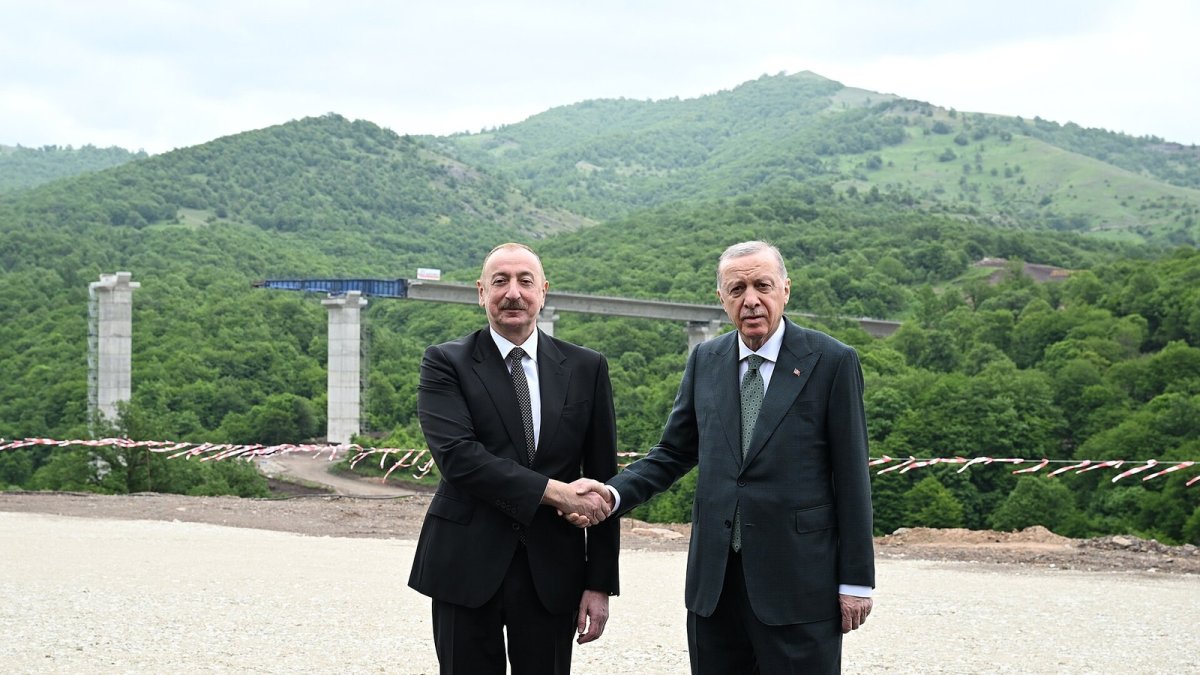
Restrictions on headscarves in Azerbaijan's schools have drawn a protest in Istanbul and criticism from a Turkish lawmaker, bringing public objections from within Türkiye, Azerbaijan's closest ally. President Ilham Aliyev, addressing his ruling party on Oct. 2, said Azerbaijan shapes its foreign policy to keep others out of its affairs, Turkish Minute reported.
The formal basis for the rules is Decision No. 309, which Prime Minister Ali Asadov signed on Sept. 21, Turkish Minute reported. The decision prohibits pupils from wearing items judged to conflict with "secularism" and does not name the hijab. The Turkish daily Karar reported that the restrictions rest on secularism provisions and uniform regulations adopted by Azerbaijan's National Assembly and Cabinet of Ministers, and that students who do not comply are referred to "pedagogical councils" for disciplinary review. Azerbaijan, a Muslim-majority country, defines itself as a secular state in its constitution.
The dispute predates the September decision. Citing the Azerbaijani daily Yeni Avaz, Turkish Minute reported that teachers and parents at School No. 269 in Baku described demands, after an inspection in February, for pupils and teachers to remove their headscarves. By March, it said, similar cases had followed in Sumgait, Mehdiabad and Imishli, and the head of School No. 3 in Mehdiabad reportedly excluded 23 pupils on March 10. The report did not specify the year. Karar said the affected students were 15 to 17 years old. The issue is not new: Turkish Minute recalled that police dispersed a protest by hundreds of people outside Azerbaijan's Education Ministry on Dec. 10, 2010.
Protest in Istanbul
Ozgur-Der, the Association for Freedom of Thought and Educational Rights, led the protest in Istanbul on Oct. 3, Karar reported. "Today we are witnessing the ordeal of our young sisters who are being turned out in Baku and Sumgait and forced to return home in tears," Ahmet Kerim Artuk said, according to the paper. Hulya Sekerci said seeing young girls leave school in tears had caused "a pain impossible to describe." She said the term "pedagogical council" called to mind the "persuasion rooms" once set up at university gates in Türkiye, where, after the military-led Feb. 28, 1997, intervention, headscarf-wearing students were pressed to uncover. Karar said protesters likened Baku's policy to that era, and speakers also criticized Azerbaijan's cooperation with Israel.
Aliyev stresses self-reliance
Aliyev's remarks came in a speech to the eighth congress of the New Azerbaijan Party in Baku. Cumhuriyet, a Turkish daily, reported that he warned against outsiders meddling in Azerbaijan's way of life and stressed that its foreign policy is independent. He also turned to arms purchases. "Whatever we acquired, we purchased with money," Aliyev said, according to Trend, a Baku-based news agency. "We need no one's help or patronage." He said Azerbaijan paid world market prices for its weapons, at times several times more, and added: "When we needed help, no one helped us," pointing to the 1 million refugees the country once sheltered.
Cumhuriyet reported that Turkish observers read the speech as a response to criticism from Türkiye over the headscarf rules and over Baku's ties with Israel. The paper set the weapons remarks against earlier statements by Turkish officials crediting Bayraktar drones with a significant role in Azerbaijan's victory in the 2020 Karabakh war. Trend framed the same passage as a rebuttal of a narrative in foreign media that linked the Karabakh victory to outside arms supplies and implied a political debt.
Ankara's silence
The Turkish government has not responded publicly to Azerbaijan's dress code, Turkish Minute, a Stockholm-based news site critical of the government, reported Oct. 3. It contrasted that silence with President Recep Tayyip Erdogan's recent condemnation at the United Nations of headscarf bans that some countries enforce in schools. Erdogan has used the U.N. platform to cast Türkiye as a voice for reform, including a push to abolish the Security Council veto. Mustafa Yeneroglu, an independent lawmaker and former member of Erdogan's Justice and Development Party (AKP), said practices that began as "individual and arbitrary" acts had become "systematic state policy," arguing that they breach Azerbaijan's constitutional guarantees and European human rights conventions.
The friction plays out inside one of the region's tightest partnerships. Türkiye backed Azerbaijan in the 2020 Karabakh war, and in June 2021 the two presidents signed the Shusha Declaration, which includes a pledge of mutual assistance if either faces a threat to its independence or territorial integrity. Officials in both capitals routinely describe the relationship as "one nation, two states."
What it means: For now, the dispute is being carried by Turkish civil society, an independent lawmaker and the press rather than through official channels, and Ankara's silence keeps it there. Aliyev's insistence that Azerbaijan paid for every weapon and needs no patron signals that Baku wants the alliance seen as a partnership of equals, not a debt owed to Ankara. For Erdogan, the episode sets his government's stated opposition to school headscarf bans against the value of an ally that sits on Türkiye's routes to the Caspian and Central Asia. The more girls are turned away from classrooms, the harder that balance becomes to hold, particularly with a domestic audience for whom the Feb. 28 era remains a live memory.
What's Your Reaction?
 Like
0
Like
0
 Dislike
0
Dislike
0
 Love
0
Love
0
 Funny
0
Funny
0
 Wow
0
Wow
0
 Sad
0
Sad
0
 Angry
0
Angry
0











Comments (0)