

Former Russian official Kambolov takes South Ossetia vote as Tbilisi and EU reject result
Marat Kambolov won 85% in the breakaway region's early presidential vote, which Georgia, the EU, Britain and Norway called illegal and Moscow praised.

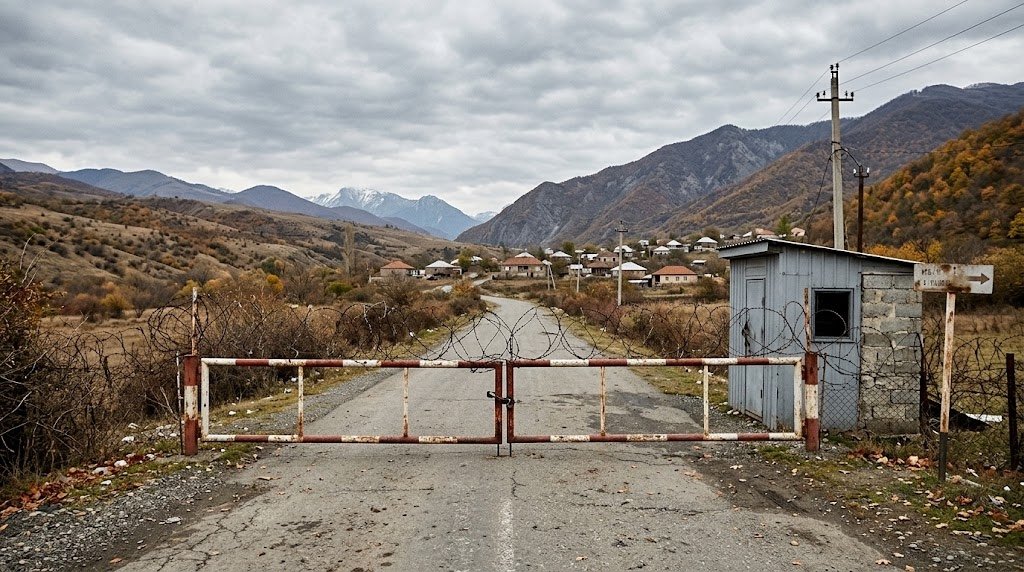
Marat Kambolov, a former Russian federal official with no prior ties to the territory, has won the early presidential vote in Georgia's breakaway South Ossetia region, according to preliminary results reported by Civil.ge on Saturday. Georgia, the European Union, Britain and Norway said the Sept. 18 vote had no legal force, while Russia's Foreign Ministry described the outcome as proof of the region's wish for closer ties with Moscow.
With more than 99% of ballots counted, the local election commission gave Kambolov 85.12% of the vote, Civil.ge reported. Murat Valiev, an employee of the region's State Guard Service, took 3.75%; Kazbeg Kodoev, an adviser to the rector of South Ossetian State University, 2.40%; and Zurab Kokoev, leader of the Unity party, 1.35%. The commission put preliminary turnout at 77.91%, with 32,083 of 44,182 registered voters casting ballots. Russian state media reported an 85% result for Kambolov and turnout of 73%, according to The Moscow Times.
South Ossetia broke away from Georgia during the collapse of the Soviet Union and secured de facto independence with Russian support; a brief war between Russia and Georgia in 2008 pushed Georgian forces out of areas they had held, The Moscow Times noted. Russia recognizes the region as independent, while Georgia and most of the international community regard it as occupied Georgian territory. The territory has a population of about 50,000, depends on Russia for food, equipment and energy, and Moscow funds public-sector wages, pensions and major infrastructure and maintains a military base there.
How the early vote came about
The ballot was called after Alan Gagloev resigned as de facto president in June and moved to Russia to serve as an adviser to President Vladimir Putin, Civil.ge reported. Kambolov, 61, who was born in North Ossetia and previously held senior posts in Russian federal offices including the Education Ministry, had been named the region's prime minister a week before Gagloev stepped down and became interim leader. He then ran with open endorsements from local political groups and from Putin.
The changes followed a treaty signed by Tskhinvali and Moscow on May 9 that, among other provisions, allows citizens of one side to hold state and municipal positions in the other, according to Civil.ge. The Moscow Times said the agreement deepened cooperation on defense, foreign and security policy and set out plans to integrate energy grids and transport networks.
Moscow and Tskhinvali
"The results demonstrate South Ossetian society's widespread desire for domestic political stability, progress and the comprehensive development of ties with the Russian Federation," Russia's Foreign Ministry said, according to The Moscow Times. Putin congratulated Kambolov on Saturday in a telegram published on the Kremlin website. In a victory speech in Tskhinvali, Kambolov said: "We have a great deal of work ahead of us. Only together can we change our republic, our Tskhinvali."
Tbilisi and Western capitals
Georgia's Foreign Ministry said in a Sept. 18 statement that holding the vote "is contrary to the fundamental norms and principles of international law" and "does not alter the international legal status of the Tskhinvali region as an integral part of Georgia." It said any vote conducted under Russian military control, while displaced persons and refugees cannot return, "is illegal and cannot produce any legal effect under international law." Tbilisi also condemned Moscow's decision to open polling stations in Abkhazia and the Tskhinvali region for Russia's State Duma elections on Sept. 18-20, calling it "a further clear manifestation of the Russian Federation's policy directed towards the de facto annexation of Georgian regions."
The EU said it does not recognize the legal framework of the vote and that "their outcome is null and void." The bloc "strongly condemns the actions undertaken by Moscow to have a Russian official appointed as de facto President" of the region and said the measures "represent steps towards future illegal annexation." Stewart Wood, the U.K. minister for Europe, said attempts to entrench Russian control over Georgia's occupied regions "will not go unanswered" and that "Russia must meet its 2008 ceasefire obligations." Norway's Foreign Ministry said it does not recognize the vote and that Russia's "incremental political integration and steps toward full annexation" undermine Georgian sovereignty, Civil.ge reported.
What it means: The sequence documented by both outlets, a May treaty permitting cross-appointments, a Russian official installed as prime minister, the incumbent's departure to the Kremlin and an early vote with Putin's endorsement, points to administrative integration rather than a change of local leadership alone. Moscow's own statement frames the result as a mandate for deeper ties, and the Duma polling stations in both regions extend that logic. For Tbilisi, which is balancing its EU aspirations against a working relationship with Russia, the episode narrows the room for maneuver: its Western partners have used unusually direct language about annexation, and the government cannot easily stay quiet while its declared territory is folded into Russia's political and military structures.
What's Your Reaction?
 Like
0
Like
0
 Dislike
0
Dislike
0
 Love
0
Love
0
 Funny
0
Funny
0
 Wow
0
Wow
0
 Sad
0
Sad
0
 Angry
0
Angry
0












Comments (0)