

Macron hosts Carney on France's last North American outpost as Canada leans toward Europe
On Saint-Pierre-et-Miquelon, the two leaders pledged space, defense and energy cooperation days after Brussels floated EU associate membership for Canada.

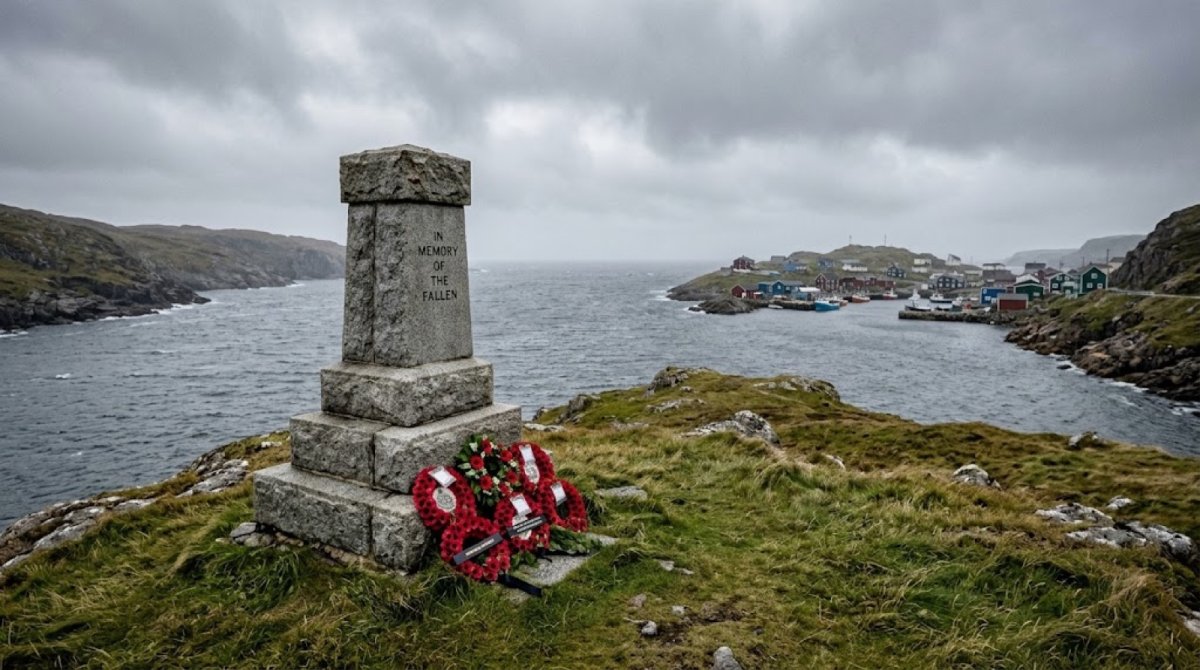
French President Emmanuel Macron received Canadian Prime Minister Mark Carney on Sunday on Saint-Pierre-et-Miquelon, the French archipelago 20 kilometers off Newfoundland, in a visit framed by both capitals as a response to a world of "power politics" and by Ottawa as part of a rapid turn toward Europe while its trade relationship with Washington deteriorates. It was the first trip by a French president to the territory since François Hollande in 2014 and the first time a Canadian prime minister had paid an official visit, according to TRT World and CP24.
The meeting came weeks after U.S. President Donald Trump posted an image showing the islands, along with French Caribbean territories, under an American flag labeled "United States of America." Paris did not respond publicly at the time, TRT World reported. A French presidency official said of the 5,800-inhabitant archipelago that it was rare to find "so many issues that are important for France as a whole concentrated in a place of this size," listing "France's geostrategic presence in the North Atlantic, at the doorstep of the United States and the Arctic, maritime sovereignty, adaptation to climate change; and cooperation with Canada."
Space, defense and chambers of commerce
After a working lunch, the two leaders announced closer bilateral cooperation. "Today sovereignty goes beyond being able to feed, fuel and defend ourselves," Carney said, according to CP24. "It requires secure access to AI, semiconductors, critical minerals, payment systems, clean energy technologies, vaccines and space-based communications." He said he and Macron would task their space agencies and defense ministries with developing and sharing common infrastructure, including launch systems and ground facilities. The two governments also agreed to expand the Regional Joint Cooperation Commission linking Atlantic Canada and Saint-Pierre-et-Miquelon, with a focus on growth, the energy transition and climate resilience, and announced a strategic partnership between Canadian and French chambers of commerce.
A spokesperson for Macron said that "in a world characterized by a return to power politics, geopolitical tensions and new dependencies, France and Canada share a common ambition: to work together — and with all countries that share these values — to strengthen their capacity to make decisions and act independently," CP24 reported. Macron, who arrived Saturday, called it "an important moment" and said Sunday the talks would help "strengthen our bilateral economic ties and defence relationship," France 24 reported. He also pointed to energy: "Canada is a country with significant resources of critical minerals and rare earths. It is also a major oil and natural gas producer. What we want to do is conclude agreements to secure more liquefied natural gas that can be shipped to Europe's Atlantic coast." The leaders later laid a wreath at a memorial to the 529 islanders who fought for Free France in World War II.
The associate membership question
The backdrop is an offer from Brussels. European Commission President Ursula von der Leyen proposed on Wednesday that Canada become the EU's first "associate member," and Carney addressed the European Parliament in Strasbourg on Thursday to welcome it, telling lawmakers that "Canada and Europe are each strong. Europe and Canada are stronger together," Al Jazeera reported. He listed critical minerals, defense, artificial intelligence, energy, digital trade, research and financial services as priorities and called for easier work, study and residency across the Atlantic. Trump dismissed the idea as "laughable" and warned: "If they do that, if I think it's at all a hostile act, I will put very serious tariffs or stop trading with Europe on many things."
The trade dispute is concrete. Al Jazeera reported that negotiations failed to head off Trump's threatened 50% tariffs on nearly $20 billion of Canadian goods, including machinery, textiles and hockey sticks, and that both sides have since imposed retaliatory duties. Canadian opinion has shifted accordingly: an Abacus Data survey conducted Sept. 4-9 found 81% of Canadians favored closer EU integration while staying outside the bloc, 71% held a positive view of the EU against 21% for the United States, and 49% backed full EU membership with 30% opposed. Conservative leader Pierre Poilievre set out the counterargument: "No EU taxes, no EU laws and no EU open-border immigration policies should be imposed on Canadians." TRT World noted that the EU-Canada trade agreement, CETA, has been provisionally applied for nine years but still awaits ratification by several member states, including France.
Carney spent less than four hours on the islands before returning to Ottawa to meet Norwegian Prime Minister Jonas Gahr Store, CP24 reported. It added that Ottawa has in recent months joined the EU's SAFE defense procurement program as its only non-European member and been chosen to host the Defense and Security Resilience Bank.
What it means
The islands were the stage, but the substance was a hedge. Both governments used the word sovereignty, and the joint commitments on launch systems, defense infrastructure and critical minerals are the areas where dependence on the United States is hardest to replace. Canada is moving faster than the institutions around it: CETA is still unratified in Paris even as Ottawa joins European defense procurement and entertains associate status. The polling shows the domestic space for that pivot has widened, while Poilievre's framing and Trump's tariff warning mark its limits. For other governments weighing a closer European tie without full membership, the Canadian case is now the working test of what "associate" can mean and how Washington will price it.
What's Your Reaction?
 Like
0
Like
0
 Dislike
0
Dislike
0
 Love
0
Love
0
 Funny
0
Funny
0
 Wow
0
Wow
0
 Sad
0
Sad
0
 Angry
0
Angry
0













Comments (0)