

Modi tells judges from 17 nations rich countries emit six times more per head than India
At an NGT climate conference in New Delhi, Modi said developing nations are wrongly blamed for emissions and India's per-capita output is half the global mean.

Prime Minister Narendra Modi used the opening of an international climate conference in New Delhi to restate India's core grievance in global climate politics: that developing countries carry blame for emissions their citizens do not produce. Modi inaugurated the two-day conference, titled "The Future of Environment and Climate Dynamics," at Vigyan Bhawan on Saturday, Sept. 19. It was organized by India's National Green Tribunal, the specialized environmental court, and gathered judges and environmental officials from 17 countries, DW reported on Sept. 20.
"We know that often the responsibility for carbon emissions is wrongly placed upon developing countries... the historical truth is that India's contribution per capita carbon emission is less than half of the global average," Modi said. "In developed countries, per capita carbon emissions are six times higher than in India." He said India had made the same argument at global forums, including the 2015 Paris climate summit, and described India as the only G20 member to have met its Paris commitments ahead of schedule.
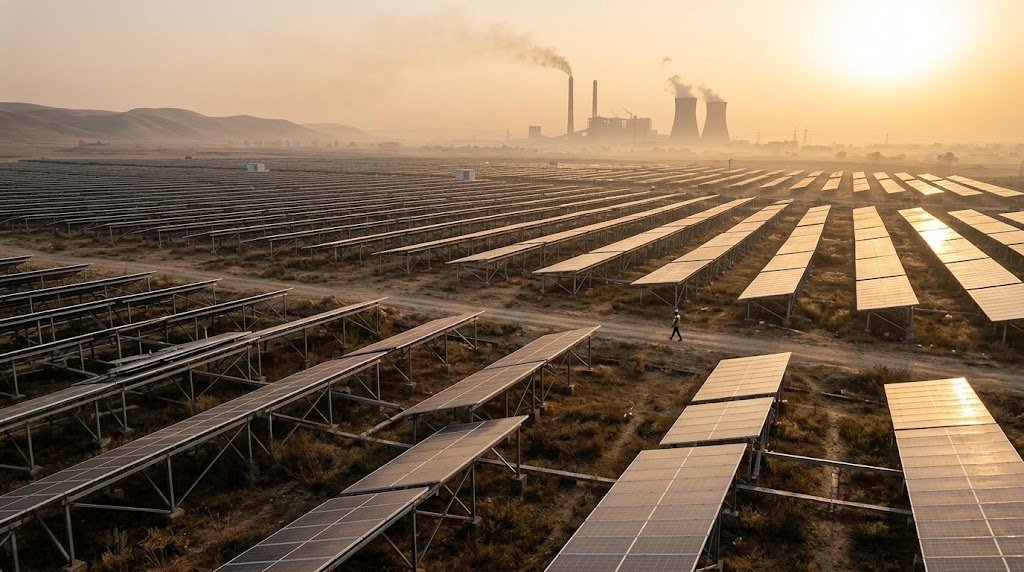
The grievance came packaged with a ledger of domestic delivery. According to a report by SCC Online on the speech, Modi said solar capacity had grown from 2 gigawatts to more than 160 gigawatts in 12 years, that more than 5 million homes had rooftop solar under the PM Surya Ghar scheme, and that 3 million farmers had received solar pumps under PM-KUSUM. He credited the One Nation-One Grid network with avoiding roughly 200 million metric tons of carbon emissions, cited electric vehicle sales rising from fewer than 3,000 a year before 2014 to about 2.5 million last year, and said the metro network had expanded from about 250 kilometers in five cities to more than 1,000 kilometers in over 20 cities. Very dense forest cover, he said, had risen by more than 22% over 12 years. "Our development is speedy as well as sustainable," he said.
Courtroom audience for a negotiating position
The setting mattered as much as the message. Chief Justice of India Surya Kant, Environment Minister Bhupender Yadav, Attorney General R. Venkataramani and NGT Chairperson Justice Prakash Shrivastava joined Modi on the dais, and the audience included representatives of the U.N. Environment Programme and the Asian Development Bank alongside Indian Supreme Court and High Court judges, senior bureaucrats and state environmental authorities, according to the Prime Minister's Office as cited by DW. The Chief Justice told the gathering that environmental protection was "deeply embedded in India's heritage" long before modern environmental law took shape, and traced the country's jurisprudence through constitutional duties on the state and citizens, the right to a pollution-free environment under Article 21, and doctrines such as precautionary action and polluter pays. The conference closes on Sunday.
DW placed the remarks against a regional backdrop: floods in Nepal weeks earlier killed more than 1,400 people, in a country responsible for roughly 0.1% of global greenhouse gas emissions and described by the World Bank as a "negligible contributor to climate change."
What it means: Modi's per-capita framing is not new, and he said so himself, dating it to Paris. What is new is the audience. Delivering the argument to judges from 17 countries, at an event run by India's environmental court, signals that New Delhi wants the equity principle written into how courts read climate obligations, not only argued at negotiating tables. Pairing the grievance with solar, grid and forest figures is designed to blunt the standard rejoinder that per-capita accounting is an excuse for inaction. And with Nepal's flood toll in the same news cycle, the gap between negligible emitters that absorb the damage and high-per-capita economies that produced it is the axis India is positioned to press in the next round of international climate diplomacy.
What's Your Reaction?
 Like
0
Like
0
 Dislike
0
Dislike
0
 Love
0
Love
0
 Funny
0
Funny
0
 Wow
0
Wow
0
 Sad
0
Sad
0
 Angry
0
Angry
0












Comments (0)