

Kazakhstan takes Abraham Accords step as it condemns strikes on oil route
Astana's foreign minister told the UN General Assembly trust is eroding, condemned drone strikes on its crude export route and confirmed an Accords bid.

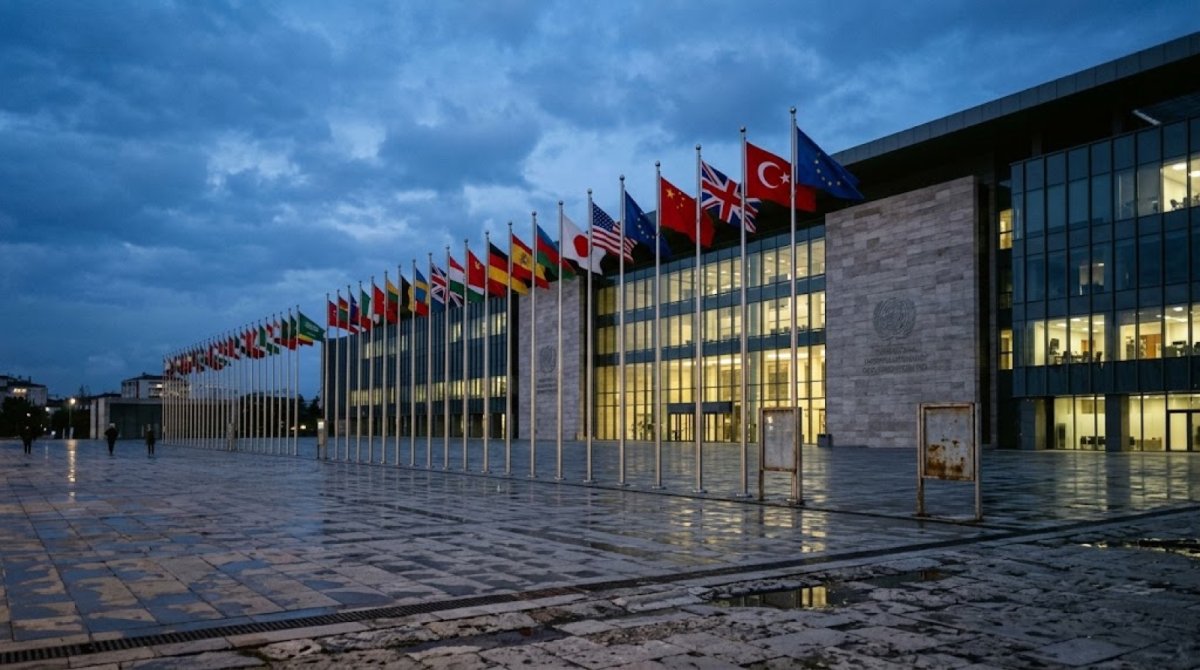
Kazakhstan used its slot at the UN General Assembly to argue that the international system is short of something harder to rebuild than budgets or armies: trust. In the same speech, Astana condemned drone attacks on the infrastructure that carries its crude to world markets and confirmed it intends to join the Abraham Accords.
Foreign Minister Mukhtar Tileuberdi, who delivered the address on Sept. 25, said confidence cannot be restored "when international law is applied selectively and commitments remain unfulfilled," according to The Astana Times. On the war in Ukraine he stayed with the careful formula Astana has used throughout, saying that "even the most difficult conflicts must ultimately be resolved through diplomacy and negotiation."
The passage with the most direct national interest concerned oil. Tileuberdi said Kazakhstan condemned the repeated drone strikes on the infrastructure that moves its crude to market, along with the attacks on commercial vessels in the Black Sea basin. The bulk of the country's export crude reaches buyers through Black Sea terminals, which leaves a landlocked producer exposed to a war it is not fighting and has sharpened European interest in the premium refiners now pay for Caspian barrels.
Disarmament as a calling card
Much of the speech rested on Kazakhstan's nuclear record. Tileuberdi said the planet "is home to more than twelve thousand nuclear weapons, each one capable of untold damage," set against world military spending of $2.9 trillion in 2025. He marked 35 years since the closure of the Semipalatinsk test site, 30 years since the Comprehensive Nuclear-Test-Ban Treaty opened for signature and 20 years since the treaty establishing a nuclear-weapon-free zone in Central Asia, and offered Kazakhstan as host for renewed high-level talks among nuclear powers.
He paired that record with institutional demands. The minister backed "greater Security Council representation for Asia, Africa, Latin America, developing countries and middle powers" — the category Astana now claims for itself — and called for "pragmatic, coordinated and step-by-step international engagement with Afghanistan, with the UN playing the central role." He also pointed to the UN regional center for the Sustainable Development Goals for Central Asia and Afghanistan, which operates out of Almaty.
On the Middle East, Tileuberdi endorsed "the New York Declaration as a framework for tangible, time-bound and irreversible steps towards the two-State solution" and said a lasting peace "requires an independent, sovereign, and viable State of Palestine." He also announced Kazakhstan's formal intention to join the Abraham Accords, the US-brokered normalization track, which he called an additional platform that could reinforce the UN-led process toward a two-state solution. The pairing captures how Astana prefers to be read: present in every framework, tied exclusively to none.
What it means: Kazakhstan is bidding for the role of indispensable middle power, and the bid is defensive as much as ambitious. Its oil leaves through a war zone, its security calendar still runs through Moscow-led structures such as the CSTO exercise it hosted this month, and its growth depends on Chinese and Western capital that is getting harder to court simultaneously. A trust deficit is not an abstraction for Astana. The multilateral rules it invokes are the thinnest layer of protection a landlocked exporter has once larger powers stop observing them.
What's Your Reaction?
 Like
0
Like
0
 Dislike
0
Dislike
0
 Love
0
Love
0
 Funny
0
Funny
0
 Wow
0
Wow
0
 Sad
0
Sad
0
 Angry
0
Angry
0










Comments (0)