

CSTO ends Rubezh-2026 drills in Kazakhstan with 1,500 troops and 115 drones
Kazakh, Kyrgyz, Russian and Tajik forces rehearsed repelling a border incursion by armed groups at the Koktal range, with drone warfare at the center.

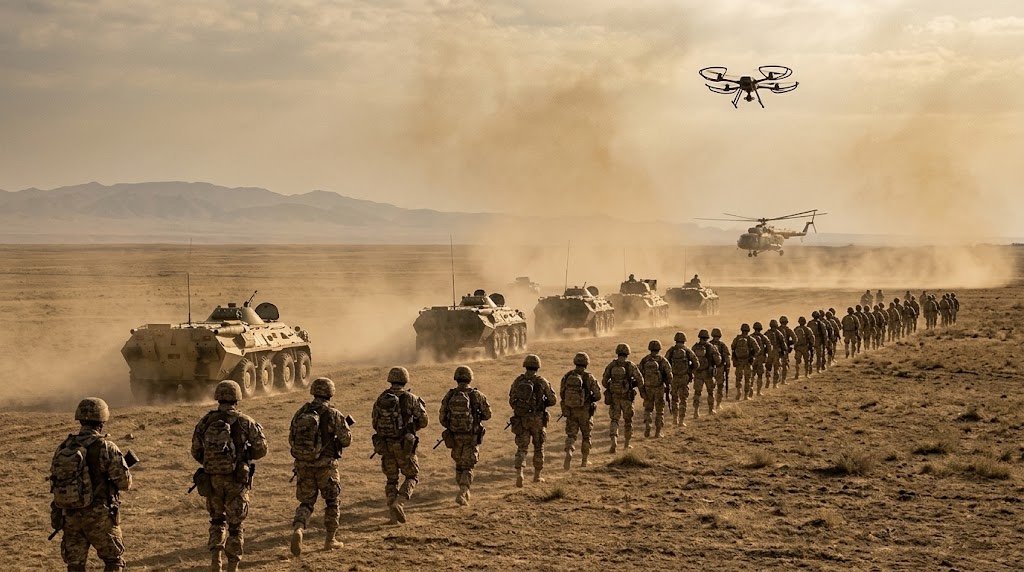
The Collective Security Treaty Organization closed its Rubezh-2026 exercise at Kazakhstan's Koktal training range on Sept. 18, ending six days of drills by the bloc's Collective Rapid Deployment Forces for the Central Asian Region. Troops from Kazakhstan, Kyrgyzstan, Russia and Tajikistan took part from Sept. 13 to 18, with about 1,500 personnel and more than 300 pieces of military and special equipment, among them 115 unmanned aerial vehicles, the CSTO said in a statement on its website. AKIpress reported the closing ceremony on Sept. 19.
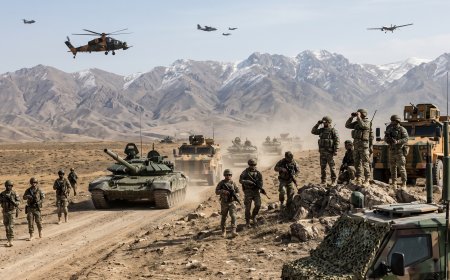
The scenario was a border incursion. Under the exercise plan, illegal armed formations had taken control of frontier areas and seized populated settlements; the four national contingents were tasked with blocking and destroying them and restoring security along the border. In the final stage, units sealed off settlements, evacuated civilians through checkpoints with mobile screening of those leaving, carried out assaults and clearance operations, delivered fire strikes on the simulated enemy, deployed mobile fire teams, landed tactical air assault groups and flew cargo into the combat zone. Tajik servicemen secured a humanitarian corridor, while Kazakh and Russian troops stormed positions after hostage negotiations failed. The exercise was commanded by Col. Makhsut Gusseinov, who heads Kazakhstan's Air Assault Forces, and the Russian contingent was drawn mainly from the 201st military base of the Central Military District.
Drones and electronic warfare at the center
Lt. Gen. Kanysh Abubakirov, Kazakhstan's first deputy defense minister and chief of the general staff, said the exercise was held "under conditions close to real ones" and let the forces work out "new forms and methods" of using modern equipment. CSTO Secretary General Talatbek Masadykov said the drills "demonstrated the increased level of training" of the command and that all contingents showed "coordinated and skillful actions," completing every task "on time and in full." Col. Gen. Andrey Serdyukov, chief of the CSTO Joint Staff, said the plan drew on "actual combat experience," above all in "electronic warfare, employment of and protection against unmanned aerial vehicles." He added: "The CRDF CAR are ready to counter modern challenges and threats."
The active phase had opened on Sept. 14. CSTO Deputy Secretary General Mirlan Turgunbekov told the opening ceremony that Rubezh-2026 was being run under a single concept and plan together with the Kazakh armed forces' own strategic command-and-staff exercise, Reshitelny Otpor 2026, Kazakhstan Today reported. Maj. Gen. Askar Zholamanov, deputy chief of Kazakhstan's general staff, and Lt. Gen. Ruslan Shpekbayev, deputy chief of the CSTO Joint Staff, attended the opening. The stated training objective was preparing and conducting combat operations to eliminate armed groups that had entered the territory of a member state.
The CSTO's regional rapid deployment force is the bloc's Central Asian instrument, and the 201st base that supplied the Russian contingent is Moscow's permanent garrison in Tajikistan, on the Afghan frontier. Both details are institutional background rather than part of the statements issued on the exercise.
What it means: Three things stand out from the official accounts. First, the scenario: armed groups crossing a border and seizing villages, with a Tajik role in securing a humanitarian corridor and a Russian contingent from the Tajikistan-based 201st base, describes an Afghan-border contingency without naming it. Second, the technology: 115 drones among 1,500 troops, and a Joint Staff chief who singled out electronic warfare and counter-UAV protection as the lessons of "actual combat experience," show the bloc importing the battlefield realities of the past few years into Central Asian training. Third, the host: Kazakhstan not only staged the drills but placed them under a Kazakh colonel and synchronized them with its own strategic exercise. Astana keeps the Moscow-led security track fully operational even as it pursues a multi-vector foreign policy, and Rubezh-2026 shows that track is being tuned to the threats the region actually faces rather than to symbolism.
What's Your Reaction?
 Like
0
Like
0
 Dislike
0
Dislike
0
 Love
0
Love
0
 Funny
0
Funny
0
 Wow
0
Wow
0
 Sad
0
Sad
0
 Angry
0
Angry
0











Comments (0)