

Trump signals CAATSA relief for Türkiye but stops short of a formal decision
Pressed on the delay, Trump said he would 'always make' Erdogan happy, keeping alive Ankara's hopes of shedding CAATSA and rejoining the F-35 program.

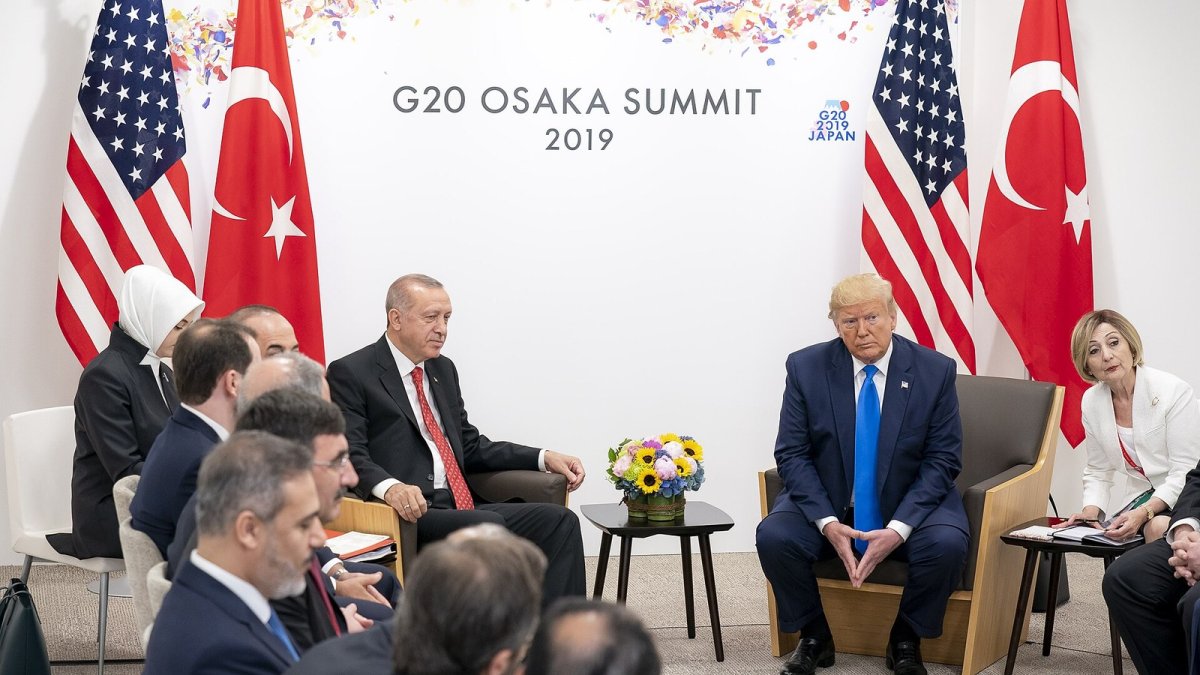
President Donald Trump offered Ankara fresh encouragement on Friday over the long-stalled removal of U.S. sanctions on Türkiye's defense sector, though he announced no formal step to lift them.
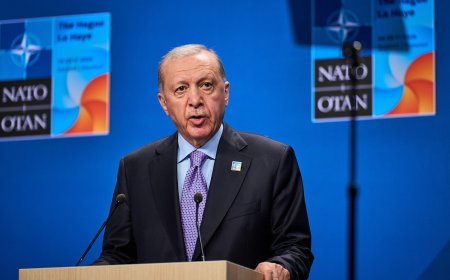
Questioned about why penalties imposed under the Countering America's Adversaries Through Sanctions Act, or CAATSA, are still in place, Trump pointed to his personal rapport with Turkish President Recep Tayyip Erdogan rather than to a timetable. "I'll always speak to President Erdogan. He is a friend of mine, as you know. And I'll always make him happy," he said, according to TRT World and Anadolu Agency.
A promise still on paper
The two leaders met in July on the sidelines of the NATO summit hosted by Türkiye, and the sanctions question has hung over the relationship since. Trump has said he wants the measures removed and that he would "certainly" consider allowing Ankara to buy F-35 fighter jets, Anadolu reported. Friday's comments repeated that warm tone but carried no date, mechanism or written decision, which means the restrictions on Turkish defense firms continue to apply for now.
How the dispute began
The rift traces back to Türkiye's purchase of the Russian-made S-400 air defense system. Washington argues that the system threatens the security of the F-35 and cannot work alongside NATO equipment. In 2019, it removed Türkiye from the multinational F-35 program. In December 2020, the United States followed with CAATSA sanctions on Türkiye's defense industry and senior officials, including curbs on export licenses and financing.
Ankara has never accepted that logic. Turkish officials say they acquired the S-400 because the country faced an urgent air defense gap and had been unable to obtain U.S.-made Patriot missiles. Removing the sanctions and regaining a place in the F-35 program remain among Ankara's foremost defense goals in its dealings with Washington.
The 2017 law was written mainly with Russia, Iran and North Korea in mind, and the 2020 measures made Türkiye the first NATO ally to be penalized under it. That precedent has made the file politically sensitive in Washington as well as in Ankara. Trump's administration has meanwhile shown it is willing to use sanctions aggressively elsewhere; he recently signed the Graham Act, which threatens tariffs on buyers of Russian oil.
The S-400 knot
Neither government has publicly described how the S-400 question would be settled as part of any sanctions relief. Without that, a decision to lift CAATSA measures would leave Washington's original objection to the Russian system unaddressed, and a return to the F-35 program would remain uncertain even if the financial and licensing restrictions were eased.
What it means: Trump's language keeps the CAATSA file in the hands of two leaders who prefer personal diplomacy, and that suits Ankara, which has more leverage with the White House than with the agencies that administer sanctions. But warm words are not a waiver. Until Washington takes a formal step and the S-400 question has an agreed answer, Türkiye's defense industry stays constrained and its F-35 ambitions stay frozen. A deal would give a major NATO military a path back into the alliance's top fighter program and narrow one of the deepest rifts between Washington and a pivotal Black Sea and Middle East power; continued delay would push Ankara to keep hedging with domestic and non-U.S. suppliers.
What's Your Reaction?
 Like
0
Like
0
 Dislike
0
Dislike
0
 Love
0
Love
0
 Funny
0
Funny
0
 Wow
0
Wow
0
 Sad
0
Sad
0
 Angry
0
Angry
0










Comments (0)