

Rahmon presses CIS police chiefs to speed up data sharing on crime
Tajikistan’s president told CIS interior ministers in Dushanbe that drug, arms and human trafficking networks now move faster than their police forces do.

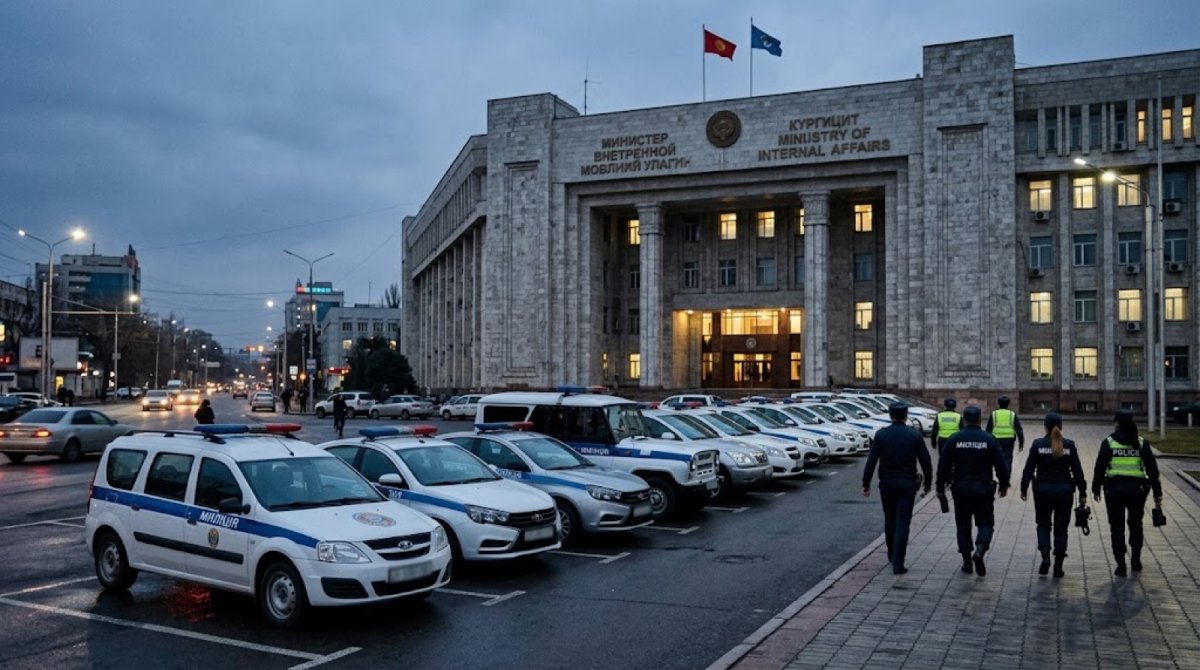
Tajikistan’s president used Thursday’s gathering of Commonwealth of Independent States interior ministers in Dushanbe to argue that police forces across the former Soviet space are being outpaced by the criminal networks they are meant to contain.
Emomali Rahmon received the ministers at the Palace of the Nation ahead of the meeting of the CIS Council of Interior Ministers and told them the body had settled into a working platform for cooperation on law enforcement and crime prevention. "The Council currently plays an important coordinating role in facilitating joint activities among the interior ministries," Rahmon said, adding that "emerging global threats and challenges require further strengthening of security measures."
Rahmon set out the files he wants the ministries to work on jointly: transnational and organized crime, the trafficking of drugs and weapons, and human trafficking. He also pressed the ministers to speed up the exchange of operational information and to make sure responses to cross-border threats arrive early enough to matter. The published account of the meeting carried no figures for staffing, budgets or case volumes, and no new joint operational structure was announced at the Palace of the Nation.
Cybercrime moves up the agenda
The clearest shift in Rahmon’s address was the weight he gave to crime committed through networks rather than across checkpoints. He voiced concern about the growth of cybercrime and about criminal groups’ use of new communication technologies and artificial intelligence, placing those tools alongside smuggling routes as a shared problem for the ministries represented in the room.
That is a notable emphasis for a forum whose traditional business is extradition requests, stolen vehicles and narcotics seizures. Rahmon framed faster information exchange as the practical answer, on the logic that criminal groups using automated tools move between jurisdictions faster than paper-based police cooperation can follow.
Hard security cooperation in the region runs on a separate track. The Collective Security Treaty Organization recently closed its Rubezh-2026 exercises in Kazakhstan, and Russian officials have reported sustained cyberattacks on Moscow’s electronic voting system during the Duma vote. The interior ministers’ council sits below both, dealing with the daily traffic of warrants, suspects and case files rather than troops or doctrine.
The CIS was formed in 1991 after the Soviet Union dissolved and keeps a thin institutional core; the interior ministers’ council is one of the few of its bodies with a concrete operational remit. Tajikistan, which shares a long border with Afghanistan, has a direct stake in the drug-trafficking file its president highlighted.
What it means. Rahmon’s pitch was institutional rather than political. The council is one of the few CIS structures where police bureaucracies still exchange case material directly, and his emphasis on speed amounts to an admission that the channel moves slower than the networks it tracks. For Central Asian governments balancing security ties with Moscow against widening economic links elsewhere, a technical law-enforcement forum is also the least politically costly place to keep cooperating. The test is whether faster data sharing survives contact with the ministries’ own procedures, because nothing announced in Dushanbe compels any of them to change how they work.
What's Your Reaction?
 Like
0
Like
0
 Dislike
0
Dislike
0
 Love
0
Love
0
 Funny
0
Funny
0
 Wow
0
Wow
0
 Sad
0
Sad
0
 Angry
0
Angry
0












Comments (0)