

Berbera bets on becoming the Red Sea's back door as Gulf ports stall and rivals circle
DP World's Somaliland terminal runs at 30% capacity, yet the UAE is fortifying it and Israel has recognized Hargeisa. Asia-bound shippers are watching.

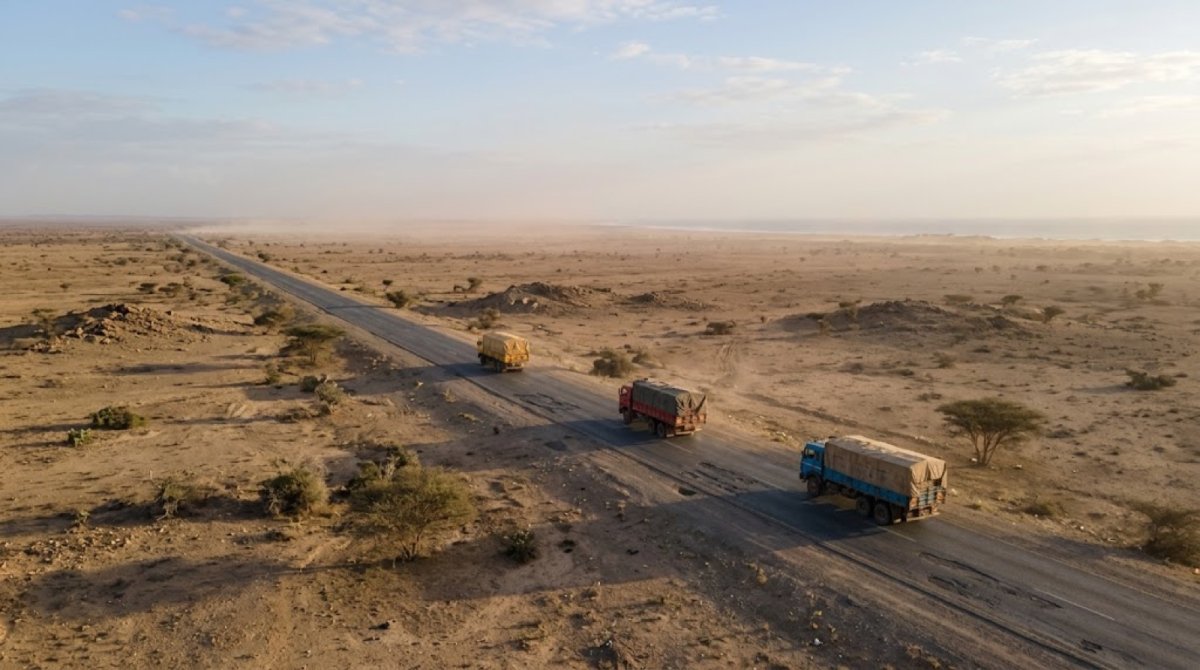
The port of Berbera on Somaliland's Gulf of Aden coast is emerging as one of the most closely watched pieces of infrastructure in the Red Sea corridor, according to a report published Sunday by Middle East Eye. Built up by Dubai's DP World and shadowed by an expanding Emirati military footprint, the terminal is pitched by its operators as an alternative gateway for cargo that once moved through Gulf ports now exposed to the U.S.-Israeli war with Iran and to Houthi attacks on shipping.
DP World took over the port in 2016 with a $450 million investment, the year after Djibouti evicted the company and Emirati troops, MEE reported. The terminal today employs 1,350 people and has capacity for 500,000 twenty-foot container units and 2 million metric tons of bulk cargo. A 2023 World Bank efficiency index placed it first among ports in sub-Saharan Africa. A 250-kilometer highway links the coast to the Ethiopian border, and the city's 15,000-foot airport runway, renovated by the United States in the mid-1980s, is described in the report as the largest in Africa.
Trade rerouted by war
The conflict between the United States, Israel and Iran has reshaped the port's business. Jama Mohamed Ahmed, DP World's commercial director in Berbera, told MEE that "our transshipment business with Jebel Ali, Salalah and Colombo suffered," and that the last connection still running, to Jeddah, "stopped with the Houthi attacks." He argued the disruption is also the port's opportunity: cargo from East Asia that used to be transshipped through Gulf ports "can come to Berbera. We are just 18 days sailing from China," he said, adding that "all the infrastructure is here. It's only a matter of time." A businessman in Addis Ababa put the case more bluntly to MEE: "The Persian Gulf is vulnerable. Ships there are trapped."
The port's biggest constraint is political rather than physical. It operates at roughly 30% of capacity, MEE reported, because a sweeping January 2024 agreement with Ethiopia was never implemented. That deal would have given landlocked Ethiopia, which pays Djibouti about $2 billion a year for sea access, a 50-year lease on a stretch of Somaliland's coast for commercial and naval use in exchange for recognizing Somaliland. Mogadishu reacted angrily, warning it would send home the Ethiopian soldiers deployed against al-Shabab in Somalia, and the plan stalled under regional opposition.
Emirati hardware, Israeli recognition
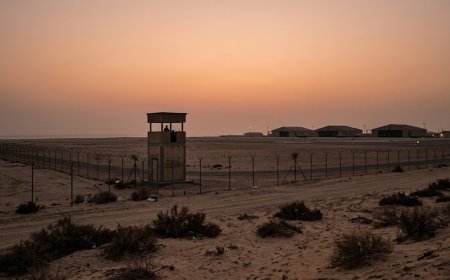
The UAE established a military base at Berbera in 2017, and recent satellite imagery cited by MEE shows Abu Dhabi has since added surface-to-air missile sites, radar facilities and hangars at the airport and is building a naval facility a few kilometers from the commercial port. Reuters reported in December 2024 that the UAE had used the airport as a stopover for military flights to Sudan's Rapid Support Forces, and MEE said the Emiratis evacuated Yemeni southern separatist leader Aidarus al-Zubaidi to Berbera after Saudi Arabia attacked his group.
Somaliland proclaimed itself independent in 1991, at the end of 10 years of fighting, and went unrecognized by any state until Israel extended recognition in January 2026, a move condemned by Saudi Arabia, Egypt, Türkiye and other Muslim-majority states, MEE reported. Bashe Omar, Somaliland's former ambassador to the UAE, told the outlet that "security and investment would go hand-in-hand" in Hargeisa's approach to Abu Dhabi and that "we weren't looking for a one-sided agreement with the UAE." He went further on Washington: "I would support a base for both the US and Israel in Berbera," he said, adding that if the United States used the port to strike the Houthis "it should be in exchange for recognition."
What it means
Berbera's numbers describe a port that is technically ready and politically blocked. Efficiency rankings, a 500,000 TEU yard and an 18-day sailing time from China are the sort of figures Asian and European shippers rerouting around Bab al-Mandeb and a still-constrained Strait of Hormuz look for, yet the terminal cannot fill its quays while Ethiopia's access deal remains frozen by Mogadishu's objections. What has moved instead is the security layer: missile sites, radars and a naval facility being built by a Gulf state whose own ports, as DP World's director concedes, have lost transshipment traffic to the war. Israel's recognition and the open call from a former Somaliland envoy for a U.S. and Israeli base suggest Hargeisa is prepared to trade strategic access for statehood. For the wider region, where Washington has already eased sanctions on Eritrea as Red Sea shipping strain deepens, the port's trajectory will show whether the Red Sea's alternative gateways are decided by trade flows or by who controls the runway.
What's Your Reaction?
 Like
0
Like
0
 Dislike
0
Dislike
0
 Love
0
Love
0
 Funny
0
Funny
0
 Wow
0
Wow
0
 Sad
0
Sad
0
 Angry
0
Angry
0











Comments (0)