

Pyongyang calls nuclear status 'irreversible' and accuses IAEA of double standards
Kim Yo Jong and the foreign ministry reject a Vienna resolution as Kim Jong Un tours munitions plants and Russian help reshapes the North's armed forces.

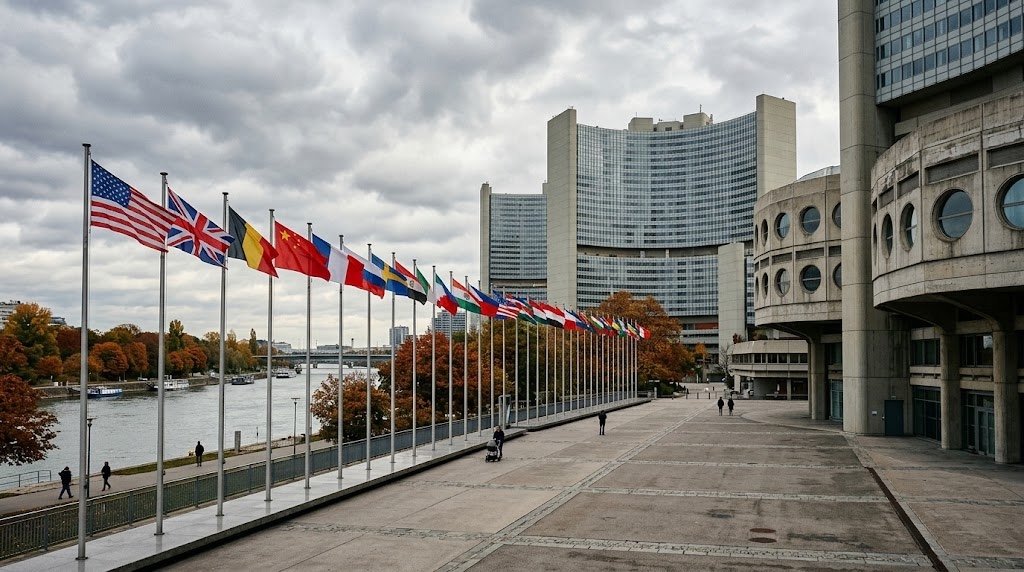
North Korea on Saturday rejected a resolution adopted by the International Atomic Energy Agency criticizing its nuclear weapons program, with the foreign ministry in Pyongyang declaring the country's status as a nuclear power "irreversible" and backed by its deterrent, Reuters reported in a dispatch carried by Dawn. The response came two days after the IAEA's 70th General Conference in Vienna adopted the text on Thursday.
Kim Yo Jong, the sister of leader Kim Jong Un, accused the agency of a "biased viewpoint and double standards" that she described as the fundamental factor causing the collapse of the international nuclear non-proliferation system, according to the Korean Central News Agency. She said the IAEA had ignored U.S. and South Korean nuclear activities while criticizing what she called North Korea's "self-defensive and legitimate nuclear activities."
In the statement, reported by Yonhap and published by The Korea Times and The Korea Herald, Kim said the agency had "forcibly adopted an anti-DPRK 'resolution'" while "turning a blind eye" to external nuclear threats to the country's security environment. "We will never mortgage our sovereignty and right to security to the 'tolerance' of the U.S. and the West under any circumstances," she said, adding that ensuring the credibility of the nuclear force is never questioned is the most important matter for national security. She criticized the IAEA for ignoring U.S. nuclear deployments in Europe and extended-deterrence arrangements with South Korea and Japan, and accused the agency of serving U.S. interests, The Korea Herald reported.
What the Vienna resolution said
The resolution reaffirmed that North Korea cannot hold nuclear-weapons-state status under the Nuclear Non-Proliferation Treaty and called on Pyongyang to immediately cease all related activities, Yonhap reported. The North's foreign ministry characterized the text as "cooked up" by "hostile forces" and said the country's position as a nuclear weapons state "is irreversibly and permanently fixed by the supreme law of the state." The ministry said Pyongyang would defend its sovereignty and "thoroughly guarantee peace and security in the region and the rest of the world by deterring all challenges and threats from outside by overwhelming force," according to The Korea Herald.
Munitions factories and the Russian factor
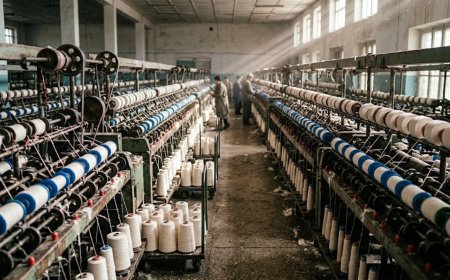
The diplomatic rebuff coincided with a three-day inspection tour of major munitions factories by Kim Jong Un this week, KCNA reported. He said the country's defense modernization drive was producing "a significant change" in the composition and capabilities of the armed forces. KCNA also reported that Kim told propaganda workers that "ideological warfare" must be "innovative, creative and aggressive."
Analysts cited by Reuters say Pyongyang has been overhauling its armed forces with Russian help since the two countries concluded a mutual defense treaty in 2024, and that the combat exposure of North Korean units sent to the war in Ukraine has accelerated that work.
What it means
The sequence of statements is more than a ritual rejection. By anchoring its nuclear status in the constitution, the "supreme law of the state," Pyongyang is telling the IAEA and the NPT's membership that denuclearization is no longer a negotiable end state but a legal impossibility from its own perspective. Kim Yo Jong's specific references to U.S. nuclear deployments in Europe and extended deterrence for Seoul and Tokyo place the North's argument inside the wider debate over great-power nuclear postures rather than the Korean Peninsula alone. Combined with the munitions tour, the 2024 treaty with Moscow and the battlefield experience gained in Ukraine, the message to Vienna is that the North's weapons program is now embedded in a Russia-aligned security architecture. That leaves the IAEA with a resolution it cannot enforce and Northeast Asia's other capitals with a neighbor whose nuclear claims are hardening rather than softening.
What's Your Reaction?
 Like
0
Like
0
 Dislike
0
Dislike
0
 Love
0
Love
0
 Funny
0
Funny
0
 Wow
0
Wow
0
 Sad
0
Sad
0
 Angry
0
Angry
0











Comments (0)