

Riyadh tells the UN the world has failed to keep Gulf shipping open
Saudi Arabia's foreign minister said the international community has been absent on maritime security as Hormuz and Bab al-Mandab stay disrupted.


Saudi Arabia told the UN General Assembly on Saturday that the world has failed to keep the Gulf's trade arteries open, turning a technical question of maritime security into a charge of collective neglect. Foreign Minister Prince Faisal bin Farhan Al Saud said attempts to close Middle Eastern waterways now threaten global energy security, Middle East Eye reported.
"The international community has been absent from assuming its responsibilities in confronting all that threatens international peace and security," the minister said. He set out the kingdom's list of routes that need protecting, saying Riyadh "stresses the importance of guaranteeing the protection of freedom of navigation in all international waterways, foremost among them the Strait of Hormuz, the Bab al-Mandab Strait, the Red Sea, the Gulf of Aden."
Two chokepoints, one bill
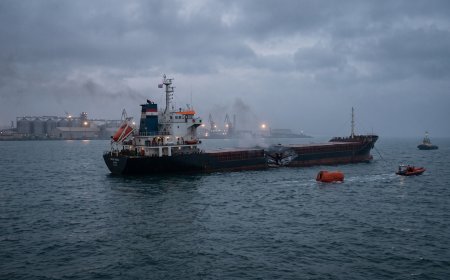
Shipping through Hormuz has been disrupted since late February, when Iran began obstructing traffic through the waterway after the United States and Israel opened their military campaign against it, according to Middle East Eye. Navigation through the Bab al-Mandab has since been disrupted by Houthi forces in Yemen. Both passages are load-bearing for oil and gas: Hormuz is the only sea route out of the Gulf, and the Bab al-Mandab is the southern gate of the Red Sea corridor toward the Suez Canal. Closing or taxing either one reprices energy far from the region, which is why Riyadh chose the General Assembly rather than a regional forum to make the argument.
The minister also called on the international community to condemn Houthi attacks, The National reported from the session. That demand sat awkwardly alongside the counter-case being made in the same building: Iran's foreign minister described US measures against his country as "economic terrorism," framing the disruption as a consequence of pressure rather than its cause. Neither side disputes that the traffic has stopped moving normally; they disagree entirely on who is responsible for restarting it.
Everyone is hedging in public
The rest of the day's Gulf diplomacy showed how far the crisis has spread beyond the waterline. Oman and Iran discussed security in the Strait of Hormuz and regional diplomacy. Pakistan's prime minister said any attack on Mecca or Medina would be a "red line." The United Arab Emirates sent Sheikh Abdullah bin Zayed to an investment gathering in New York, and Iraq spent the week courting energy partnerships with Türkiye, Jordan and Syria, The National reported. The pattern is consistent: Gulf and neighboring states are simultaneously demanding protection, avoiding entrapment in the war and shopping for alternative routes and revenue.
Eurasian Post has tracked the same corridor from the military side, including US Central Command's tally of traffic through the strait. It has also covered the Saudi home front, where Houthi claims of strikes on Riyadh and Yanbu put the kingdom's own energy infrastructure in the line of fire.
What it means: Riyadh's complaint is aimed less at Tehran than at the powers that guarantee freedom of navigation as a public good. By declaring that guarantee absent, Saudi Arabia is doing two things at once: pressing Washington and its partners to show results in the water, and building a record that justifies its own hedging if they do not. The framing also internationalizes a cost the Gulf has been absorbing alone, since insurers, charterers and buyers in Asia and Europe pay for every week the routes stay unreliable. The risk in that approach is that a public declaration of failure invites every user of the corridor to arrange its own protection, which is how a single shared waterway turns into a patchwork of competing escorts and claims.
What's Your Reaction?
 Like
0
Like
0
 Dislike
0
Dislike
0
 Love
0
Love
0
 Funny
0
Funny
0
 Wow
0
Wow
0
 Sad
0
Sad
0
 Angry
0
Angry
0












Comments (0)