

Germany's EV surge drains fuel tax revenue and revives the road toll debate
Energy tax on diesel and gasoline fell to 33 billion euros last year and could sink to 5 billion by 2050, pushing Berlin toward tolls or a higher vehicle tax.

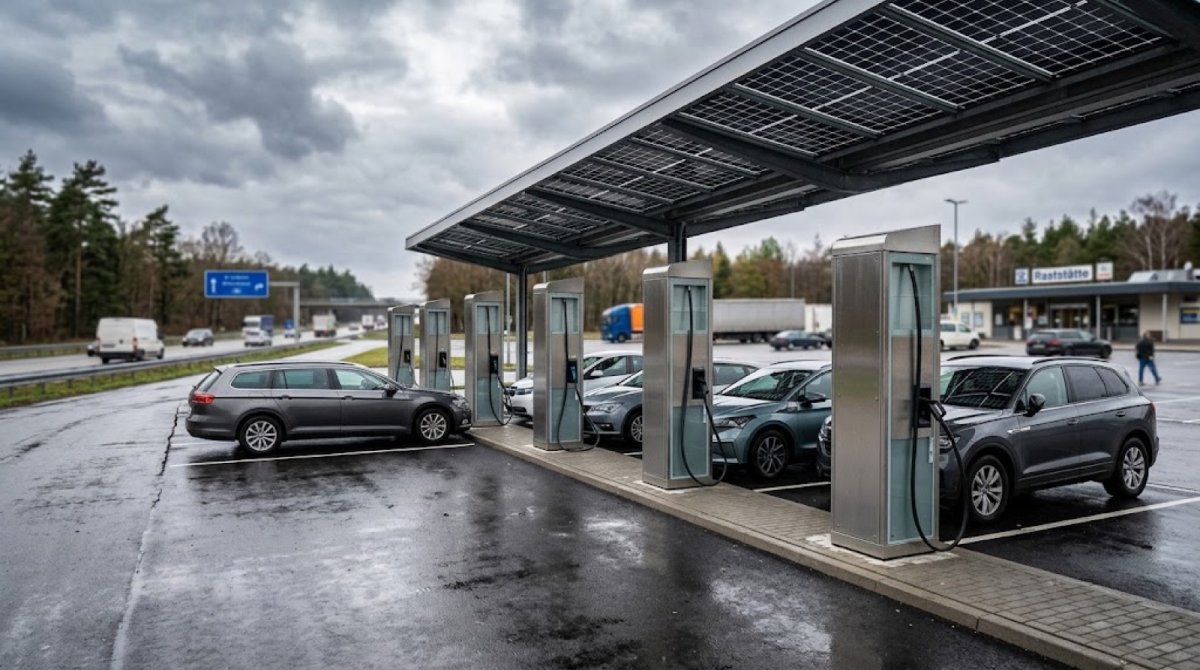
Germany's accelerating shift to electric cars is shrinking one of the federal government's most reliable revenue streams, the energy tax on diesel and gasoline, and economists say Berlin will have to decide how to pay for its roads before the gap becomes unmanageable, Deutsche Welle reported Sunday.
"People are moving away from gasoline and diesel," Jens Boysen-Hogrefe, a tax and transportation expert at the Kiel Institute for the World Economy, told DW. "The boom in electric cars triggered by high fuel prices is accelerating the transition in drive technologies that was already planned anyway."
Revenue from the energy tax on the two fuels dropped from 37 billion euros in 2016 to 33 billion euros last year, according to Germany's Federal Statistical Office. A 2022 report by the scientific advisory committee to the Transport Ministry projected the take could fall as low as 5 billion euros by 2050. "The transition to electric vehicles has fiscal implications that have hardly been discussed so far," the report said, adding that the shortfalls come on top of the subsidies still needed to drive adoption.
More than half the pump price goes to the state
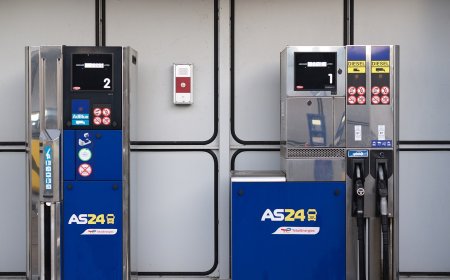
The fiscal stake is large because fossil fuels are taxed heavily while charging an EV incurs only minimal electricity tax and no energy tax. A liter of diesel carries 47.04 euro cents in energy tax and a liter of gasoline 65.45 euro cents, before a carbon levy and 19% value-added tax are added. With gasoline at 2.10 euros per liter, taxes make up 1.14 euros of the price, according to the ADAC motoring club. "The finance minister doesn't benefit much when people drive electric cars," Boysen-Hogrefe said. "Quite the opposite." If the shift proceeds and the tax system stays as it is, he said, "the road system will become a money-losing venture for the federal government," with losses running into the billions.
Germany scrapped its purchase incentives for electric cars, worth several thousand euros per vehicle, at the end of 2023, but EVs remain exempt from vehicle tax through 2035 and companies investing in them keep tax advantages. The Transport Ministry's advisers urged the government not to wait until the deficit forces its hand, arguing that "the lead time for such measures spans several legislative terms." If buyers keep switching in large numbers, Boysen-Hogrefe said, "the government can't just shrug it off."
What other countries are doing
Several governments have already moved. In the United Kingdom, an Electric Vehicle Excise Duty due to take effect in April 2028 will charge 3 pence per mile for fully electric cars and 1.5 pence for plug-in hybrids. Since 2024, EV owners in New Zealand and Iceland have had to submit to yearly odometer readings so that fees can be charged by distance driven. Switzerland will impose a road-use charge on EV owners from 2030, either as a weight-based per-kilometer fee or a tax on electricity bought at charging stations. Norway, where electric cars account for as many as 95% of new registrations, has narrowed the VAT exemption for EVs this year and brought in tolls along with a purchase or registration tax pegged to vehicle weight.
In Germany, many specialists favor a passenger car toll. A recently published University of Münster study said "the recommended policy option is a distance- and traffic-based toll," and that if politicians shy away from that step, "the vignette solution is recommended," under which drivers pay a flat fee for a defined period. Should that also meet what the authors called insurmountable resistance, "the only solution left is to raise the motor vehicle tax," they concluded.
The pressure is building against a backdrop of record pump prices across the European Union. Average French diesel reached a new high of 2.41 euros per liter on Sunday, according to an AFP analysis of more than 8,700 stations cited by Report.az, with Brent crude still above $100 per barrel after a roughly 20% jump in September driven by the Middle East conflict and attacks on Saudi energy infrastructure. The International Energy Agency's Global EV Outlook 2026 recorded EV sales in Europe rising nearly 30% in the first quarter of 2025 from a year earlier.
What it means: The figures in DW's report show a structural problem, not a cyclical dip: the tax base is tied to fuel volumes that the government itself is trying to reduce, and the current fuel-price shock only speeds the migration. The examples from London, Oslo and Bern point to a menu of options, all of which shift the cost of roads onto EV drivers who have so far been shielded. For Berlin, the choice among a distance toll, a vignette or a higher vehicle tax is politically fraught, but the advisory report's warning about multi-term lead times means the decision is effectively already on the table for this legislature.
What's Your Reaction?
 Like
0
Like
0
 Dislike
0
Dislike
0
 Love
0
Love
0
 Funny
0
Funny
0
 Wow
0
Wow
0
 Sad
0
Sad
0
 Angry
0
Angry
0















Comments (0)