

Iran claims two-year high in oil revenue as US commander says it exported zero barrels
Tehran's budget office reports more than $3 billion in September oil sales despite the US naval blockade; CENTCOM says Iran has shipped nothing through Hormuz.

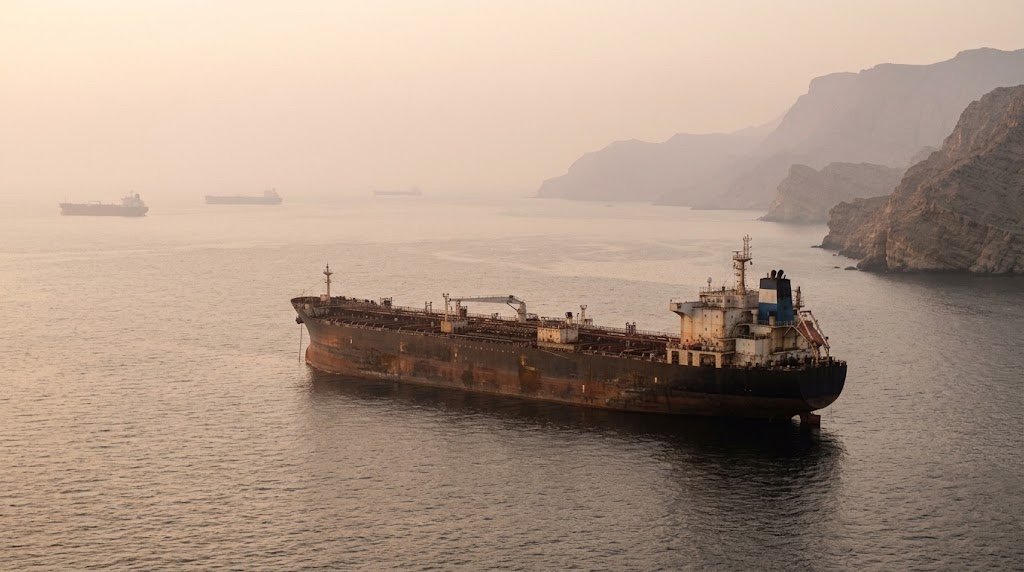
Iran's Plan and Budget Organization says the country's oil sales topped $3 billion in September, the highest monthly total in two years, according to reports by the semi-official Mehr news agency and Middle East Eye published Saturday. The figure sits in direct contradiction with the account given by the head of U.S. Central Command, who said the same day that Iran has "exported zero barrels" because of the U.S. naval blockade.
Mehr reported that, while foreign media have described uncertainty over Iran's oil sales under sanctions, domestic outlets were reporting September revenue above $3 billion on the basis of the budget organization's latest figures. The agency said the total had been reached despite the U.S. naval blockade intended to stop Iranian exports. Neither Mehr nor Middle East Eye offered an explanation of how the oil was moved, and Middle East Eye noted that the report did not indicate how Iran evaded the blockade.
Washington's version
Adm. Brad Cooper, the Central Command chief, said the U.S. military has supported the transit of 1 billion barrels of oil through the Strait of Hormuz over the past two months, The Associated Press reported. He said the strait's primary transit lanes have been cleared of mines and that the volume of oil, natural gas and cargo passing through over the past two weeks was the highest in six months, a period the AP said dates to shortly after the war began with U.S. and Israeli strikes. In the same remarks, Cooper claimed Iran had exported no oil at all because of the blockade.
The two accounts cannot both be complete. Iranian oil revenue can reflect payments received for cargoes sold earlier, sales routed outside the Hormuz choke point or accounting that does not map onto month-by-month shipments, but none of the Iranian reporting available Saturday addressed those possibilities, and the budget organization's figure has not been independently verified.
A pattern of Iranian revenue claims
The September number extends a series of similar reports from Tehran. On Sept. 3, Anadolu Agency reported that the semi-official Fars news agency, citing documents seen by its reporter, said more than $1 billion in oil revenue had entered Iran during the first 11 days of the period ending Sept. 2 and had been added to foreign exchange reserves. Fars also said oil sales in the first five months of the Iranian fiscal year, which runs from March 21, 2026, to March 20, 2027, had generated revenue equal to more than 80% of the oil income projected in the 2026-27 budget.
That report followed data released by Iran's Oil Ministry in late August showing that $7.5 billion in foreign currency from oil sales during the first four months of the fiscal year, from March 21 to July 22, had been transferred to the Central Bank, according to Anadolu. The same report said Washington had recently launched "Operation Economic Outcast," a campaign aimed at cutting Iran off from global financial channels and restricting its ability to generate and repatriate revenue, including from oil, with new sanctions on dozens of entities, individuals and vessels and a broader secondary-sanctions risk for parties still doing business with Tehran.
Diplomatic channels remain open in the background. Pakistan's Foreign Minister Ishaq Dar discussed uninterrupted energy supplies and safe passage for commercial ships in a telephone call with Iranian Foreign Minister Abbas Araghchi, the AP reported Saturday.
What it means
For energy markets the question raised by Saturday's dueling statements is one of measurement rather than rhetoric. If the Plan and Budget Organization's $3 billion is accurate, it implies that either the blockade is leaking or that Iran is being paid for oil that left before the cordon tightened, and the fact that Tehran's own agencies decline to say how the barrels moved leaves both readings open. If Cooper's zero-barrel claim is accurate, the revenue figure is a domestic message about resilience aimed at a public living under sanctions and wartime pressure. The steady drumbeat of Iranian announcements, from the $7.5 billion Central Bank transfer to the 80% budget-coverage claim and now the two-year high, shows Tehran has chosen to contest the blockade on the information front as much as at sea. The Dar-Araghchi call points to the regional stakes: Pakistan and other Asian importers need Hormuz open regardless of who is selling, and their governments will be reading both sets of numbers.
What's Your Reaction?
 Like
0
Like
0
 Dislike
0
Dislike
0
 Love
0
Love
0
 Funny
0
Funny
0
 Wow
0
Wow
0
 Sad
0
Sad
0
 Angry
0
Angry
0











Comments (0)