

Pakistan sets Nov. 25 for its first astronaut to fly on a Chinese mission
Planning Minister Ahsan Iqbal gave the launch date as one of two Pakistani pilots training in Beijing awaits final selection for the flight.

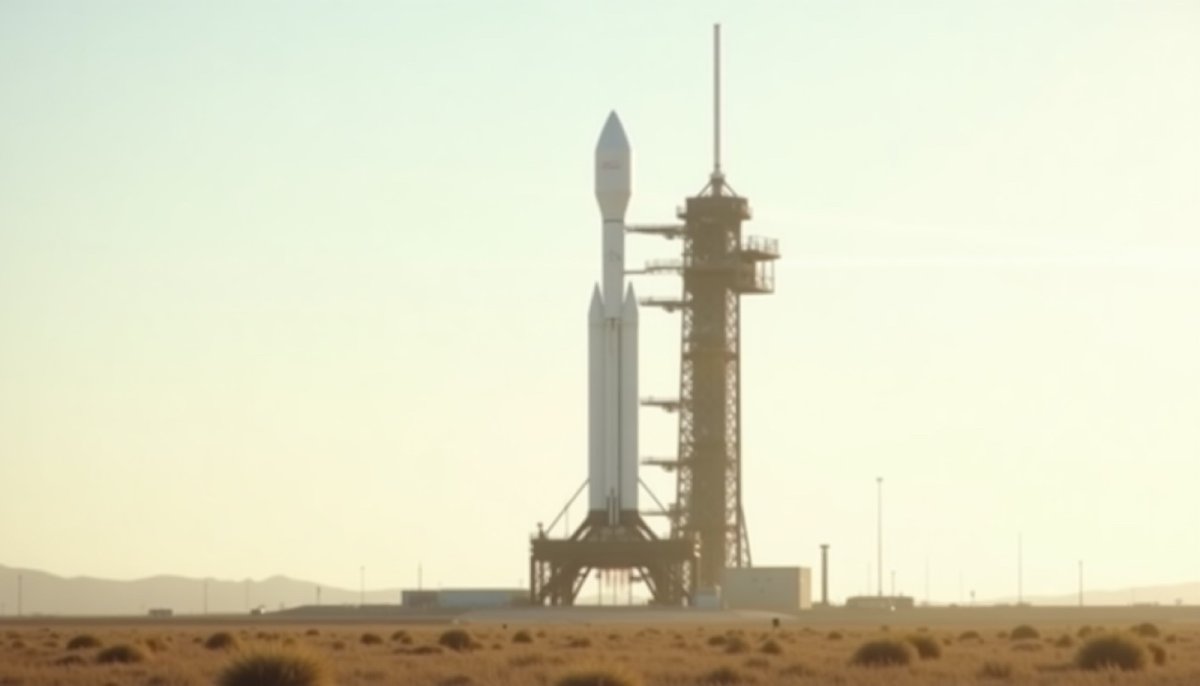
Pakistan's first astronaut will fly on a space mission from a Chinese space center on Nov. 25, Planning, Development and Special Initiatives Minister Ahsan Iqbal said on Sunday, Oct. 18, according to Dawn.
Iqbal made the announcement at the closing ceremony of World Space Week in Narowal, an event held with the Pakistan Space and Upper Atmosphere Research Commission (Suparco), Dawn reported. In a handout issued by the Planning Ministry, he said the country would "reach new heights in space exploration." Dawn's report also restated Pakistan's aim of a lunar landing by 2035.
Two pilots, one seat
The flyer will be one of two Pakistani pilot candidates, Zeeshan Ali and Khurram Daud, whom China selected in April and who are training in Beijing, according to Dawn. China has not said which of the two will make the trip, and a final decision on the selection was expected in mid-to-late October, the newspaper reported, citing Reuters.
Amer Gilani, who oversees human spaceflight cooperation at Suparco, told Reuters last month that the chosen candidate would serve as a "payload specialist" running scientific experiments, Dawn said. The astronaut will travel on a Chinese-built spacecraft and will communicate in Mandarin while in orbit, according to the report.
Built on a 2025 agreement
The flight rests on a cooperation agreement that Suparco signed with the China Manned Space Agency (CMSA) on Feb. 28, 2025, for Pakistan's first astronaut mission to the China Space Station, Tiangong, according to Suparco. Under that deal, two Pakistani astronauts were to train at the Astronaut Center of China, with one prepared as a scientific payload specialist, and the selection was to be completed in 2026. Suparco lists nine research fields for the first mission, among them biological and medical sciences, microgravity studies, space radiation and astronomy.
At the signing, Prime Minister Shehbaz Sharif described the agreement as a cornerstone of Pakistan's human spaceflight ambitions, while Iqbal called it a milestone, Suparco said in its account. Space cooperation between the two countries predates the deal: a Pakistani lunar cubesat, ICUBE-Q, reached lunar orbit aboard China's Chang'e-6 mission in 2024. Beijing's own launch tempo has also climbed, as seen in China's run of six orbital launches in six days.
The Nov. 25 date gives the program its first public timeline, though Dawn's account did not name the mission, the launch site or the length of the stay in orbit, and it cited no Chinese confirmation of the schedule.
What it means: For Islamabad, a seat on a Chinese flight is a shortcut to human spaceflight that it could not build alone, and it arrives through the same partnership that already underpins much of Pakistan's infrastructure and defense cooperation with Beijing. For China, flying a partner country's astronaut on its own hardware turns its station program into a diplomatic asset, offering an alternative to Western-led crewed programs for states in its orbit. The terms are telling: Pakistan's astronaut will work in Mandarin, on Chinese equipment, under a Chinese mission plan. The prestige is shared, but the platform, and the leverage that comes with it, stays in Beijing.
What's Your Reaction?
 Like
0
 Dislike
0
 Love
0
 Funny
0
 Wow
0
 Sad
0
 Angry
0









Comments (0)