

Uzbekistan takes its pitch for Central Asian heritage to the UN in Geneva
Tashkent's Center of Islamic Civilization staged an exhibition and conference at the Palace of Nations, extending a heritage push launched at UNESCO.

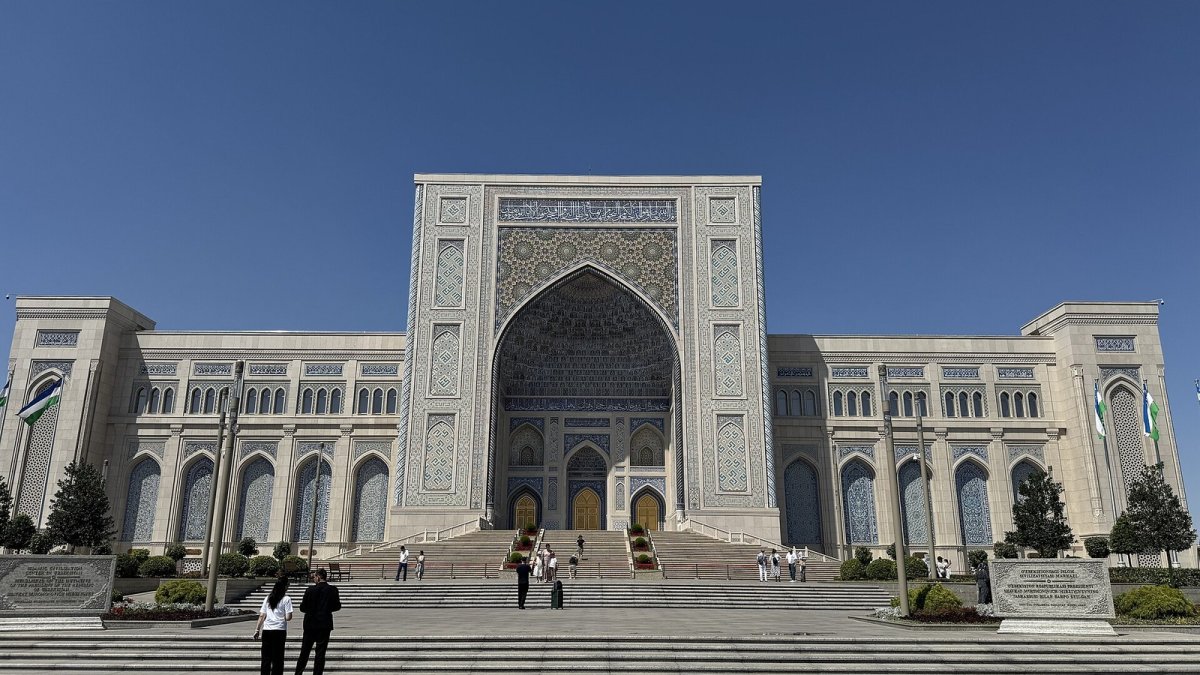
Uzbekistan's Center of Islamic Civilization brought an exhibition and conference on Central Asia's scientific and spiritual heritage to the United Nations Office in Geneva, presenting projects meant to preserve and promote that legacy, Report.az reported on Saturday.
The program, titled "Civilizations, Personalities, Discoveries," was held at the Palace of Nations and drew diplomats, scholars, cultural figures and staff of international bodies. Bakhrom Abdukhalimov, vice president of the Uzbekistan Academy of Sciences, moderated the conference.
From Paris to Geneva
The Geneva event continued an international dialogue that opened on Oct. 7 at UNESCO headquarters in Paris. Both gatherings are part of an initiative President Shavkat Mirziyoyev announced on Sept. 23, 2025, at the 80th session of the UN General Assembly, aimed at promoting the legacy of three scholars revered across the Muslim world: Imam al-Bukhari, Imam al-Tirmidhi and Imam al-Maturidi.
All three are tied to cities in present-day Uzbekistan. Al-Bukhari, born in Bukhara in the ninth century, compiled one of the most widely cited collections of the sayings of the Prophet Muhammad. Al-Tirmidhi, from the area of modern Termez, assembled another major collection. Al-Maturidi, who worked in Samarkand, gave his name to a school of theology that remains influential in Central Asia, Türkiye and South Asia. Anchoring the campaign in these figures lets Tashkent present the region's past as a contribution to world scholarship.
A broad roster of Uzbek institutions took part in the program, including the Foreign Ministry and the country's Permanent Mission to the UN Office in Geneva, the Committee on Religious Affairs, the international research centers named after the three imams, the Uzbekistan International Islamic Academy, the Art and Culture Development Foundation, the Muslim Board of Uzbekistan and the World Society for the Study, Preservation and Promotion of the Cultural Heritage of Uzbekistan (WOSCU).
Films, books and next steps
Organizers screened three short films: one on Uzbekistan's heritage of Islamic civilization, one presenting the Center as a new-generation museum and one on the legacy of the three imams. Every book on display was given by the Center to the UN Office's library in Geneva. The conference ended with discussion of possible joint scientific, cultural and educational projects, followed by a reception featuring traditional Uzbek cuisine.
Heritage has become an active diplomatic field across the wider region. Even in neighboring Afghanistan, repairs to the Minaret of Jam have turned a medieval monument into a test of how authorities use culture to engage international institutions.
What it means: Uzbekistan is using heritage as a form of soft power, and it is doing so inside the UN system rather than at home. By moving the dialogue from UNESCO in Paris to the Palace of Nations in Geneva, Tashkent places its narrative in front of diplomats who shape multilateral agendas, and it frames the legacy of the three imams as a shared Central Asian asset rather than a narrow national claim. The book donation gives the effort a lasting footprint in a UN library. Concrete outcomes remain open: the report described joint projects as prospects under discussion, with no budgets or timelines announced.
What's Your Reaction?
 Like
0
 Dislike
0
 Love
0
 Funny
0
 Wow
0
 Sad
0
 Angry
0











Comments (0)