

Rubio lands in Samarkand with 200 US executives as Washington courts Central Asia
The U.S. secretary of state opens C5+1 talks on trade, critical minerals and security in Samarkand, the city where the format was born in 2015.

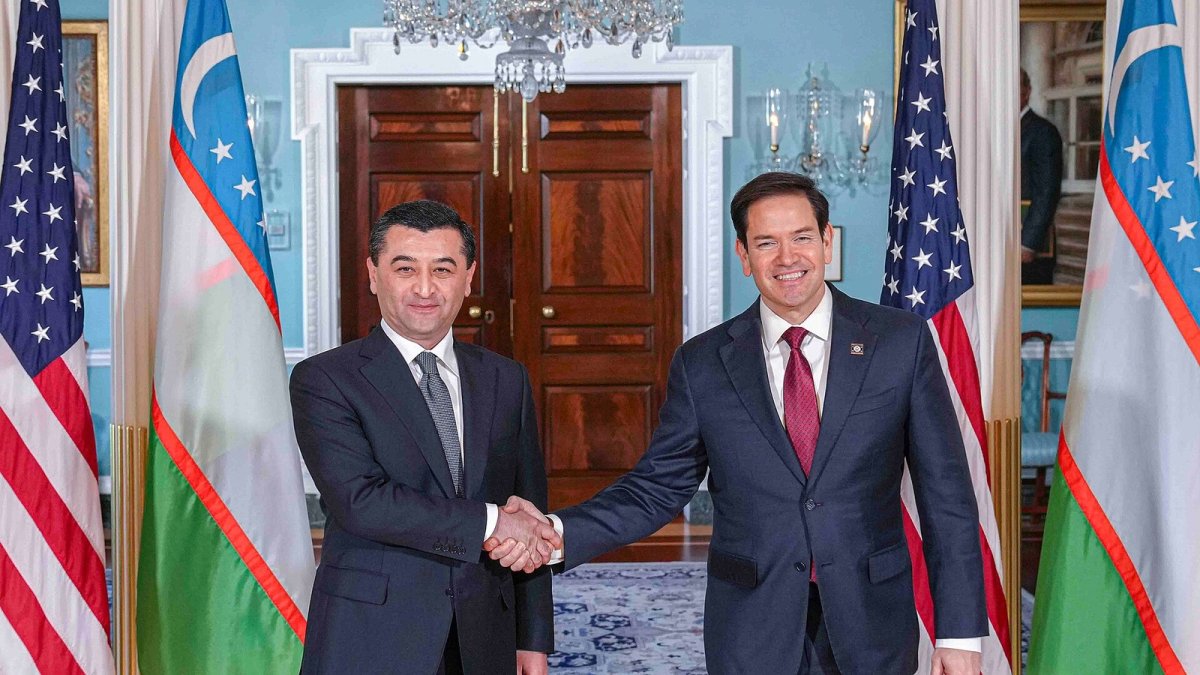
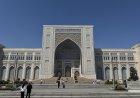
U.S. Secretary of State Marco Rubio arrived in the Uzbek city of Samarkand on Sunday evening, bringing more than 200 American business leaders with him for a round of talks with the five Central Asian republics. The C5+1 ministerial meeting on Monday is set to cover trade, investment, critical minerals and security, Euronews reported, putting commercial ties at the center of a visit that Washington is using to deepen its footprint in a region long dominated by Moscow and Beijing.
"This is an important relationship," Rubio said, according to Euronews. He also said that "there's countries you'd like to get to because we want to build our relationships with them," a remark that underlines how rarely the region has featured on the itinerary of top American diplomats.
Bilateral track with Tashkent
Alongside the multilateral session, Rubio is scheduled to open a first round of expanded strategic partnership talks with Uzbek Foreign Minister Bakhtiyor Saidov on Monday. Tashkent prepared the ground two days earlier: President Shavkat Mirziyoyev received Sergio Gor, the U.S. special envoy for South and Central Asia, on Oct. 16 to go over the visit. Uzbekistan's Interior Ministry has restricted traffic in Samarkand from Oct. 18 to Oct. 22 for the event. From Uzbekistan, Rubio travels on to India, with stops in Mumbai and Jamnagar, on an Asian tour expected to wrap up Thursday.
Back where the format began
The venue carries weight for the format itself. The C5+1 framework, which brings together the United States and Kazakhstan, Kyrgyzstan, Tajikistan, Turkmenistan and Uzbekistan, was launched in Samarkand in 2015, when John Kerry led American diplomacy. It has since been raised to the level of heads of state, with Joe Biden meeting the five leaders in 2023 and Donald Trump doing so in November 2025. At that most recent summit, commercial agreements worth $25 billion were announced, according to the U.S. Department of Commerce, though Euronews noted that the deals were at different stages of development rather than completed investments.
Trade flows remain modest by comparison with the headline figures. Commerce in goods and services between the United States and Kazakhstan, the region's largest economy, reached $7.1 billion in 2025, while U.S.-Uzbekistan trade stood at $1.7 billion, Euronews reported. Those numbers frame the size of the gap the business delegation is meant to help close, and explain why Washington is pairing diplomacy with a large corporate contingent rather than relying on government-to-government agreements alone.
A crowded field of suitors
Washington is not the only Western capital courting the region. The European Union announced a Global Gateway investment package of 12 billion euros at its own summit with Central Asian leaders in Samarkand in April 2025, aimed at transport, energy and raw materials links. Russia and China, which border the region and have far deeper trade, energy and security ties with it, remain the benchmarks against which any American or European offer is measured. For Central Asian governments, a steady stream of outside partners strengthens their hand in pursuing so-called multi-vector foreign policies that avoid dependence on a single power. The region's growing weight in that contest was also visible in Uzbekistan's $7.5 billion bet on wind power and data centers in Karakalpakstan.
What it means: By returning the C5+1 to Samarkand with a delegation of more than 200 executives and critical minerals on the agenda, Washington is signaling that its Central Asia policy is moving from symbolic summitry toward commercial competition. The test will be delivery. The $25 billion in deals announced last year remains largely a pipeline rather than completed investment, and annual trade with Uzbekistan is still below $2 billion. If Monday's talks produce concrete minerals, transport or financing commitments, the United States gains a sharper tool in a region where Russian and Chinese influence is structural; if they do not, the visit risks reinforcing the view in Central Asian capitals that American attention is episodic.
What's Your Reaction?
 Like
0
 Dislike
0
 Love
0
 Funny
0
 Wow
0
 Sad
0
 Angry
0










Comments (0)