

Brussels weighs tougher China trade tools as €1 billion-a-day deficit persists
EU trade chief Maroš Šefčovič says whole sectors are under threat as Brussels looks beyond its hybrid car deal with Beijing to wider curbs.

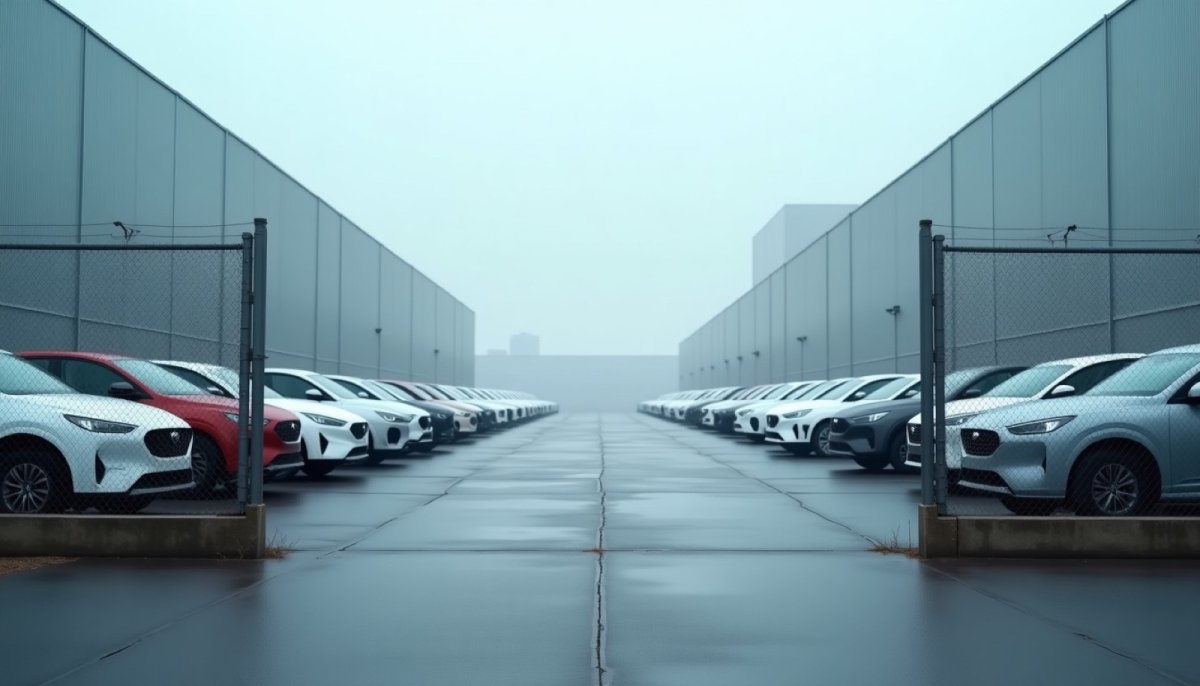
The European Union is preparing to widen its trade defenses against China, with Trade Commissioner Maroš Šefčovič warning that entire industries in member states are exposed as the bloc's deficit with Beijing runs at a record of about €1 billion a day. The push, discussed as EU trade ministers met in Ireland, signals that Brussels sees its recent car deal with China as a first step rather than a settlement.
"There are whole sectors under threat," Šefčovič said, referring to job losses across member states, Euronews reported Friday. He argued that the bloc must go further than conventional instruments. "We have to proceed not only with the traditional trade techniques, but also with a very political approach," he said.
A car quota that leaves the gap open
On Oct. 9, the EU and China reached an agreement to limit imports of Chinese hybrid cars. Under the arrangement, 350,000 Chinese hybrids a year may enter the EU market for four years, with the quota adjusted at a fixed rate of 6% annually. Euronews said the deal is unlikely to make a significant dent in the overall imbalance.
The pressure on European producers has continued to build. Chinese customs data show the country's exports to the EU rose 25% over the past year, according to Euronews. The Commission now wants to extend restrictions to other sectors and is developing new trade defense tools, a course that could invite retaliation from Beijing.
The 'kill switch' mandate
EU leaders have given the Commission a political mandate to design what Euronews described as a "kill switch": an instrument that would allow Brussels to cut off China's access to the single market in response to economic distortions. The Commission is also working on a separate instrument aimed at diversifying suppliers of strategic products, part of a broader effort that mirrors Europe's push to reduce its dependence on Chinese supply chains.
The negotiating calendar stretches into next year. Talks between the two sides began in June, technical discussions with Beijing are set to continue through the end of 2026, and political negotiations are scheduled for January and March 2027.
Beijing has already signaled how it may react. In late September, China's Commerce Ministry called an earlier proposed EU instrument, modeled on Section 301 of U.S. trade law, a "typical protectionist and unilateralist measure" and said it "will seriously undermine mutual trust," The Vibes reported, citing Reuters. Chinese observers quoted by the state-run Global Times at the time said Beijing had a "strong policy toolbox," including anti-discrimination probes, industrial and supply-chain security investigations and scrutiny of foreign subsidies. Noah Barkin, a senior adviser at Rhodium Group, said then that Germany and France were finalizing a joint paper urging the Commission to accelerate such a tool.
What it means: The hybrid car quota showed that Brussels and Beijing can still strike sector-by-sector bargains, but Šefčovič's language suggests the Commission no longer believes such deals can contain a deficit of this scale. By pairing a market-access weapon with supplier diversification, the EU is moving from case-by-case trade remedies toward a strategic posture closer to Washington's. That raises the stakes for the talks scheduled for early 2027: if they fail to deliver, the bloc will have the legal tools ready, and China has already outlined the investigations it could launch in reply, leaving European exporters and Chinese manufacturers alike exposed to a wider confrontation along the Europe-China trade corridor.
What's Your Reaction?
 Like
0
 Dislike
0
 Love
0
 Funny
0
 Wow
0
 Sad
0
 Angry
0













Comments (0)