

France braces for Macron address as cost-of-living riots spill into EU politics
About 1,800 arrests and 500 injured responders after Saturday's unrest, as Hungary's Magyar ties the violence to migration and Macron prepares to speak.

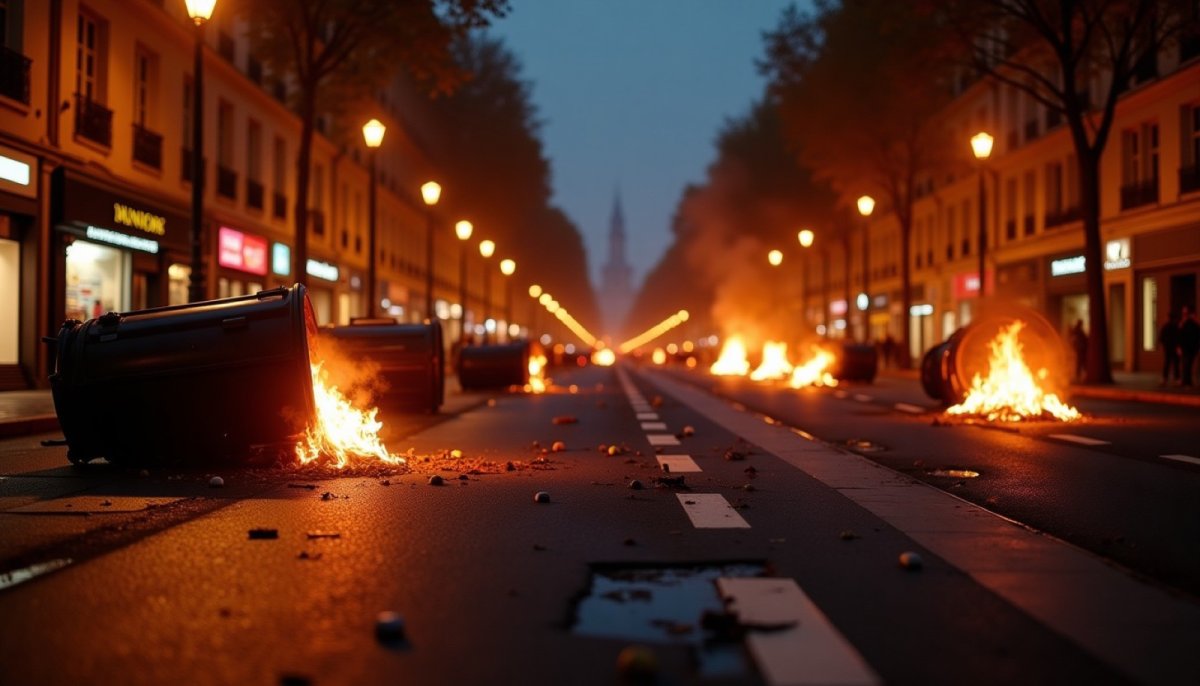
French President Emmanuel Macron was scheduled to address the nation at 8 p.m. Sunday after a day of anti-austerity protests turned violent in several cities, leaving looted shops, burned buildings and hundreds of injured emergency workers. By Sunday afternoon, demonstrators were back on the streets of Paris, where riot police faced crowds at Place de la République and tear gas was fired during a standoff, Al Jazeera reported.
Interior Minister Laurent Nuñez said about 1,800 people had been arrested nationwide over the protests and looting, and that roughly 500 police officers, firefighters and paramedics were injured, according to Dawn, which cited officials as saying 557 people were in custody in Paris alone. Nuñez said investigations were underway "to identify the perpetrators of these acts." Officials cited in the reports gave no death toll.
From school conditions to looting
Saturday's marches, billed as "yellow and youth" demonstrations, were called by the Yellow Vest movement around the high cost of living. Al Jazeera described the protests as a meeting point of anger over conditions in schools, frustration with living costs and a sense that the government has failed to act. Looting was reported in Paris, Lyon and Marseille, and hundreds of shops were ransacked across the country. In Limoges, the 19th-century town hall was destroyed by fire, while a tourist office in Lyon was set alight. On Sunday, Al Jazeera reported that hundreds of riot police were deployed to Place de la République as a large fire burned in a nearby side street, and Paris residents told the network they were dismayed by the damage.
The unrest lands on a population already squeezed by prices. Across Europe, energy-driven inflation is set to erase real pay gains in France and most large economies, a backdrop that helps explain why living costs have become a rallying cry rather than a niche grievance.
Budapest turns French unrest into a migration argument
The violence quickly became material for debates beyond France. Hungarian Prime Minister Péter Magyar linked the riots to immigration and said they vindicated his government's tough line, Euronews reported. Referring to what he called "this senseless destruction and unjustified violence," he pledged continuity. "We will not relax our efforts to protect our external borders," Magyar said, adding: "The Europe we all love is in serious trouble today." He described the footage from France as "shocking scenes" and argued that an overwhelming majority of European countries want a stricter migration policy.
The framing drew pushback at home. András Jámbor, a left-wing activist and Budapest city councilor, said: "It is deeply disturbing that the Hungarian Prime Minister chose not to address the people's legitimate demands." The French protests were called over living costs, not migration.
A split that predates the riots
The exchange echoes a divide visible at a European summit earlier in the week, where Denmark, Italy and Hungary pushed for stronger language on migration in the final conclusions, Euronews reported. Polish Prime Minister Donald Tusk said Poland would maintain its strict asylum policy, declaring: "On security issues, we will be relentless." Macron, by contrast, warned against stigmatizing immigrants, and Spanish Prime Minister Pedro Sánchez praised their contribution.
What it means: France's unrest is being read in two very different ways. At home, it is a cost-of-living and public-services crisis that puts pressure on Macron to offer more than a security response when he speaks on Sunday night. Abroad, leaders such as Magyar are folding it into the migration debate that already divides EU capitals, even though the protests were called over prices and schools. That gap matters for Brussels: if street violence in one of the bloc's two largest economies becomes an argument for harder borders rather than social policy, the next round of EU talks on migration and budgets will be shaped as much by images from Paris and Limoges as by the grievances that brought people out.
What's Your Reaction?
 Like
0
 Dislike
0
 Love
0
 Funny
0
 Wow
0
 Sad
0
 Angry
0





Comments (0)